Buying Property in Downtown Miami from Brazil: Documents and Steps
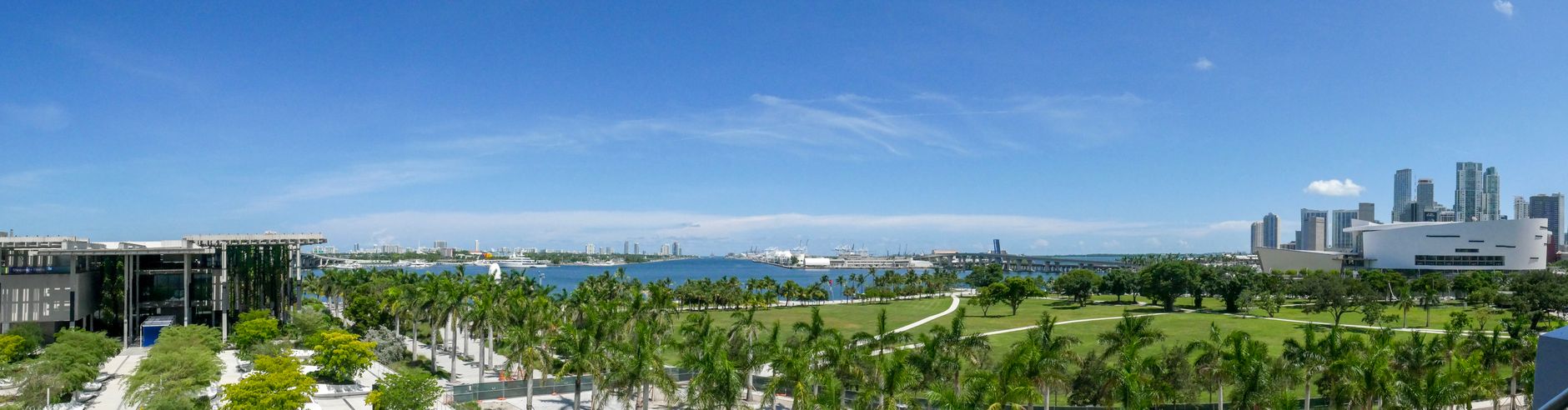
A buyer living in Brazil can close on an unit in Downtown Miami without travelling, provided the power of attorney, the apostille and the funds transfer are settled first. And the purchase does not end at closing: it leaves a filing obligation in Brazil.
The Brazilian file has two ends. In Florida, the title company decides which power-of-attorney wording it accepts and which documents it demands apostilled; in Brazil, the purchase is documented before the bank that sends the money and is recorded for the declaration of assets held abroad that Brazil requires of its residents before its own authorities. That second obligation is the most commonly forgotten, because it surfaces months after closing and needs details only available on signing day: who appears as owner, under which identification and on what date the deed was recorded.
What is specific to Downtown Miami
The administrative and judicial centre, with the bayfront park and the Metromover hub. A mix of converted older towers and new construction around Miami Worldcenter. The best public transport in the city: Metromover, Metrorail, Brightline and Metrobus all converge here.
- how the street changes between a weekday and a Sunday, because downtown empties out and you feel it when you live there
- whether the tower is new construction or an office conversion, because ceiling heights and building systems are not the same
- how close it is to the events district, because of traffic on game and concert nights
What to verify, step by step
- Check the broker's licence in the Florida state register and engage a real estate attorney licensed there before sending documents from Brazil.
- Ask the title company for the exact power-of-attorney wording it accepts and execute it before a Brazilian notary using that wording.
- Have the power of attorney and identity documents apostilled in Brazil and order the translation the title company requires.
- Ask your bank in Brazil what documentation of the transaction it needs to process the outbound transfer, and ask the closing agent in whose name the funds must arrive.
- Confirm in writing which closing signatures are accepted remotely and which require presence in Miami, yours or your attorney-in-fact's.
- On signing day itself, ask the attorney and the closing agent for the title and recorded deed details, and pass them to your accountant in Brazil for the declaration of assets held abroad.
Mistakes that cost money
- Closing the purchase and not keeping the title and recorded deed details, which are precisely what the accountant asks for in Brazil's declaration of assets held abroad.
- Executing the power of attorney on a standard Brazilian template without first consulting the title company, and having to redo it with an apostille.
- Sending the money before confirming in whose name it must arrive and what source-of-funds support the closing agent requires.
Frequently asked questions
- Can you close without travelling to Miami?
- It is common to do so under a power of attorney, but which signatures are accepted remotely is decided by the title company and, if there is financing, by the lender. Confirm it in writing before arranging a trip or ruling one out.
- Does a Brazilian power of attorney work as it stands in Florida?
- That cannot be assumed. Ask for the wording the title company accepts, execute it before a notary in Brazil, have it apostilled and translated as that company requires.
- What about the declaration of assets held abroad?
- Brazil requires its residents to declare assets held outside the country to its own authorities. What to declare, when and how is a question for an accountant in Brazil; it is not something we settle here.
- And financing?
- It has a separate file and is covered in the article on financing for Brazilian buyers. It is best resolved before making an offer.
Where to check it
- Miami-Dade Clerk of the Courts — deeds, liens, encumbrances and litigation on the property
- Florida DBPR — whether a broker, appraiser or contractor holds a current licence
- FinCEN — reporting applicable to all-cash real estate purchases
- Internal Revenue Service — the non-resident owner's federal tax obligations
- City of Miami — the rules of the municipality Downtown Miami belongs to
Official bodies. Specific figures are requested there, not copied from a listing.
Updated 2026-11-04
More about Downtown Miami
- Best Property Types for International Buyers in Downtown Miami
- Condo, Townhouse or House in Downtown Miami: Which Property Type Fits Your Needs?
- Waterfront vs. Non-Waterfront Property in Downtown Miami: What Buyers Should Compare
- Recommended Condo Buildings in Downtown Miami: What Buyers Should Research
- Condo Association Fees in Downtown Miami: What Buyers Should Ask About
The same, in other neighbourhoods
Interested in a property in this area?
Write to us and we will send you the available options.