In Cartagena's Zona Norte the buyer's risk is rarely in the building: it is in the land. A flawless apartment sitting on a property with a broken chain of title is still a problem, and not one you fix later.
The certificate of title and encumbrances is the property's full history, and it is the only document that establishes who may sell. Three things show up often along this coast and stop a purchase: falsa tradición, meaning someone transferred more than they held; community council land under collective title, which does not transfer like ordinary property; and the tidal strip, which is public domain of the Nation and cannot be privately owned. None of the three is visible on a site visit.
What is sold in Punta Canoa is often not a lot but a share in a tract still held en común y proindiviso, in undivided co-ownership, and buying a share gives no right to a specific piece of ground, only an abstract fraction of the whole: the buyer ends up co-owning with strangers and needs a partición, a partition, or a physical division before being able to say which part is his. That is the process that sets this sector apart: identifying every co-owner, finding out whether anyone has already petitioned for division, and seeing how the predial, the property tax, has been paid on an asset nobody uses exclusively. The counterparty differs from the village too: sometimes it is a land-holding company based elsewhere, in which case you request its certificado de existencia y representación, the corporate good-standing and signing-authority certificate, along with the resolution authorizing the sale. Who decides differs as well: lying outside consolidated urban land, permitting runs through the rural regime and the environmental opinions of Cardique rather than a neighborhood licensing office, with DIMAR, the maritime authority, involved at the beach edge. Nor is infrastructure networked: each parcel arranges its own water, power and wastewater.
What is specific to Punta Canoa
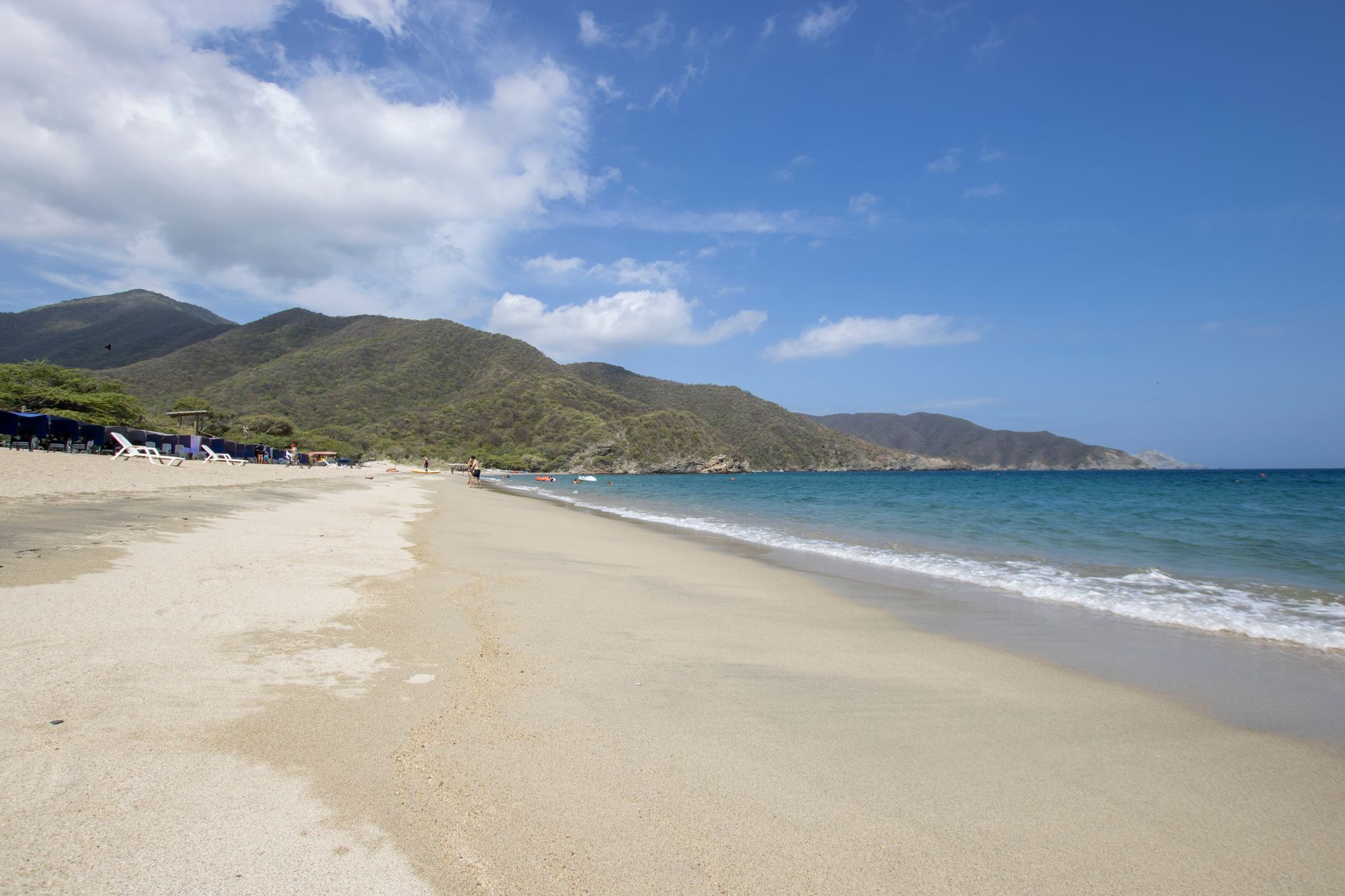
A low-density coastal village to the north, with open beach and very little high-rise building. Lots and houses dominate; towers are the exception. It lies along the coastal road toward Barranquilla, far from the centre and without full urban services.
- whether the property has its own registry folio or sits inside a larger parcel that was never subdivided
- whether there is certified utility availability, not merely a promise that services are coming
- whether the property lies in a coastal erosion risk zone, which is documented along this stretch
What to verify, step by step
- Order the certificate of title and encumbrances using the registry folio number through the Ventanilla Única de Registro. It is available online and you do not need to be in Colombia.
- Read the entries from oldest to newest and flag any that mention falsa tradición, possession, allocation of public land, or patrimonio de familia.
- Compare the area and boundaries on the certificate against the IGAC cadastral record. If they disagree, the property is not properly identified.
- Check the POT for the land use assigned to the Punta Canoa polygon and whether it falls in protected land.
- Search the Rama Judicial for pending proceedings against the seller or over the property.
- If the land touches beach or mangrove, ask DIMAR about the tidal zone and Cardique about environmental constraints.
Mistakes that cost money
- Accepting the certificate the seller hands you. Order it yourself and recently dated: the entries change.
- Confusing the deed with registration. An unregistered deed does not transfer ownership, however properly it was signed before a notary.
- Taking a fenced, built-on lot as proof. Physical possession does not prove title, and along this coast that is exactly where foreign buyers go wrong.
Frequently asked questions
- Can I order the certificate from outside Colombia?
- Yes. The Ventanilla Única de Registro issues it online if you have the registry folio number.
- What exactly is falsa tradición?
- An entry showing that an incomplete right was transferred: a share, possession or improvements, rather than full ownership. It does not prevent registering the sale, but it usually does prevent a mortgage.
- Does the bank do the search for me?
- The bank examines what matters for its own collateral, not what matters to you as the buyer. They are two different reviews.
Where to check it
- Superintendencia de Notariado y Registro — the certificate of title and encumbrances, which is the property's full history
- Ventanilla Única de Registro (VUR) — checking the registry folio online and ordering the certificate without visiting the office
- Instituto Geográfico Agustín Codazzi — the cadastral record, area, boundaries and assessed value of the property
- Plan de Ordenamiento Territorial de Cartagena — land use, the rules applying to the property and protected land
- Rama Judicial — whether there is pending litigation over the property or its owners
- Dirección General Marítima (DIMAR) — public-domain tidal land and concessions over the beach
- Cardique, autoridad ambiental del Canal del Dique — environmental permits, water setbacks and mangrove or wetland constraints
- Cartagena de Indias — the rules of the municipality Punta Canoa belongs to
Official bodies. Specific figures are requested there, not copied from a listing.
Updated 2026-11-05
More about Punta Canoa
- Buying in Punta Canoa as a foreigner: the actual procedure, step by step
- Short-term renting in Punta Canoa: what the law requires and what the building forbids
- Buying off-plan in Punta Canoa: what is permitted and what is merely announced
- The building permit in Punta Canoa: what it authorises and how to check it
- The mistakes buyers actually make in Punta Canoa
The same, in other neighbourhoods
Interested in a property in this area?
Write to us and we will send you the available options.