The administration dues are the fixed cost a Castillogrande buyer discovers late, because they appear not in the asking price but in the first bill. Behind them sits the fondo de imprevistos, the reserve fund, which is the only thing standing between a necessary repair and an extraordinary assessment.
The dues cover what keeps the common property standing: security, cleaning, management, utilities for common areas, insurance, lifts, pool and gardens. The fondo de imprevistos is a reserve the copropiedad builds up for what was not budgeted. In seafront buildings that reserve is consumed by the façade: salt air attacks paint, metal joinery, railings and exposed reinforcing steel, and façade work at height needs scaffolding or access equipment that costs again every time it is repeated. A building that spent its reserve on the last façade campaign enters the next one with an extraordinary assessment, and the assembly decides that, not the owner who has just bought. Serena del Mar adds a double charge that catches buyers out: the dues of the complex where the unit sits and the dues of the ciudadela (the master community), which sustains the master plan's shared urban infrastructure. They are two separate charges and they add up. In Castillogrande what is worth checking is whatever distinguishes the sector, listed further down.
In Castillogrande the typical deal is not a unit in a condominium but a house and its lot, which puts the weight of the file back on the chain of title to the land: you climb through the deeds to the parcelación, the original subdivision that created the block, because those platting deeds registered conditions, setbacks and easements that still bind and that are invisible from the street. There is no building manager to issue a paz y salvo, a no-arrears certificate, and no assembly to settle anything, so boundary questions with a neighbor are argued between private parties and what governs is the title and the survey, not a set of house rules. The counterparty is usually an old city family and, fairly often, a family company that owns the property: then you must decide whether to buy the real estate or the company's shares, two different transactions with different paperwork and different exposure, and request the certificado de existencia y representación, the corporate good-standing and signing-authority certificate, together with the resolution approving the sale. And because the neighborhood is fully built out, any construction is permitted on an already developed lot, with neighbors entitled to take part in the proceeding.
What is specific to Castillogrande
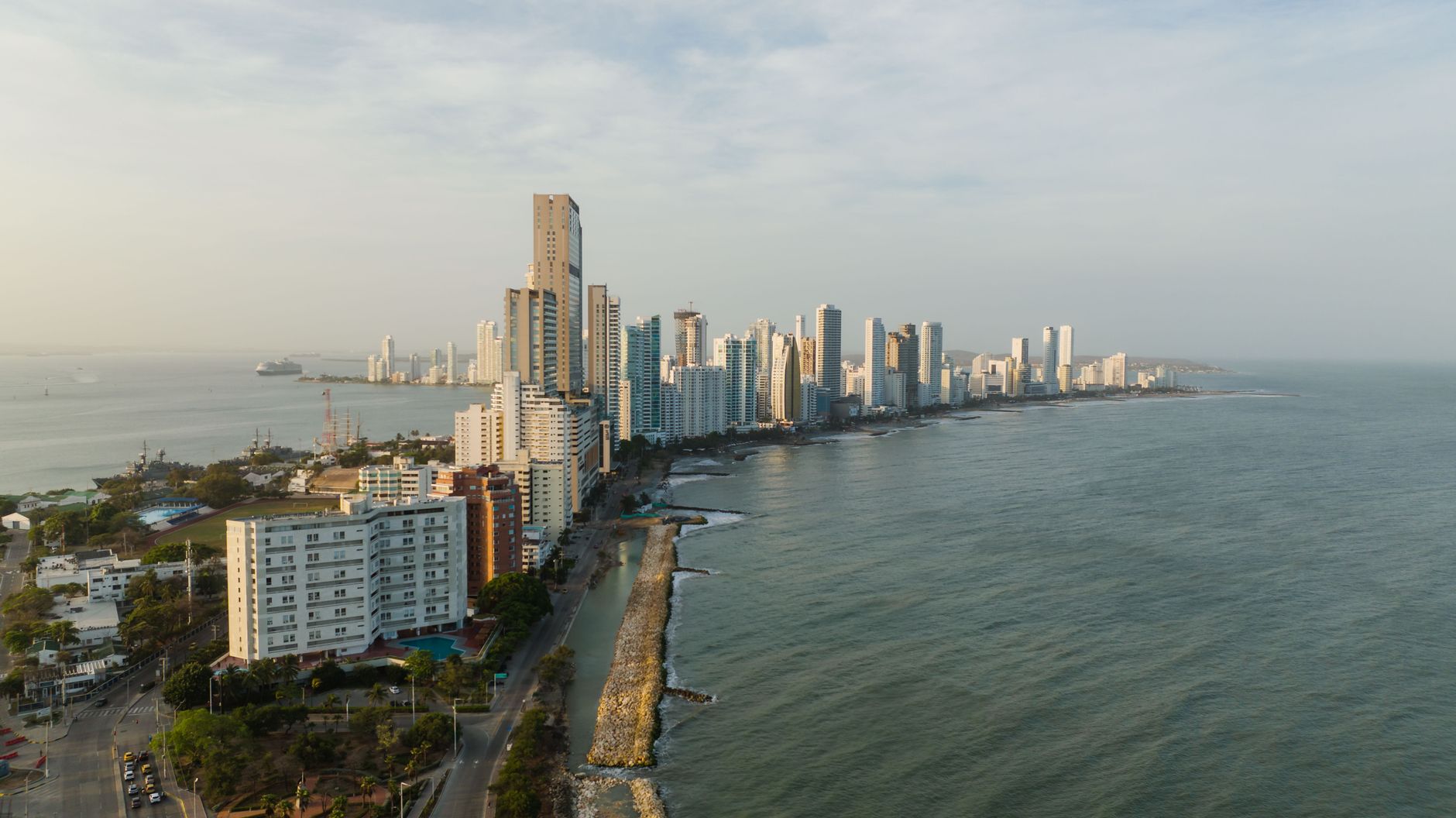
The residential tip of the peninsula: lower and quieter than Bocagrande, facing the bay, with little street retail. Houses and low-rise buildings sit alongside new towers, and single-family homes still exist. It is a dead end: access is through Bocagrande with no through road at the far tip, which keeps it free of passing traffic.
- whether the property faces the bay or the open sea, because the swell, the smell and the façade upkeep are not comparable
- what building height the rules allow on the lot, which is not uniform across the peninsula and is the first fact omitted when a lot is sold
- how ground stability was addressed, given this is land reclaimed from the sea, and what the soil study for the building says
What to verify, step by step
- Ask the manager for the approved budget for the current year and the previous one, and ask which line grew and why.
- Ask what the fondo de imprevistos holds today, when the last façade campaign was, and when the next is expected. If nobody knows, that is the answer.
- Search the minutes for extraordinary assessments already approved and any under discussion, and ask for the minute approving the last major work.
- Ask whether the unit pays one set of dues or two, because planned master communities bill the complex and the shared urban infrastructure separately.
- Request the unit's account statement and the certificate that it is current, before closing.
- Ask which dues apply to units in short-term rental, which in several buildings differ from those for permanent residence.
Mistakes that cost money
- Comparing dues between buildings without comparing what each includes. Two different figures may cover services that bear no resemblance, and the lower one may belong to the building that has deferred maintenance.
- Looking at the dues and not the reserve fund. The dues are the cost you know about; an empty reserve is the cost you do not know about yet.
- Budgeting for a single set of dues in a phased master community. In Serena del Mar the complex's dues and the ciudadela's dues are two charges and they add up.
Frequently asked questions
- How much are the dues in Castillogrande?
- We publish no amounts: they depend on the building, the services included and your unit's coefficient. The manager gives you the figure for the specific building, and the approved budget explains where it comes from.
- What is the fondo de imprevistos?
- A copropiedad reserve for unbudgeted expenses. In seafront buildings it is what absorbs façade maintenance, which is why it is worth asking how much is left.
- Can I be charged an extraordinary assessment right after buying?
- The assembly can approve extraordinary assessments and whoever owns the unit at the time pays them. Reading the minutes before buying is how you see whether one is coming.
- Why are there two sets of dues in some sectors?
- Because in a planned master community the shared urban infrastructure is funded separately from the individual complex. Ask whether your unit is in that situation before doing the arithmetic.
Where to check it
- Superintendencia de Notariado y Registro — the certificate of title and encumbrances, which is the property's full history
- Alcaldía Mayor de Cartagena de Indias — property tax, betterment levies and District procedures
- Instituto Geográfico Agustín Codazzi — the cadastral record, area, boundaries and assessed value of the property
- Lonja de Propiedad Raíz de Bolívar — commercial appraisals and appraisers listed on the open register
- Plan de Ordenamiento Territorial de Cartagena — land use, the rules applying to the property and protected land
- Cartagena de Indias — the rules of the municipality Castillogrande belongs to
Official bodies. Specific figures are requested there, not copied from a listing.
Updated 2026-11-05
More about Castillogrande
- Zona de bajamar in Castillogrande: why fenced lots on the shore cannot be sold
- Beach access in Castillogrande: the right of way the seller shows you and the one that exists on the register
- Coastal erosion in Castillogrande: where the data lives and what it means for building on the front row
- Mangrove, ronda hídrica and wetland in Castillogrande: why a protected lot does not develop like the rest
- Maintaining a seafront property in Castillogrande: what to ask the building manager before signing
The same, in other neighbourhoods
- Administration dues and the reserve fund in Crespo: what they actually cover
- Administration dues and the reserve fund in El Laguito: what they actually cover
- Administration dues and the reserve fund in Barceloneta: what they actually cover
- Administration dues and the reserve fund in La Boquilla: what they actually cover
Interested in a property in this area?
Write to us and we will send you the available options.