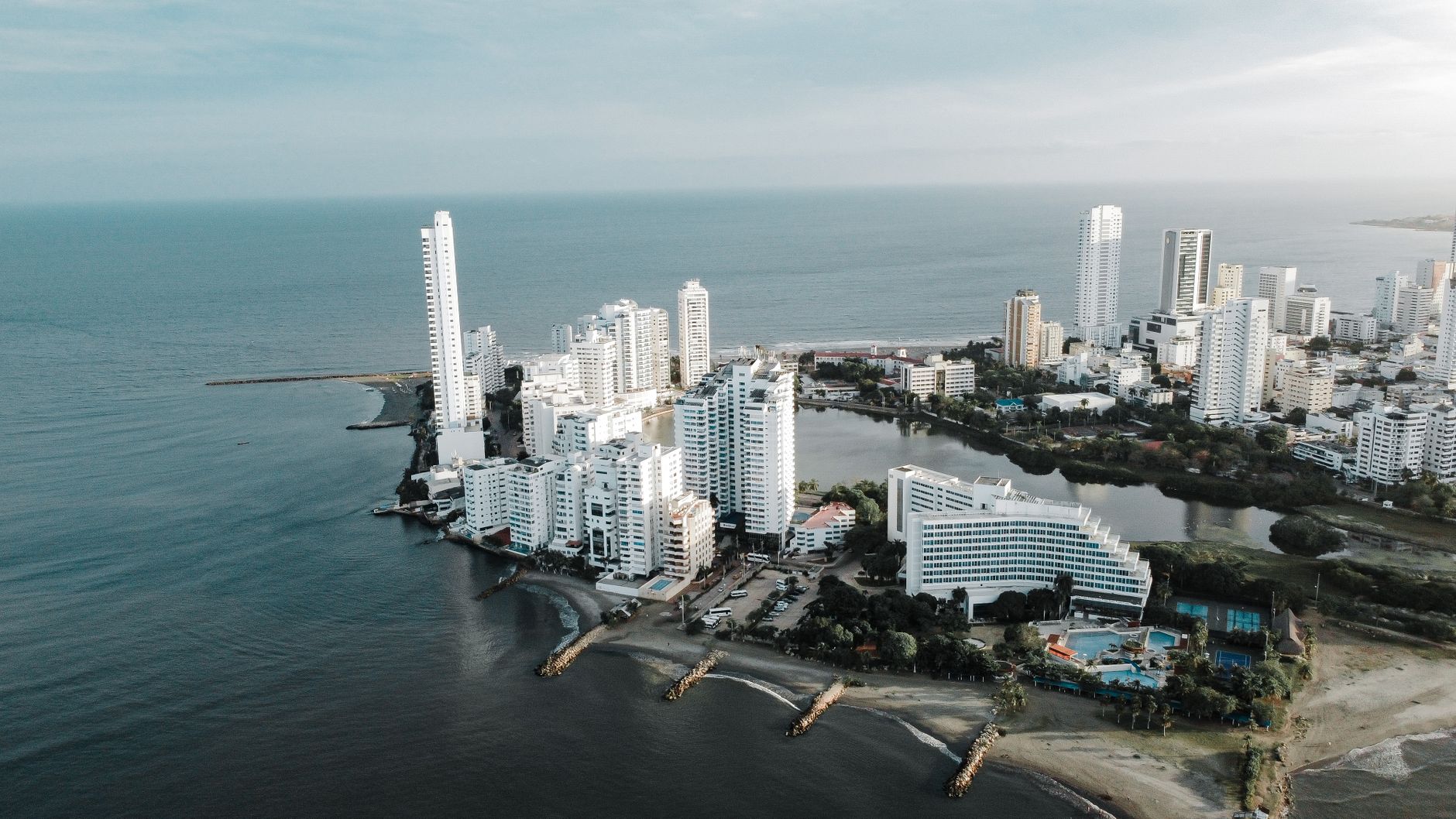
The zona de bajamar — the tidal strip between the high and low water marks — is public domain of the Nation and cannot be privately owned. That does not stop it from appearing in Morros fenced, built on, and covered by a notarised deed.
Public-domain property is outside commerce: it cannot be sold, mortgaged, or acquired by possession, however many generations a family has occupied it. What can exist over the beach and the tidal strip is a concesión or a permit from the maritime authority — temporary, revocable, and transferring ownership to no one. The consequence for a buyer is financial: if part of the area being priced falls within the zona de bajamar, that part is not being bought and a bank will not take it as collateral. The line is invisible from the terrace and is not drawn on the deed.
What you buy in Morros is not land but a private unit created by subdividing a single folio matriz, the parent registry record, and that changes the file. The chain of title on the land was settled once by the builder; what remains to review is the registered reglamento de propiedad horizontal, the condominium bylaws, any acta de asamblea, owners' meeting minutes, that amended them, and the coeficiente de copropiedad, the ownership share assigned to the unit, which governs both voting and billing. The counterparty differs from the undeveloped north as well: usually an individual owner living outside Cartagena, so closing depends on a power of attorney from that person, on a spouse's consent where it applies, and on the paz y salvo, a no-arrears certificate signed by the building manager, a document that does not even exist for rural land. Decisions here belong to the owners' assembly and the manager it appoints, not to a public office; the District and the curaduría urbana, the private licensing office, had their say when the tower was permitted. Internal infrastructure, from pumping to the generator and security, is private and funded by the budget that same assembly approves, so the minutes describe the property better than any tour.
What is specific to Morros
The first consolidated stretch of the Zona Norte: gated tower complexes along the road, beach in front and their own amenities. Almost everything is high-rise condominium, much of it bought as a second home and rented out seasonally. It sits minutes from the airport along the Anillo Vial, which is its only real way in and out.
- what the condominium bylaws say about daily rentals, because several complexes restrict them and buyers find out after signing
- the state of the maintenance dues and the reserve fund, which in seafront buildings goes into façade upkeep
- whether the tower holds a concession or permit for the beach in front, which does not come with the apartment
What to verify, step by step
- Ask DIMAR, the maritime authority, for information on the deslinde — the official demarcation of public-domain land — along the stretch of coast where the Morros property sits, and whether any concesión is current over that beach and in whose name. The request is made in writing and does not require being in Colombia.
- Compare the area and boundaries on the certificado de tradición y libertad (the title and encumbrances certificate) against the IGAC cadastral record. A discrepancy in area on the seaward side is the signal worth understanding before going further.
- Read the certificate's entries from oldest to newest, looking for allocations, falsa tradición, or consolidations that extended the property toward the beach at some point in the chain.
- Insist that the survey be properly referenced and signed by an identifiable professional, not a sales-office plan with no author.
- Check in addition what is specific to Morros, which is not the same from one stretch of coast to the next: what the condominium bylaws say about daily rentals, because several complexes restrict them and buyers find out after signing; the state of the maintenance dues and the reserve fund, which in seafront buildings goes into façade upkeep and whether the tower holds a concession or permit for the beach in front, which does not come with the apartment.
Mistakes that cost money
- Treating the fence, the building and the paid property-tax receipt as proof of ownership. It is the mistake of someone buying a beach lot: none of the three turns public-domain land into private property, and a tax receipt is not title.
- Confusing the concesión with ownership. It is the mistake of someone buying a tower apartment facing the beach and assuming the access comes with the unit: a concession authorises an use for a term, it is held in someone's name, and it is not sold with the property.
- Accepting that “it has always been done this way here”. Local custom does not change the legal nature of the land, and the foreign buyer is the one who absorbs the difference.
Frequently asked questions
- How do I know where the zona de bajamar ends on a specific property?
- You cannot infer it by looking at the beach. DIMAR is the competent authority, and the deslinde for that stretch is what you ask it for.
- If the deed is registered, is the question settled?
- Registration records that the transaction was filed, not that the thing transferred was capable of private ownership. Those are two different questions, and the second is answered by the maritime authority.
- What is it about Morros that changes this enquiry?
- The rule is the same across the city; the history of the land is not. Bocagrande and Castillogrande include land reclaimed from the sea, La Boquilla combines a coastal sandbar with collective title, and in Morros the right move is to ask about that stretch and not the one beside it.
Where to check it
- Dirección General Marítima (DIMAR) — public-domain tidal land and concessions over the beach
- Superintendencia de Notariado y Registro — the certificate of title and encumbrances, which is the property's full history
- Instituto Geográfico Agustín Codazzi — the cadastral record, area, boundaries and assessed value of the property
- Plan de Ordenamiento Territorial de Cartagena — land use, the rules applying to the property and protected land
- Cardique, autoridad ambiental del Canal del Dique — environmental permits, water setbacks and mangrove or wetland constraints
- Ventanilla Única de Registro (VUR) — checking the registry folio online and ordering the certificate without visiting the office
- Cartagena de Indias — the rules of the municipality Morros belongs to
Official bodies. Specific figures are requested there, not copied from a listing.
Updated 2026-11-05
More about Morros
- Beach access in Morros: the right of way the seller shows you and the one that exists on the register
- Coastal erosion in Morros: where the data lives and what it means for building on the front row
- Mangrove, ronda hídrica and wetland in Morros: why a protected lot does not develop like the rest
- Maintaining a seafront property in Morros: what to ask the building manager before signing
- Beachfront apartment in Morros: what changes versus being a few blocks back
The same, in other neighbourhoods
- Zona de bajamar in Cielo Mar: why fenced lots on the shore cannot be sold
- Zona de bajamar in Serena del Mar: why fenced lots on the shore cannot be sold
- Zona de bajamar in Manzanillo del Mar: why fenced lots on the shore cannot be sold
- Zona de bajamar in Punta Canoa: why fenced lots on the shore cannot be sold
Interested in a property in this area?
Write to us and we will send you the available options.