Occupancy in Punta Canoa is not spread evenly across the year, and the gap between the strong months and the weak ones is what decides whether the operation holds up. That data exists, but it sits with the building manager and the current owners, not in the brochure.
We publish no occupancy or rate figures here, and it is worth distrusting anyone who publishes them without saying where they came from. What you can do is request them from whoever holds them and compare. The seasonal pattern along this coast is shaped by Colombian public holidays, school vacations and the northern hemisphere winter, and each sector experiences it differently depending on how it is reached and what surrounds it: a sector with a single road in congests at the peaks, and one without established retail depends more on guests arriving by car. It also matters that fixed costs do not fall in low season: the administration dues and the maintenance keep running. So the useful figure is not an annual average but the month-by-month spread, and who measured it.
What is sold in Punta Canoa is often not a lot but a share in a tract still held en común y proindiviso, in undivided co-ownership, and buying a share gives no right to a specific piece of ground, only an abstract fraction of the whole: the buyer ends up co-owning with strangers and needs a partición, a partition, or a physical division before being able to say which part is his. That is the process that sets this sector apart: identifying every co-owner, finding out whether anyone has already petitioned for division, and seeing how the predial, the property tax, has been paid on an asset nobody uses exclusively. The counterparty differs from the village too: sometimes it is a land-holding company based elsewhere, in which case you request its certificado de existencia y representación, the corporate good-standing and signing-authority certificate, along with the resolution authorizing the sale. Who decides differs as well: lying outside consolidated urban land, permitting runs through the rural regime and the environmental opinions of Cardique rather than a neighborhood licensing office, with DIMAR, the maritime authority, involved at the beach edge. Nor is infrastructure networked: each parcel arranges its own water, power and wastewater.
What is specific to Punta Canoa
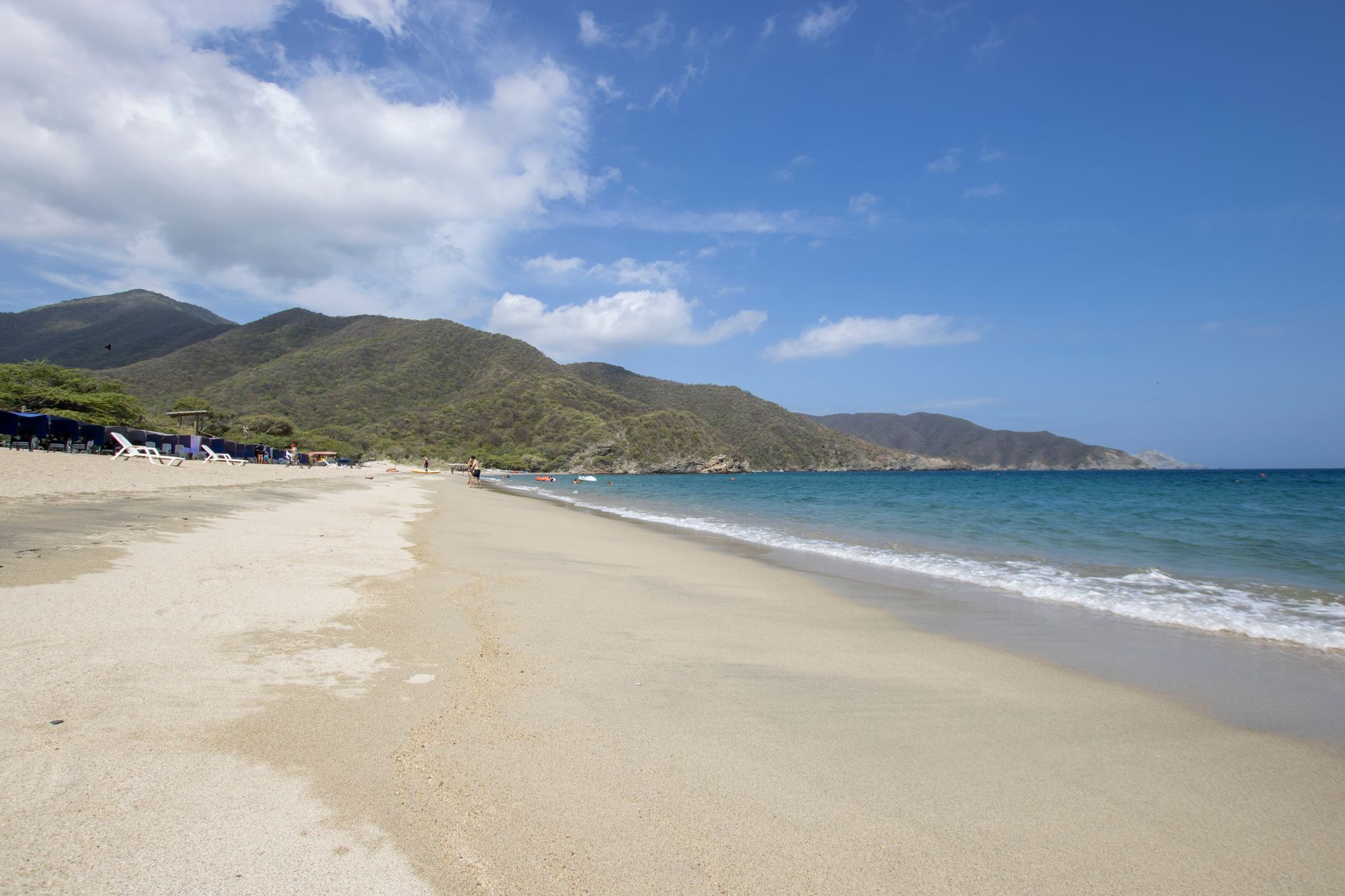
A low-density coastal village to the north, with open beach and very little high-rise building. Lots and houses dominate; towers are the exception. It lies along the coastal road toward Barranquilla, far from the centre and without full urban services.
- whether the property has its own registry folio or sits inside a larger parcel that was never subdivided
- whether there is certified utility availability, not merely a promise that services are coming
- whether the property lies in a coastal erosion risk zone, which is documented along this stretch
What to verify, step by step
- Ask the building manager how many units in the building are in short-term rental and for how long, and ask for the month-by-month spread rather than an annual average.
- Talk to two or three current owners who already operate and ask about their weakest month in recent years, not their best. The weak month is what defines cash flow.
- Ask who produced any figure you are shown, by what method and over what period. A sales office projection and a manager's historical record are not the same document.
- Test what you are told against the Punta Canoa-specific conditions listed further down. That is what conditions the operation there, not the city's general trend.
- Ask how access to the sector behaves at the seasonal peaks, because congestion and the way in affect whether a guest books a second time.
- Request the fixed-cost series for the same period: without the cost beside it, an occupancy figure says nothing.
Mistakes that cost money
- Accepting an annual average occupancy. An average hides precisely the figure that matters: how many months a year the unit fails to cover its fixed costs.
- Taking the sales office number as a historical record. A projection is the seller's expectation, and nobody signs it.
- Comparing Punta Canoa with another part of the city as though demand were the same. What draws a guest to each stretch of this coast differs, and access is part of that.
Frequently asked questions
- Why do you not publish occupancy figures for Punta Canoa?
- Because we do not measure them and because they change by building and by year. Publishing a borrowed number would lend authority to something that has none. We would rather tell you whom to ask.
- Who holds the real historical record?
- The building manager and the owners who already operate. If nobody has it in writing, that too tells you something about the building.
- Are official statistics useful?
- They are useful for city-level context: DANE publishes housing and construction indicators, and the Lonja de Bolívar lists registered appraisers. Neither tells you what happens in your apartment.
Where to check it
- DANE — the building census, housing price indices and construction cost data
- Lonja de Propiedad Raíz de Bolívar — commercial appraisals and appraisers listed on the open register
- Registro Nacional de Turismo — whether a property may legally be used for tourist accommodation and who has registered it
- Alcaldía Mayor de Cartagena de Indias — property tax, betterment levies and District procedures
- Cartagena de Indias — the rules of the municipality Punta Canoa belongs to
Official bodies. Specific figures are requested there, not copied from a listing.
Updated 2026-11-05
More about Punta Canoa
- The reglamento de propiedad horizontal in Punta Canoa: why it governs inside the building
- Administration dues and the reserve fund in Punta Canoa: what they actually cover
- Zona de bajamar in Punta Canoa: why fenced lots on the shore cannot be sold
- Beach access in Punta Canoa: the right of way the seller shows you and the one that exists on the register
- Coastal erosion in Punta Canoa: where the data lives and what it means for building on the front row
The same, in other neighbourhoods
- Seasons and demand in Bocagrande: how to ask for the data instead of believing it
- Seasons and demand in Castillogrande: how to ask for the data instead of believing it
- Seasons and demand in Crespo: how to ask for the data instead of believing it
- Seasons and demand in El Laguito: how to ask for the data instead of believing it
Interested in a property in this area?
Write to us and we will send you the available options.