Colombia does not bar foreigners from buying homes, and in Bocagrande a good share of demand comes from abroad. What does exist is a sequence of formalities that, done in the wrong order, leave the investment unregistered with the central bank.
The purchase itself is the easy part. What determines whether you can take the money out later, and at what rate, is registering the foreign investment with the central bank, which must go through the formal exchange channel and not an ordinary transfer. On top of that come the tax ID with DIAN for the property's taxes, and the source-of-funds due diligence the real estate sector is required to perform.
Bocagrande works like a mature resale market, with consequences that do not repeat up north. The counterparty is almost never a builder: it is a long-standing owner or, very often, an unsettled sucesión, an estate proceeding, whose heirs live in different countries, so closing depends not on one power of attorney but on several, and on the partition among them. The registry record is old too: it was opened when the building was submitted to the condominium regime, it carries legacy entries such as cancelled mortgages, patrimonio de familia and afectación a vivienda familiar, both family-home protections, or lifted attachments, and the recorded area does not always match a current survey, so you compare the registry record against the deed and against the unit's floor plan. The peninsula is also land reclaimed from the sea under subdivisions the District authorized in their day, and the oldest deeds still carry references to those parcelaciones, the original platting. Day-to-day power sits with the owners' assembly and its manager, so in a tower with a long record of decisions the minutes and the status of the condominium's lawsuits matter more than the brochure.
What is specific to Bocagrande
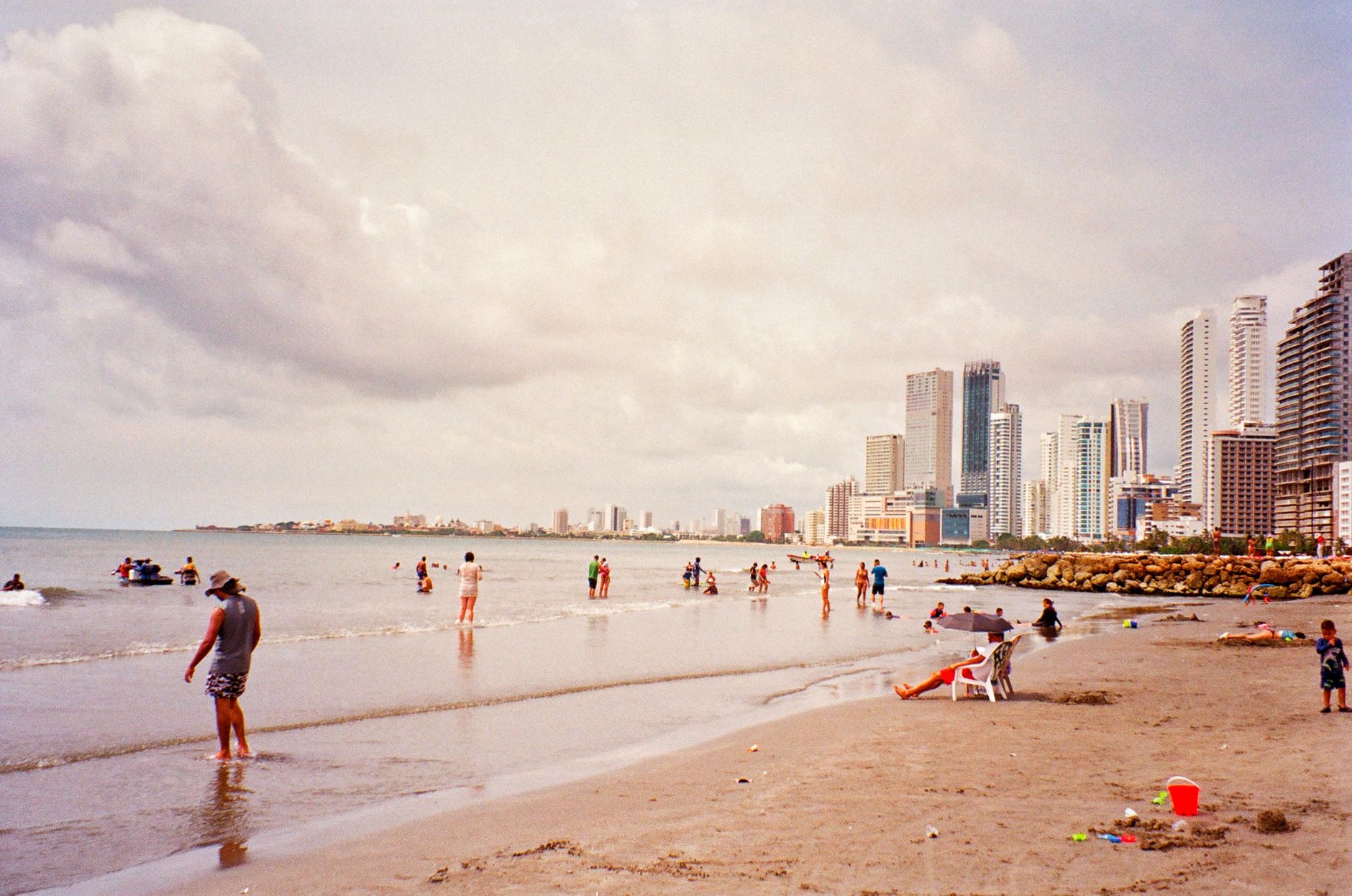
Cartagena's dense, vertical peninsula: open sea on one side, bay on the other, and built out to the last lot. Condominium towers from very different eras, from the sixties to recent construction, on the same block. Groceries, restaurants and beach are walkable, and access is through a few roads that saturate in high season.
- the building's actual age and whether it has a structural vulnerability study, since much of the stock was built under seismic codes earlier than those now in force
- what the condominium bylaws say about daily rentals, which on this peninsula is the difference between being able to rent and not
- how many parking spaces the unit holds in the deed, not in the brochure, because older towers do not have one per apartment
What to verify, step by step
- Decide before wiring any money whether you are buying personally or through a company, because the exchange registration and the tax treatment both depend on the answer.
- Ask the Banco de la República how foreign investment in real estate is registered and through which channel the funds must arrive.
- Obtain the Colombian tax ID from DIAN. You need it for property tax and for the eventual sale.
- If you will not attend the signing, grant a power of attorney before a Colombian consul or with an apostille, depending on where you are.
- Have your source-of-funds documentation ready before the promise of sale: the broker and the notary are required to request it.
- Check with Migración Colombia whether your situation fits the investor visa, which is a separate matter from the purchase.
Mistakes that cost money
- Wiring funds outside the formal exchange channel. The purchase registers anyway, but the investment does not, and you discover that when you sell.
- Assuming that buying grants residency automatically. They are two separate procedures with their own requirements.
- Signing the promise of sale without the power of attorney in hand when buying remotely, the commonest reason the closing date slips.
Frequently asked questions
- Do I need a Colombian foreigner ID to buy?
- Not to buy. Yes for some later formalities, and Migración Colombia defines which ones.
- Can I buy without travelling to Cartagena?
- Yes, with a power of attorney granted before a consul or apostilled. What you should not delegate is verifying the title.
- Are there restrictions on foreigners near the coast?
- The relevant restriction is not nationality but the nature of the land: the tidal zone is public domain and is not sold to anyone, Colombian or foreign.
Where to check it
- Banco de la República — registration of foreign investment and the official exchange rate
- DIAN — the tax ID, withholding on sale and the capital gains tax
- Migración Colombia — visas and the foreigner ID card, including the real-estate investor visa
- Cancillería de Colombia — current visa requirements and the apostille of foreign documents
- UIAF — the anti-money-laundering obligations that apply to the real estate sector
- Superintendencia de Notariado y Registro — the certificate of title and encumbrances, which is the property's full history
- Cartagena de Indias — the rules of the municipality Bocagrande belongs to
Official bodies. Specific figures are requested there, not copied from a listing.
Updated 2026-11-05
More about Bocagrande
- Short-term renting in Bocagrande: what the law requires and what the building forbids
- Buying off-plan in Bocagrande: what is permitted and what is merely announced
- The building permit in Bocagrande: what it authorises and how to check it
- The mistakes buyers actually make in Bocagrande
- What you can build on a lot in Bocagrande: the rules before the design
The same, in other neighbourhoods
Interested in a property in this area?
Write to us and we will send you the available options.