The permit is the only document that states what may be built on a property in Castillogrande, and almost nobody asks for it before signing. When it turns out to be expired, amended or issued for another lot, the project you bought is no longer the one that was authorised.
The licencia de construcción and the licencia de urbanismo (building and subdivision permits) are issued by a curaduría urbana, a private body exercising a public function, and they are checked there by property and by filing number. A permit authorises something specific: an use, a number of units, a height, setbacks and a term. It does not authorise the brochure. It can be expired, it can have been amended after issue, and it can cover the neighbouring lot rather than the one on offer. None of that is visible on a site visit, and all of it can be checked in writing from abroad.
In Castillogrande the typical deal is not a unit in a condominium but a house and its lot, which puts the weight of the file back on the chain of title to the land: you climb through the deeds to the parcelación, the original subdivision that created the block, because those platting deeds registered conditions, setbacks and easements that still bind and that are invisible from the street. There is no building manager to issue a paz y salvo, a no-arrears certificate, and no assembly to settle anything, so boundary questions with a neighbor are argued between private parties and what governs is the title and the survey, not a set of house rules. The counterparty is usually an old city family and, fairly often, a family company that owns the property: then you must decide whether to buy the real estate or the company's shares, two different transactions with different paperwork and different exposure, and request the certificado de existencia y representación, the corporate good-standing and signing-authority certificate, together with the resolution approving the sale. And because the neighborhood is fully built out, any construction is permitted on an already developed lot, with neighbors entitled to take part in the proceeding.
What is specific to Castillogrande
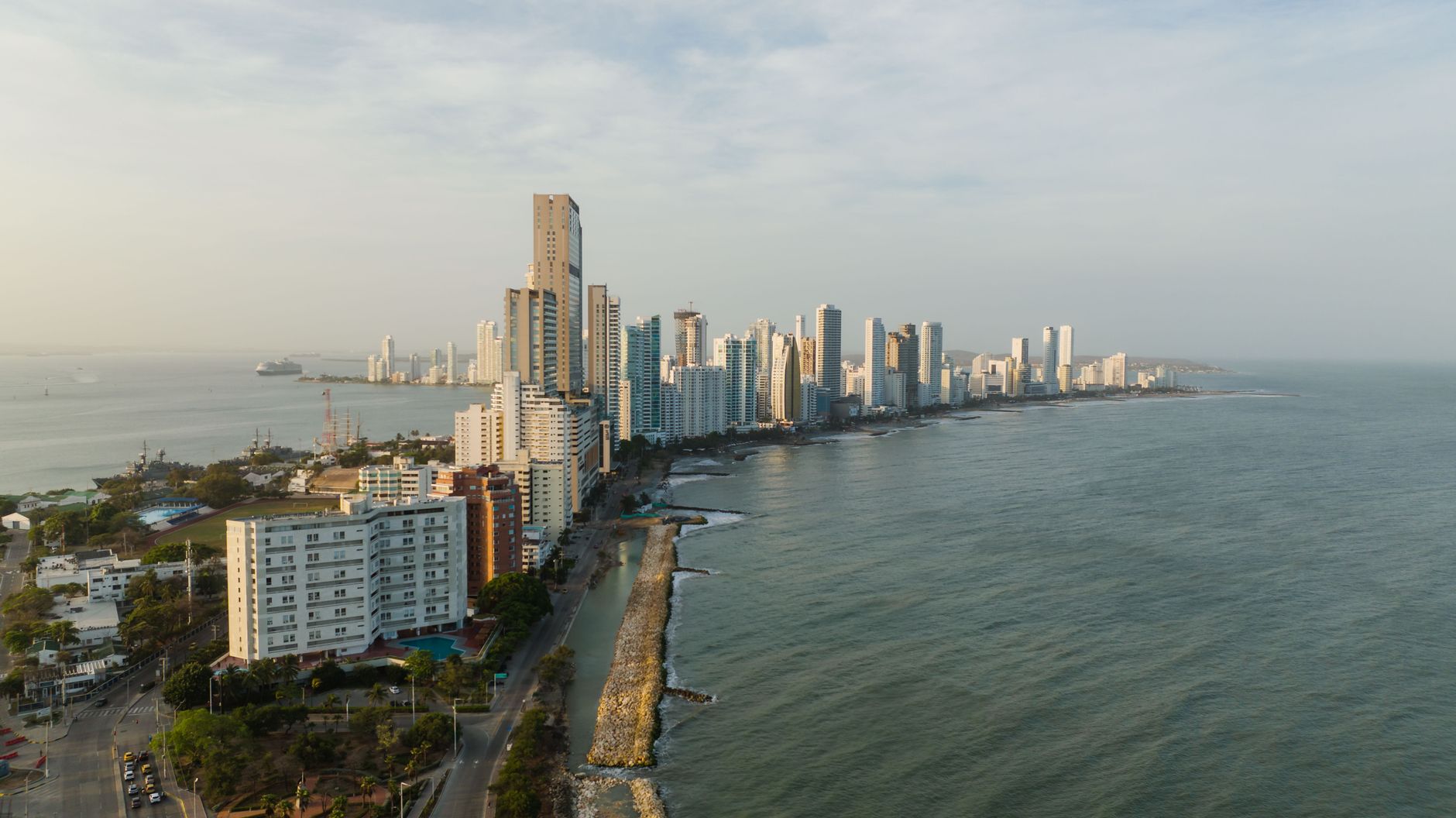
The residential tip of the peninsula: lower and quieter than Bocagrande, facing the bay, with little street retail. Houses and low-rise buildings sit alongside new towers, and single-family homes still exist. It is a dead end: access is through Bocagrande with no through road at the far tip, which keeps it free of passing traffic.
- whether the property faces the bay or the open sea, because the swell, the smell and the façade upkeep are not comparable
- what building height the rules allow on the lot, which is not uniform across the peninsula and is the first fact omitted when a lot is sold
- how ground stability was addressed, given this is land reclaimed from the sea, and what the soil study for the building says
What to verify, step by step
- Ask for the complete permit, not the cover page: what it authorises sits in the resolution and the approved drawings.
- Confirm the registry folio on the permit is the one for the property offered to you in Castillogrande, not a larger parcel or an adjoining lot.
- Ask the curaduría urbana whether the permit is current, whether it was extended, and whether it was later amended, and ask for the amending act.
- Compare the use, the unit count and the height on the permit against the commercial offer; where they differ, ask which of the two is going to be brought into line.
- Check in addition what Castillogrande requires in particular, with the authority that imposes it: whether the property faces the bay or the open sea, because the swell, the smell and the façade upkeep are not comparable; what building height the rules allow on the lot, which is not uniform across the peninsula and is the first fact omitted when a lot is sold and how ground stability was addressed, given this is land reclaimed from the sea, and what the soil study for the building says.
Mistakes that cost money
- Accepting the permit the seller shows you without checking it at the curaduría. A printed document does not say whether it is still current today.
- Confusing the licencia de urbanismo with the licencia de construcción. The first enables the land, the second the building: it is the mistake of someone buying a developable lot, not of someone buying a finished apartment.
- Treating advanced construction as proof of authorisation. In an already built tower what you compare is what stands against the approved drawings, and that is not done on a site visit.
Frequently asked questions
- Can I check the permit for a Castillogrande property from outside Colombia?
- Yes, in writing to the curaduría urbana that issued it, with the filing number or the property address. You do not need to be in Cartagena for that.
- What does it mean if the permit has expired?
- That the act had a term and the term ran out. What that means for your particular case comes from the curaduría and your own lawyer, not from an article.
- Does the permit tell me the height and setbacks for the lot?
- Those come from the POT rules for the polygon and are then fixed in the permit. Ask the curaduría for them for that specific property: we publish no figures here.
Where to check it
- Curadurías Urbanas de Cartagena — whether a current building or subdivision permit exists and exactly what it authorises
- Plan de Ordenamiento Territorial de Cartagena — land use, the rules applying to the property and protected land
- Superintendencia de Notariado y Registro — the certificate of title and encumbrances, which is the property's full history
- Ventanilla Única de Registro (VUR) — checking the registry folio online and ordering the certificate without visiting the office
- Cardique, autoridad ambiental del Canal del Dique — environmental permits, water setbacks and mangrove or wetland constraints
- Dirección General Marítima (DIMAR) — public-domain tidal land and concessions over the beach
- Alcaldía Mayor de Cartagena de Indias — property tax, betterment levies and District procedures
- Cartagena de Indias — the rules of the municipality Castillogrande belongs to
Official bodies. Specific figures are requested there, not copied from a listing.
Updated 2026-11-05
More about Castillogrande
- The mistakes buyers actually make in Castillogrande
- What you can build on a lot in Castillogrande: the rules before the design
- Cartagena's land-use plan applied to Castillogrande: use, protection and limits
- Property tax and betterment levies in Castillogrande: the debt that follows the property
- Seasons and demand in Castillogrande: how to ask for the data instead of believing it
The same, in other neighbourhoods
Interested in a property in this area?
Write to us and we will send you the available options.