Property tax and the betterment levy do not chase the seller: they stay attached to the property. In Punta Canoa a buyer who does not request the District's clearance certificate before signing inherits the whole debt along with the deed.
Property tax is assessed on the cadastral value set by IGAC, not on what you paid, and the betterment levy is a separate charge the District imposes on properties benefited by public works. Both are obligations of the property itself, which is why an old debt gets billed to the new owner. In Punta Canoa a further complication applies: if the property is poorly identified in the cadastre —area disagreeing with the certificate of title, a folio sitting inside a larger undivided parcel, or a land use other than the one being sold— the assessment can be corrected later and produce a retroactive charge nobody budgeted for. Check what this sector in particular requires: whether the property has its own registry folio or sits inside a larger parcel that was never subdivided; whether there is certified utility availability, not merely a promise that services are coming and whether the property lies in a coastal erosion risk zone, which is documented along this stretch. How much is payable is a matter for the District and IGAC, and they are who you ask.
What is sold in Punta Canoa is often not a lot but a share in a tract still held en común y proindiviso, in undivided co-ownership, and buying a share gives no right to a specific piece of ground, only an abstract fraction of the whole: the buyer ends up co-owning with strangers and needs a partición, a partition, or a physical division before being able to say which part is his. That is the process that sets this sector apart: identifying every co-owner, finding out whether anyone has already petitioned for division, and seeing how the predial, the property tax, has been paid on an asset nobody uses exclusively. The counterparty differs from the village too: sometimes it is a land-holding company based elsewhere, in which case you request its certificado de existencia y representación, the corporate good-standing and signing-authority certificate, along with the resolution authorizing the sale. Who decides differs as well: lying outside consolidated urban land, permitting runs through the rural regime and the environmental opinions of Cardique rather than a neighborhood licensing office, with DIMAR, the maritime authority, involved at the beach edge. Nor is infrastructure networked: each parcel arranges its own water, power and wastewater.
What is specific to Punta Canoa
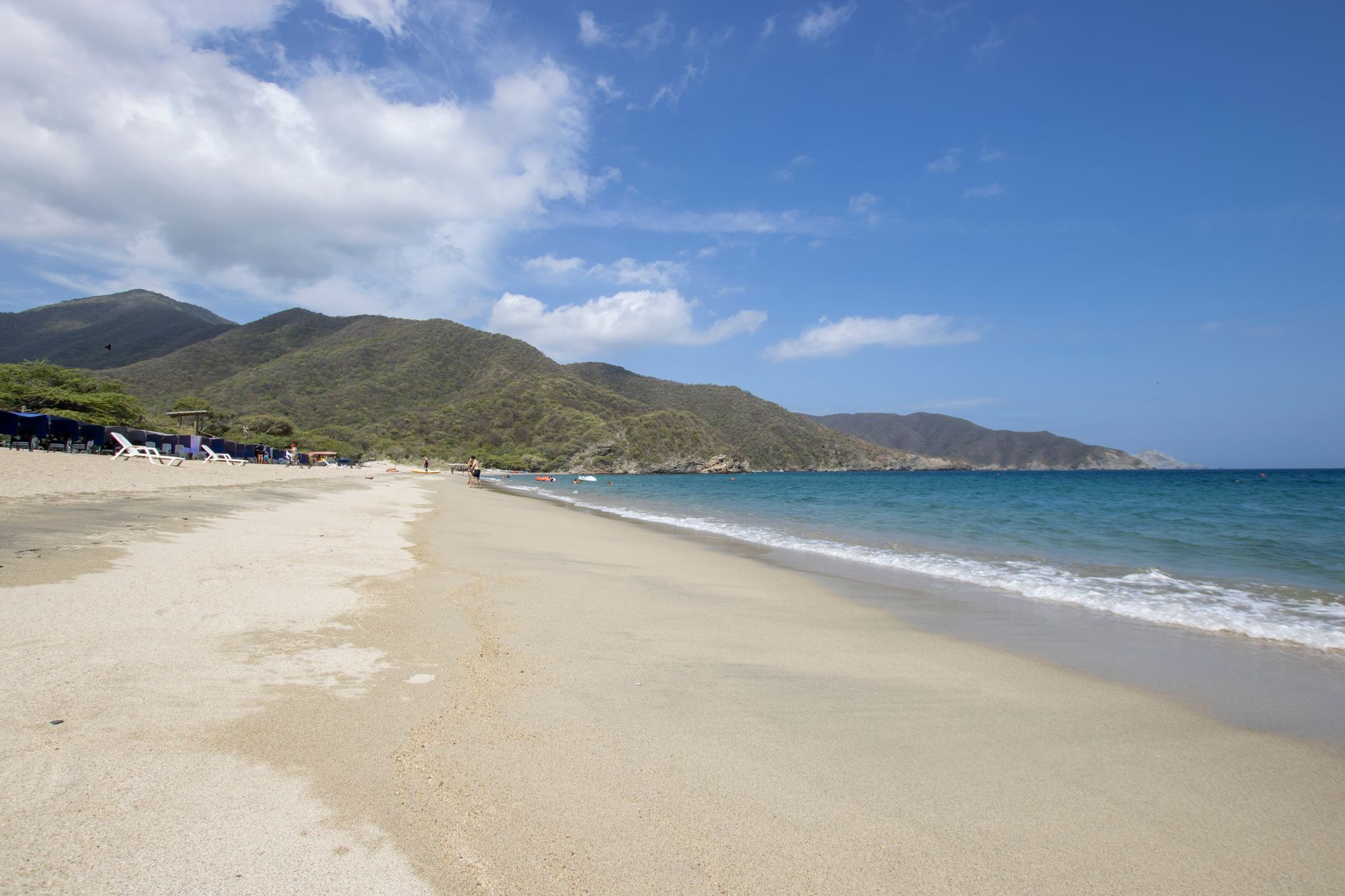
A low-density coastal village to the north, with open beach and very little high-rise building. Lots and houses dominate; towers are the exception. It lies along the coastal road toward Barranquilla, far from the centre and without full urban services.
- whether the property has its own registry folio or sits inside a larger parcel that was never subdivided
- whether there is certified utility availability, not merely a promise that services are coming
- whether the property lies in a coastal erosion risk zone, which is documented along this stretch
What to verify, step by step
- Request from the District the property tax statement and clearance certificate for the property in Punta Canoa, by its tax parcel number, before signing the promise of sale.
- Ask the District whether a betterment levy over the property has been assigned, decreed, or is in collection, because those are three different states and only one shows on the current account statement.
- Pull the cadastral record from IGAC and compare area, boundaries and economic use against the certificate of title. If they disagree, the assessment can change.
- Check the POT for the land use of the Punta Canoa polygon, since the use the cadastre records is what determines how the tax is assessed.
- Require the promise of sale to state who answers for debts predating the signing, and hold back part of the price until the clearances are in hand.
- If you will manage the property remotely, ask the District how billing is delivered and whether you can pay online from abroad.
Mistakes that cost money
- Believing the debt stays with the seller. Property tax and betterment levies follow the property, and the District bills whoever holds title now.
- Looking only at the current year's bill. A betterment levy that has been decreed but not yet invoiced does not show there, and shows up later.
- Accepting the cadastral value you are shown. Pull the record from IGAC yourself: in Punta Canoa the area on the certificate and the area in the cadastre do not always agree.
Frequently asked questions
- How much is property tax in Punta Canoa?
- We publish no rates. The District assesses it on IGAC's cadastral value, and it depends on the property's economic use. Request the statement by tax parcel number.
- What if the seller left property tax unpaid?
- The debt sits on the property, so the District bills you as the new owner. That is why the clearance certificate is requested before signing, not after.
- Is the betterment levy an one-off?
- It is a charge tied to a specific public work rather than an annual tax, but more than one work can affect the same property. The District is who states which have been decreed.
- Can I check and pay from outside Colombia?
- Ask the District: some procedures are online, but the scope changes and it is worth confirming before you commit to managing remotely.
Where to check it
- Alcaldía Mayor de Cartagena de Indias — property tax, betterment levies and District procedures
- Instituto Geográfico Agustín Codazzi — the cadastral record, area, boundaries and assessed value of the property
- Plan de Ordenamiento Territorial de Cartagena — land use, the rules applying to the property and protected land
- Superintendencia de Notariado y Registro — the certificate of title and encumbrances, which is the property's full history
- Ventanilla Única de Registro (VUR) — checking the registry folio online and ordering the certificate without visiting the office
- Cartagena de Indias — the rules of the municipality Punta Canoa belongs to
Official bodies. Specific figures are requested there, not copied from a listing.
Updated 2026-11-05
More about Punta Canoa
- Seasons and demand in Punta Canoa: how to ask for the data instead of believing it
- The reglamento de propiedad horizontal in Punta Canoa: why it governs inside the building
- Administration dues and the reserve fund in Punta Canoa: what they actually cover
- Zona de bajamar in Punta Canoa: why fenced lots on the shore cannot be sold
- Beach access in Punta Canoa: the right of way the seller shows you and the one that exists on the register
The same, in other neighbourhoods
- Property tax and betterment levies in Bocagrande: the debt that follows the property
- Property tax and betterment levies in Castillogrande: the debt that follows the property
- Property tax and betterment levies in Crespo: the debt that follows the property
- Property tax and betterment levies in El Laguito: the debt that follows the property
Interested in a property in this area?
Write to us and we will send you the available options.