Property tax and the betterment levy do not chase the seller: they stay attached to the property. In Castillogrande a buyer who does not request the District's clearance certificate before signing inherits the whole debt along with the deed.
Property tax is assessed on the cadastral value set by IGAC, not on what you paid, and the betterment levy is a separate charge the District imposes on properties benefited by public works. Both are obligations of the property itself, which is why an old debt gets billed to the new owner. In Castillogrande a further complication applies: if the property is poorly identified in the cadastre —area disagreeing with the certificate of title, a folio sitting inside a larger undivided parcel, or a land use other than the one being sold— the assessment can be corrected later and produce a retroactive charge nobody budgeted for. Check what this sector in particular requires: whether the property faces the bay or the open sea, because the swell, the smell and the façade upkeep are not comparable; what building height the rules allow on the lot, which is not uniform across the peninsula and is the first fact omitted when a lot is sold and how ground stability was addressed, given this is land reclaimed from the sea, and what the soil study for the building says. How much is payable is a matter for the District and IGAC, and they are who you ask.
In Castillogrande the typical deal is not a unit in a condominium but a house and its lot, which puts the weight of the file back on the chain of title to the land: you climb through the deeds to the parcelación, the original subdivision that created the block, because those platting deeds registered conditions, setbacks and easements that still bind and that are invisible from the street. There is no building manager to issue a paz y salvo, a no-arrears certificate, and no assembly to settle anything, so boundary questions with a neighbor are argued between private parties and what governs is the title and the survey, not a set of house rules. The counterparty is usually an old city family and, fairly often, a family company that owns the property: then you must decide whether to buy the real estate or the company's shares, two different transactions with different paperwork and different exposure, and request the certificado de existencia y representación, the corporate good-standing and signing-authority certificate, together with the resolution approving the sale. And because the neighborhood is fully built out, any construction is permitted on an already developed lot, with neighbors entitled to take part in the proceeding.
What is specific to Castillogrande
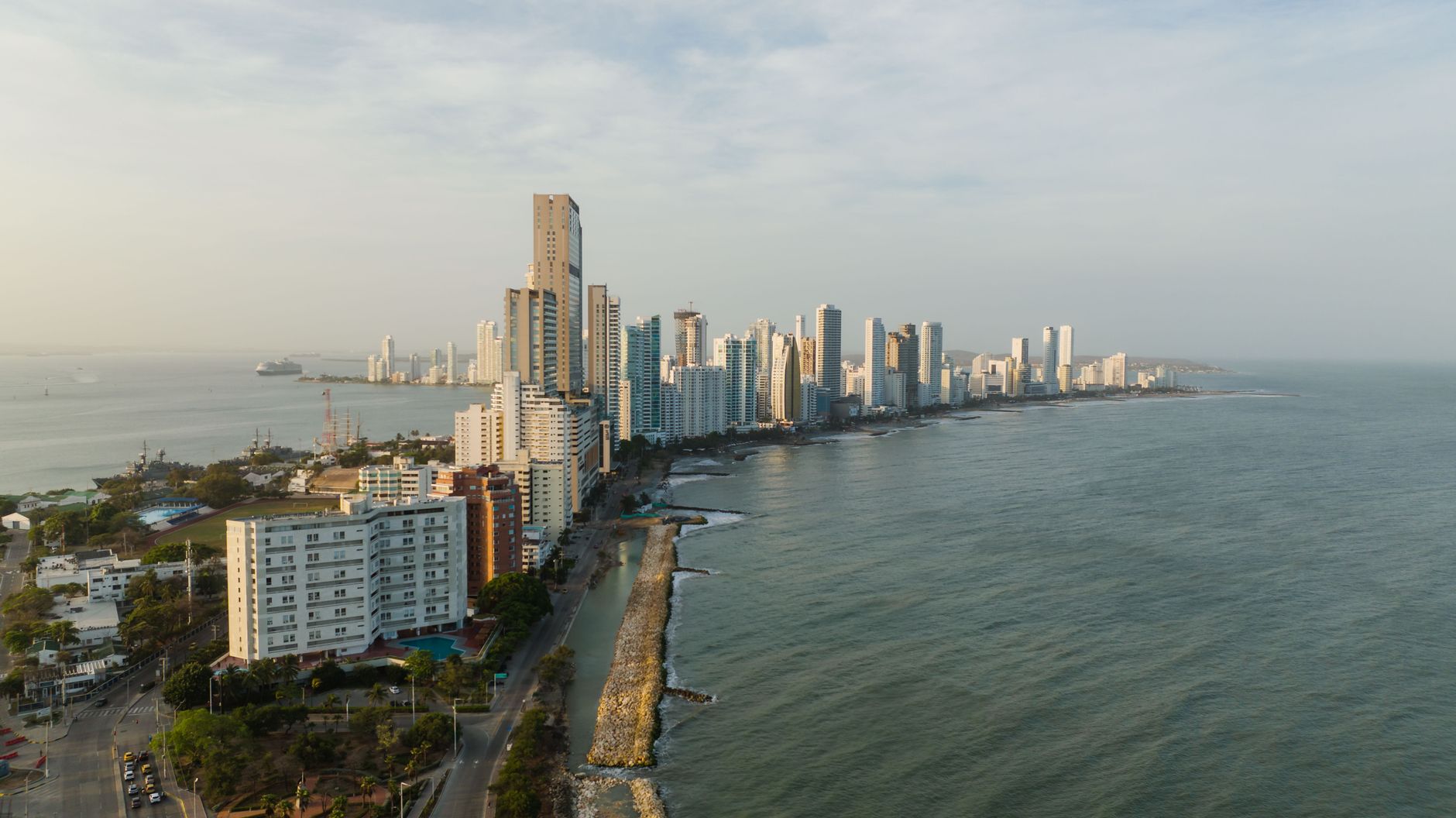
The residential tip of the peninsula: lower and quieter than Bocagrande, facing the bay, with little street retail. Houses and low-rise buildings sit alongside new towers, and single-family homes still exist. It is a dead end: access is through Bocagrande with no through road at the far tip, which keeps it free of passing traffic.
- whether the property faces the bay or the open sea, because the swell, the smell and the façade upkeep are not comparable
- what building height the rules allow on the lot, which is not uniform across the peninsula and is the first fact omitted when a lot is sold
- how ground stability was addressed, given this is land reclaimed from the sea, and what the soil study for the building says
What to verify, step by step
- Request from the District the property tax statement and clearance certificate for the property in Castillogrande, by its tax parcel number, before signing the promise of sale.
- Ask the District whether a betterment levy over the property has been assigned, decreed, or is in collection, because those are three different states and only one shows on the current account statement.
- Pull the cadastral record from IGAC and compare area, boundaries and economic use against the certificate of title. If they disagree, the assessment can change.
- Check the POT for the land use of the Castillogrande polygon, since the use the cadastre records is what determines how the tax is assessed.
- Require the promise of sale to state who answers for debts predating the signing, and hold back part of the price until the clearances are in hand.
- If you will manage the property remotely, ask the District how billing is delivered and whether you can pay online from abroad.
Mistakes that cost money
- Believing the debt stays with the seller. Property tax and betterment levies follow the property, and the District bills whoever holds title now.
- Looking only at the current year's bill. A betterment levy that has been decreed but not yet invoiced does not show there, and shows up later.
- Accepting the cadastral value you are shown. Pull the record from IGAC yourself: in Castillogrande the area on the certificate and the area in the cadastre do not always agree.
Frequently asked questions
- How much is property tax in Castillogrande?
- We publish no rates. The District assesses it on IGAC's cadastral value, and it depends on the property's economic use. Request the statement by tax parcel number.
- What if the seller left property tax unpaid?
- The debt sits on the property, so the District bills you as the new owner. That is why the clearance certificate is requested before signing, not after.
- Is the betterment levy an one-off?
- It is a charge tied to a specific public work rather than an annual tax, but more than one work can affect the same property. The District is who states which have been decreed.
- Can I check and pay from outside Colombia?
- Ask the District: some procedures are online, but the scope changes and it is worth confirming before you commit to managing remotely.
Where to check it
- Alcaldía Mayor de Cartagena de Indias — property tax, betterment levies and District procedures
- Instituto Geográfico Agustín Codazzi — the cadastral record, area, boundaries and assessed value of the property
- Plan de Ordenamiento Territorial de Cartagena — land use, the rules applying to the property and protected land
- Superintendencia de Notariado y Registro — the certificate of title and encumbrances, which is the property's full history
- Ventanilla Única de Registro (VUR) — checking the registry folio online and ordering the certificate without visiting the office
- Cartagena de Indias — the rules of the municipality Castillogrande belongs to
Official bodies. Specific figures are requested there, not copied from a listing.
Updated 2026-11-05
More about Castillogrande
- Seasons and demand in Castillogrande: how to ask for the data instead of believing it
- The reglamento de propiedad horizontal in Castillogrande: why it governs inside the building
- Administration dues and the reserve fund in Castillogrande: what they actually cover
- Zona de bajamar in Castillogrande: why fenced lots on the shore cannot be sold
- Beach access in Castillogrande: the right of way the seller shows you and the one that exists on the register
The same, in other neighbourhoods
- Property tax and betterment levies in Crespo: the debt that follows the property
- Property tax and betterment levies in El Laguito: the debt that follows the property
- Property tax and betterment levies in Barceloneta: the debt that follows the property
- Property tax and betterment levies in La Boquilla: the debt that follows the property
Interested in a property in this area?
Write to us and we will send you the available options.