In Bocagrande, wherever there is propiedad horizontal, the document that most governs daily use is not the deed: it is the reglamento, the bylaws of Colombia's condominium regime. It is registered, it binds every owner, and almost no foreign buyer reads it before signing the promise of sale.
The reglamento defines what is private and what is common property, what each unit may be used for, what may be altered on the façade, how the coeficientes de copropiedad (ownership coefficients) are allocated, which set both voting weight and dues. That decides money: bylaws restricting daily rentals change what the property can be used for. The actas de asamblea (owners' meeting minutes) are the other half of the story, because that is where later decisions live: approved works, extraordinary assessments, litigation and new restrictions. And where the sector is lots and standalone houses, with the tower as the exception, there are no bylaws to read and no manager to ask for minutes: what orders life between neighbours is the easements recorded on the folio, the land use the POT assigns and, for daily rentals, the registro nacional de turismo. That absence is not an advantage: it is a different set of documents.
Bocagrande works like a mature resale market, with consequences that do not repeat up north. The counterparty is almost never a builder: it is a long-standing owner or, very often, an unsettled sucesión, an estate proceeding, whose heirs live in different countries, so closing depends not on one power of attorney but on several, and on the partition among them. The registry record is old too: it was opened when the building was submitted to the condominium regime, it carries legacy entries such as cancelled mortgages, patrimonio de familia and afectación a vivienda familiar, both family-home protections, or lifted attachments, and the recorded area does not always match a current survey, so you compare the registry record against the deed and against the unit's floor plan. The peninsula is also land reclaimed from the sea under subdivisions the District authorized in their day, and the oldest deeds still carry references to those parcelaciones, the original platting. Day-to-day power sits with the owners' assembly and its manager, so in a tower with a long record of decisions the minutes and the status of the condominium's lawsuits matter more than the brochure.
What is specific to Bocagrande
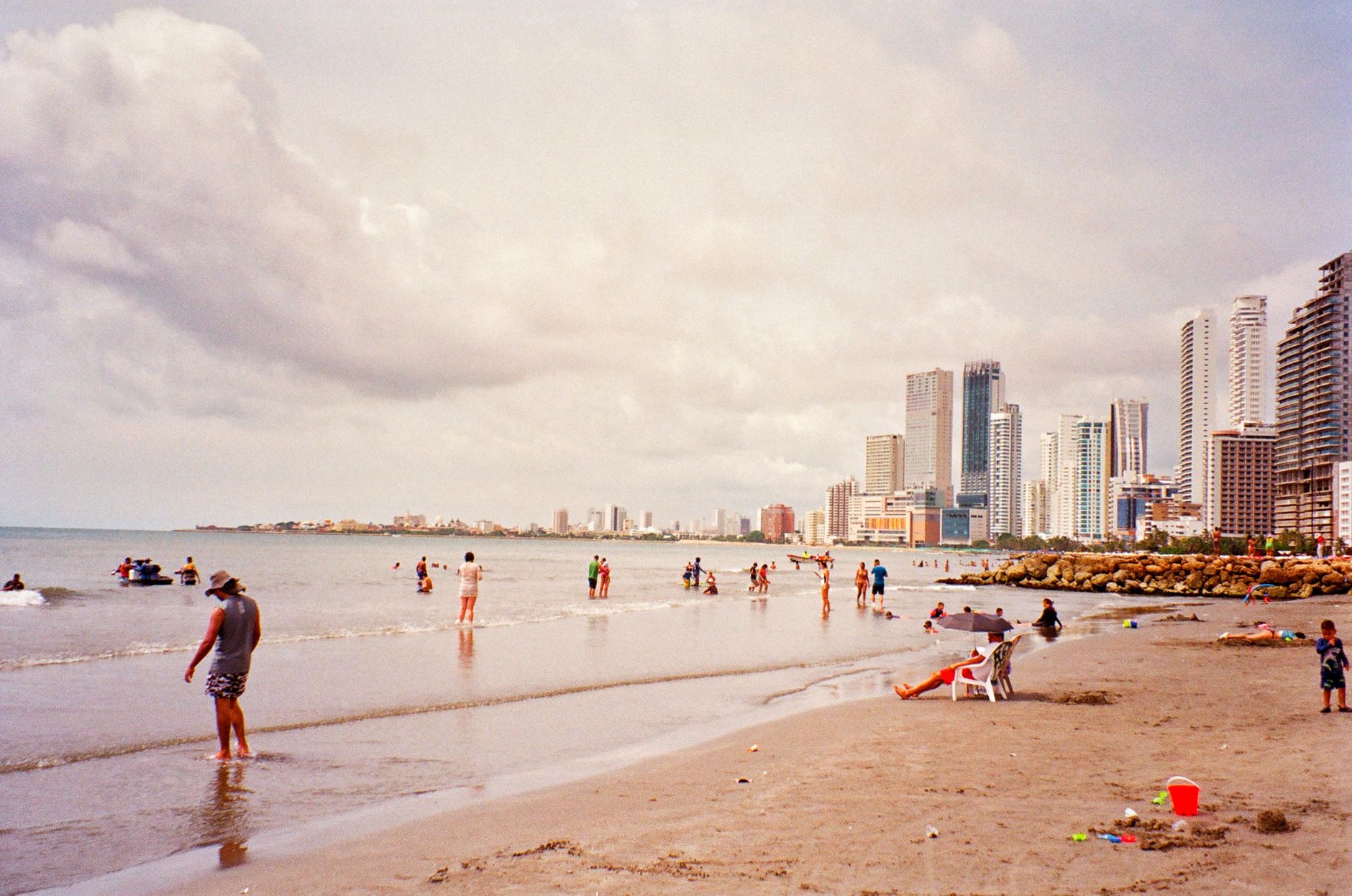
Cartagena's dense, vertical peninsula: open sea on one side, bay on the other, and built out to the last lot. Condominium towers from very different eras, from the sixties to recent construction, on the same block. Groceries, restaurants and beach are walkable, and access is through a few roads that saturate in high season.
- the building's actual age and whether it has a structural vulnerability study, since much of the stock was built under seismic codes earlier than those now in force
- what the condominium bylaws say about daily rentals, which on this peninsula is the difference between being able to rent and not
- how many parking spaces the unit holds in the deed, not in the brochure, because older towers do not have one per apartment
What to verify, step by step
- Request the registered reglamento in full, with its amendments, not the summary that circulates by email; it can be reviewed from abroad. Read the chapter on permitted use of private units, then the one on penalties: the second tells you what happens if you breach the first.
- Request the last few years of actas de asamblea, including extraordinary meetings, and flag approved assessments, pending works and litigation involving the copropiedad.
- Check the unit's coeficiente de copropiedad and compare it against the deed and against what the manager bills.
- Ask the manager for a certificate that the unit is current on its dues, because the debt follows the property, not the seller; where there is no condominium regime, ask the registry for the recorded easements.
- Set what the bylaws permit against what the POT permits in Bocagrande: either restriction alone can close off an use, and they are checked separately.
- Verify as well what this sector in particular demands, because neither the bylaws nor the POT cover it: the building's actual age and whether it has a structural vulnerability study, since much of the stock was built under seismic codes earlier than those now in force; what the condominium bylaws say about daily rentals, which on this peninsula is the difference between being able to rent and not and how many parking spaces the unit holds in the deed, not in the brochure, because older towers do not have one per apartment.
Mistakes that cost money
- Reading the bylaws and not the minutes. The bylaws state the original rule; the minutes state what the assembly decided afterwards, and that is usually where recent restrictions on daily rentals sit.
- Buying without requesting the unit's account statement. Unpaid dues are charged against the property, and the new owner inherits them.
- Assuming one Bocagrande building's bylaws apply to the one next door. They differ even between towers in the same complex, and where none exists there is no common rule to invoke against a neighbour.
Frequently asked questions
- Can the bylaws forbid something the law allows?
- Inside the building they govern the use of private units, which is why you read them before buying. How far a particular clause reaches in your case is for a lawyer who reads it to say, not an article.
- Can I request the bylaws and minutes from outside Colombia?
- Yes: the reglamento is registered and the manager provides the minutes. Ask in writing, and before the promise of sale rather than after.
- What if the property in Bocagrande sits under no condominium regime?
- That is the likely case where the tower is the exception. There are no bylaws, no assembly, no dues and nobody answering for common areas: their place is taken by the easements recorded on the folio and the land use the POT assigns. Order the certificate of title.
Where to check it
- Superintendencia de Notariado y Registro — the certificate of title and encumbrances, which is the property's full history
- Ventanilla Única de Registro (VUR) — checking the registry folio online and ordering the certificate without visiting the office
- Plan de Ordenamiento Territorial de Cartagena — land use, the rules applying to the property and protected land
- Alcaldía Mayor de Cartagena de Indias — property tax, betterment levies and District procedures
- Registro Nacional de Turismo — whether a property may legally be used for tourist accommodation and who has registered it
- Cartagena de Indias — the rules of the municipality Bocagrande belongs to
Official bodies. Specific figures are requested there, not copied from a listing.
Updated 2026-11-05
More about Bocagrande
- Administration dues and the reserve fund in Bocagrande: what they actually cover
- Zona de bajamar in Bocagrande: why fenced lots on the shore cannot be sold
- Beach access in Bocagrande: the right of way the seller shows you and the one that exists on the register
- Coastal erosion in Bocagrande: where the data lives and what it means for building on the front row
- Mangrove, ronda hídrica and wetland in Bocagrande: why a protected lot does not develop like the rest
The same, in other neighbourhoods
- The reglamento de propiedad horizontal in Castillogrande: why it governs inside the building
- The reglamento de propiedad horizontal in Crespo: why it governs inside the building
- The reglamento de propiedad horizontal in El Laguito: why it governs inside the building
- The reglamento de propiedad horizontal in Barceloneta: why it governs inside the building
Interested in a property in this area?
Write to us and we will send you the available options.