An avalúo comercial —a signed appraisal report— is not an opinion about price: it is a document a licensed perito avaluador stands behind. Before any money moves, find out who prepared it, by what method and for whom, because the appraisal the lender orders and the one the seller shows you are two different documents.
The method follows the nature of the property, which is why the appraisal of an off-plan new construction is not assembled like any other. Where comparable units exist in the same sector the perito works by market comparison; where the subject is undeveloped land or a property with no close referents, the residual and replacement-cost methods appear, and those rest on planning and construction assumptions a buyer can read and challenge. On top of that sits a common confusion: the avalúo catastral published by IGAC —the assessed value— is the base for the impuesto predial, the property tax, and never claims to be market value. And an appraisal commissioned by a lender exists to measure that lender's own collateral, under prudential criteria that are not the buyer's. All of it decides money: how much the bank advances, how much the seller asks, and what ends up written in the deed.
Off-plan new construction is bought differently because at signing the property does not yet exist: what exists is a project, a permit and a company that has to stay standing until delivery. The document, not the apartment, is therefore what gets reviewed. The first thing that changes is the path of the money: instalments are paid into a patrimonio autónomo —a trust estate— administered by a fiduciaria rather than into the builder's own account, and it is worth knowing what conditions must be met before those funds are released to the works. The second is that what you sign may be a promesa de compraventa, a binding promise of sale, or only an encargo fiduciario, a trust deposit instruction; they do not bind alike and do not unwind alike, and what happens if the project never starts depends on which one it is. The third is that the unit's identity rests on a plan that allows adjustment, so read which tolerances and specification changes the seller reserved and how the buyer is told of them. The fourth, for a buyer abroad, is duration: every transfer has to be documented and someone has to be empowered to sign and take delivery years later.
In Castillogrande the typical deal is not a unit in a condominium but a house and its lot, which puts the weight of the file back on the chain of title to the land: you climb through the deeds to the parcelación, the original subdivision that created the block, because those platting deeds registered conditions, setbacks and easements that still bind and that are invisible from the street. There is no building manager to issue a paz y salvo, a no-arrears certificate, and no assembly to settle anything, so boundary questions with a neighbor are argued between private parties and what governs is the title and the survey, not a set of house rules. The counterparty is usually an old city family and, fairly often, a family company that owns the property: then you must decide whether to buy the real estate or the company's shares, two different transactions with different paperwork and different exposure, and request the certificado de existencia y representación, the corporate good-standing and signing-authority certificate, together with the resolution approving the sale. And because the neighborhood is fully built out, any construction is permitted on an already developed lot, with neighbors entitled to take part in the proceeding.
What is specific to Castillogrande
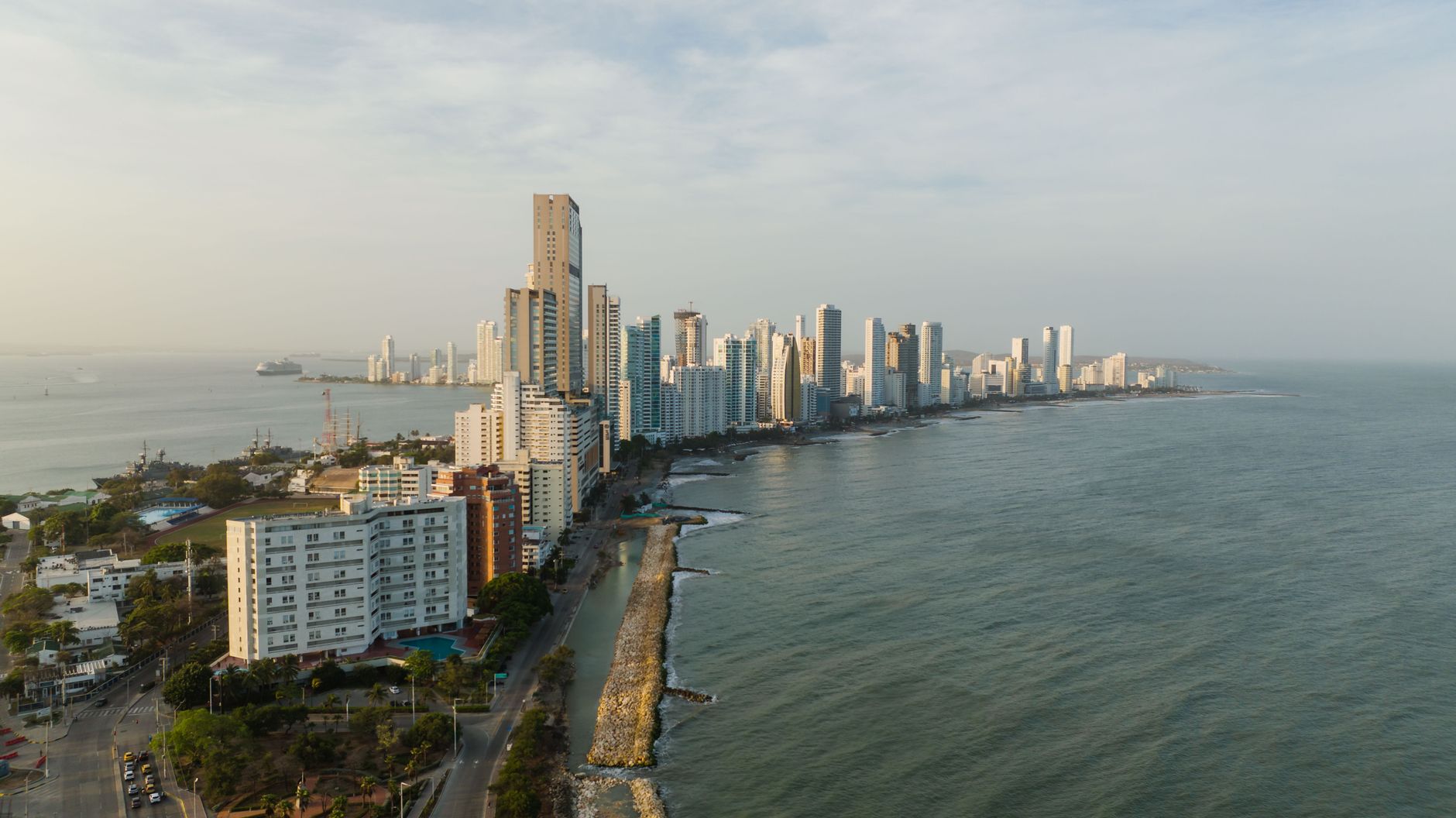
The residential tip of the peninsula: lower and quieter than Bocagrande, facing the bay, with little street retail. Houses and low-rise buildings sit alongside new towers, and single-family homes still exist. It is a dead end: access is through Bocagrande with no through road at the far tip, which keeps it free of passing traffic.
- whether the property faces the bay or the open sea, because the swell, the smell and the façade upkeep are not comparable
- what building height the rules allow on the lot, which is not uniform across the peninsula and is the first fact omitted when a lot is sold
- how ground stability was addressed, given this is land reclaimed from the sea, and what the soil study for the building says
What to verify, step by step
- Ask for the complete appraisal report rather than the summary page: it has to name the signer, the perito's registration, the date and the method used.
- Check the appraiser against the open register kept by the Lonja de Propiedad Raíz de Bolívar, which can be consulted from abroad.
- Compare the area, boundaries and identification of the property in the appraisal against the IGAC cadastral record and the certificado de tradición y libertad, the registry history of the property.
- Go through the items specific to off-plan new constructions that the appraiser should have had in front of him: which patrimonio autónomo (the trust estate holding buyers' funds) the instalments are paid into and which fiduciaria administers it, because the money should not reach the builder's own account; whether the licencia de construcción has actually been issued or the project is still in prelanzamiento, and what punto de equilibrio (the pre-sale threshold) must be met before building starts and what the signed document says about the return of funds if that threshold is never met, and whether you signed a promesa de compraventa or only an encargo fiduciario (a trust deposit instruction).
- Add what the sector itself forces you to check in Castillogrande: whether the property faces the bay or the open sea, because the swell, the smell and the façade upkeep are not comparable; what building height the rules allow on the lot, which is not uniform across the peninsula and is the first fact omitted when a lot is sold and how ground stability was addressed, given this is land reclaimed from the sea, and what the soil study for the building says.
- If there will be a mortgage, ask the lender which appraisal it requires and confirm with the Superintendencia Financiera that the institution is supervised before handing over documents or funds.
Mistakes that cost money
- Treating the seller's appraisal as neutral. The seller paid for it and it was written to support the asking figure; still ask for it, but read who commissioned it.
- Asking the appraiser for a number instead of the report. What lets you argue about value are the assumptions and the comparables, not the conclusion.
- Assuming the appraisal replaces a title search. The perito values the property; he does not establish who may sell it.
Frequently asked questions
- Can I commission my own appraisal of an off-plan new construction without being in Cartagena?
- Yes. The perito needs access to the property and its documents, not the buyer's presence; the signed report can be delivered by email.
- Why is the lender's appraisal below the asking price?
- Because it measures the institution's collateral, not the negotiation between the parties. They are two documents with different purposes and it is worth having both.
- Is the avalúo catastral useful for negotiating?
- It is useful for understanding the base of the impuesto predial, which is what IGAC and the District publish. For market value you order an appraisal from a registered perito.
Where to check it
- Lonja de Propiedad Raíz de Bolívar — commercial appraisals and appraisers listed on the open register
- Instituto Geográfico Agustín Codazzi — the cadastral record, area, boundaries and assessed value of the property
- Superintendencia Financiera de Colombia — whether a trust company exists and is supervised, before transferring money to a patrimonio autónomo
- Cartagena de Indias — the rules of the municipality Castillogrande belongs to
Official bodies. Specific figures are requested there, not copied from a listing.
Updated 2026-11-06
Interested in a property in this area?
Write to us and we will send you the available options.