Almost every buyer arrives with a remodel in mind, and for a dúplex (two-level unit) that remodel goes through two separate doors that get confused constantly: the copropiedad and the curaduría urbana. The work the seller already did matters too, because an unauthorised alteration passes to whoever buys.
The curaduría urbana is the body that issues construction permits and their variants, and what it requires depends on whether the work touches structure, façade, built area or only finishes. The copropiedad issues no permits: it authorises —or refuses— work on common property, sets how the job runs inside the building, and answers for what the reglamento says about façade and enclosures. The two doors are cumulative, and neither replaces the other. For a dúplex (two-level unit), the split between what may be touched and what may not is written in the deed and the reglamento, not on the seller's drawing. In a resale there is a prior question: whether what stands matches the approved plans, because work done without a permit where one was required can surface in a Distrito inspection and complicate a later filing. Which permit variant fits your remodel is for the curaduría to define, and what the copropiedad allows is for the asamblea.
A dúplex is bought differently because what you see and what is recorded may not be the same thing. Two levels joined by an internal staircase are lived in as one home, yet the registry may still see two: two matrículas inmobiliarias (registry folios), two ownership shares, two chains of title and two separate arrears accounts with the building. That gap between the physical thing and the legal thing organizes the entire purchase. If there are two folios, you are really signing two acquisitions that end up tied in fact but not in law, and each one can be taxed, mortgaged, attached and sold on its own, so a future buyer may find half a home on offer. If there is a single folio, you need to know when and how the merger happened, because joining units is an amendment to the reglamento and not merely building work. What gets examined here, then, is the identity of the property before its condition: how the unit came into being, which document recognizes it, and whether the copropiedad was ever told. For a buyer abroad, each folio may also carry its own paperwork and its own power of attorney.
In Castillogrande the typical deal is not a unit in a condominium but a house and its lot, which puts the weight of the file back on the chain of title to the land: you climb through the deeds to the parcelación, the original subdivision that created the block, because those platting deeds registered conditions, setbacks and easements that still bind and that are invisible from the street. There is no building manager to issue a paz y salvo, a no-arrears certificate, and no assembly to settle anything, so boundary questions with a neighbor are argued between private parties and what governs is the title and the survey, not a set of house rules. The counterparty is usually an old city family and, fairly often, a family company that owns the property: then you must decide whether to buy the real estate or the company's shares, two different transactions with different paperwork and different exposure, and request the certificado de existencia y representación, the corporate good-standing and signing-authority certificate, together with the resolution approving the sale. And because the neighborhood is fully built out, any construction is permitted on an already developed lot, with neighbors entitled to take part in the proceeding.
What is specific to Castillogrande
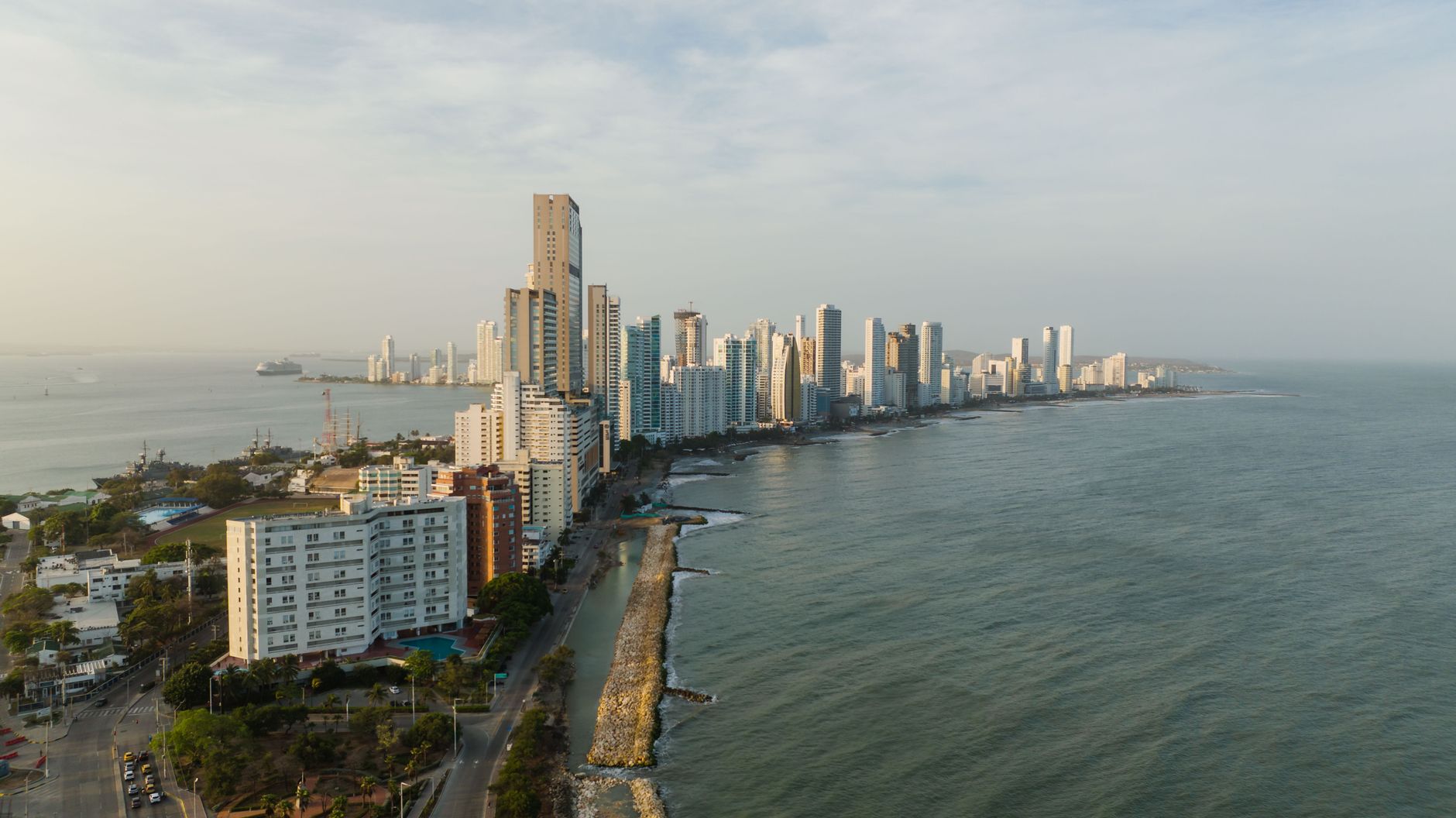
The residential tip of the peninsula: lower and quieter than Bocagrande, facing the bay, with little street retail. Houses and low-rise buildings sit alongside new towers, and single-family homes still exist. It is a dead end: access is through Bocagrande with no through road at the far tip, which keeps it free of passing traffic.
- whether the property faces the bay or the open sea, because the swell, the smell and the façade upkeep are not comparable
- what building height the rules allow on the lot, which is not uniform across the peninsula and is the first fact omitted when a lot is sold
- how ground stability was addressed, given this is land reclaimed from the sea, and what the soil study for the building says
What to verify, step by step
- Describe the remodel in writing —what is touched, what is opened, what is closed— and ask the curaduría urbana which permit variant or filing applies to that work on that property.
- Request the original licencia de construcción with its approved drawings and compare what was approved against what stands today.
- Ask the administrador for the recorded reglamento and the minutes, and read which works require asamblea authorisation and under what conditions work may run inside the building.
- Check what belongs to a dúplex (two-level unit) itself and decides what may be altered: whether both levels sit on a single matrícula inmobiliaria (registry folio) or on two, since that decides whether it conveys as one property or as two; whether the internal staircase appears on the plans approved with the licencia de construcción or was cut later to join two units and how the coeficiente de copropiedad was restated after the merger, because if the reglamento was never amended the dues may still be billed twice.
- Ask the Oficina de Registro whether there are entries about alterations, mergers or subdivisions of the folio, and ask the Alcaldía whether any administrative proceeding is open over unpermitted work at the property.
- Have the promesa state what happens if unauthorised work turns up and who answers for regularising it, because after closing the Distrito's counterpart is the new owner.
Mistakes that cost money
- Believing the administrador's permission replaces the permit. The administrador issues no permits, and the curaduría does not read the reglamento.
- Buying with the work already done and never asking for the approved drawings. Extra construction does not show on the certificado de tradición y libertad, and it surfaces the next time something is filed.
- Treating bien común de uso exclusivo as if it were área privada. Terrace, façade and assigned patio often belong to someone other than whoever uses them daily.
Frequently asked questions
- Who issues the permit to remodel?
- The curaduría urbana, under whichever variant matches the work. The copropiedad authorises what touches common property and sets how the job runs, but it issues no permit.
- What if the seller already remodelled without a permit?
- That risk is identified by comparing the approved drawings against what stands and asking the Alcaldía whether any proceeding is open. What route to regularisation exists is for the curaduría and your attorney to say.
- Can the filing be advanced without being in Cartagena?
- The preliminary enquiry and the application can be handled by a professional in the city, and the owner's signature is given by power of attorney. Which power the filing requires is confirmed by the curaduría.
Where to check it
- Curadurías Urbanas de Cartagena — whether a current building or subdivision permit exists and exactly what it authorises
- Alcaldía Mayor de Cartagena de Indias — property tax, betterment levies and District procedures
- Superintendencia de Notariado y Registro — the certificate of title and encumbrances, which is the property's full history
- Cartagena de Indias — the rules of the municipality Castillogrande belongs to
Official bodies. Specific figures are requested there, not copied from a listing.
Updated 2026-11-06
Interested in a property in this area?
Write to us and we will send you the available options.