A property in Colombia can carry tax consequences in two countries at once, and neither is settled at the sales office. What follows are not answers: they are the questions a Colombian living abroad needs settled before signing, and who to put them to.
We do not state here which countries have a treaty with Colombia, nor what anyone is required to declare, and the reason is practical: those lists and rules get amended, and one wrong assertion would repeat across every page. What can be set out is how the problem is built. There are two tax administrations with their own rules; there are two moments treated differently —holding the property, with its rental income, and selling it, with its ganancia ocasional (the gain taxed on sale)— and there is a personal condition, tax residence, which is not chosen but determined by rules and which changes what is withheld and what is filed. The DIAN is the authority on the Colombian side; the other side needs an accountant in that country; and the Cancillería explains the apostille of the certificates each administration will ask the other for. The seller substitutes for none of those three conversations.
This is the case apart. You need no visa and no cédula de extranjería, because your document is the Colombian cédula, and that is exactly what gets neglected: check that the cédula is current and that its details match the registry, because an unrecorded change of marital status or surname stops the deed. The money, though, does come from abroad, so the transfer enters through the regulated exchange market with its declaración de cambio like anyone else's, and if you are not a Colombian tax resident that inflow may have to be registered as foreign investment with the Banco de la República: they are who to ask whether your particular case requires it. What really changes is how you file. Tax residence is not chosen, it is determined by rules, and not being a Colombian tax resident alters what is withheld from you and what you report to the DIAN, both on rent and on sale. For signing from abroad, the Colombian consulate where you live grants the poder. And the tax question is whether a treaty exists between Colombia and the country where you live and what it says about rental income and about ganancia ocasional, with an accountant in each country.
In Castillogrande the typical deal is not a unit in a condominium but a house and its lot, which puts the weight of the file back on the chain of title to the land: you climb through the deeds to the parcelación, the original subdivision that created the block, because those platting deeds registered conditions, setbacks and easements that still bind and that are invisible from the street. There is no building manager to issue a paz y salvo, a no-arrears certificate, and no assembly to settle anything, so boundary questions with a neighbor are argued between private parties and what governs is the title and the survey, not a set of house rules. The counterparty is usually an old city family and, fairly often, a family company that owns the property: then you must decide whether to buy the real estate or the company's shares, two different transactions with different paperwork and different exposure, and request the certificado de existencia y representación, the corporate good-standing and signing-authority certificate, together with the resolution approving the sale. And because the neighborhood is fully built out, any construction is permitted on an already developed lot, with neighbors entitled to take part in the proceeding.
What is specific to Castillogrande
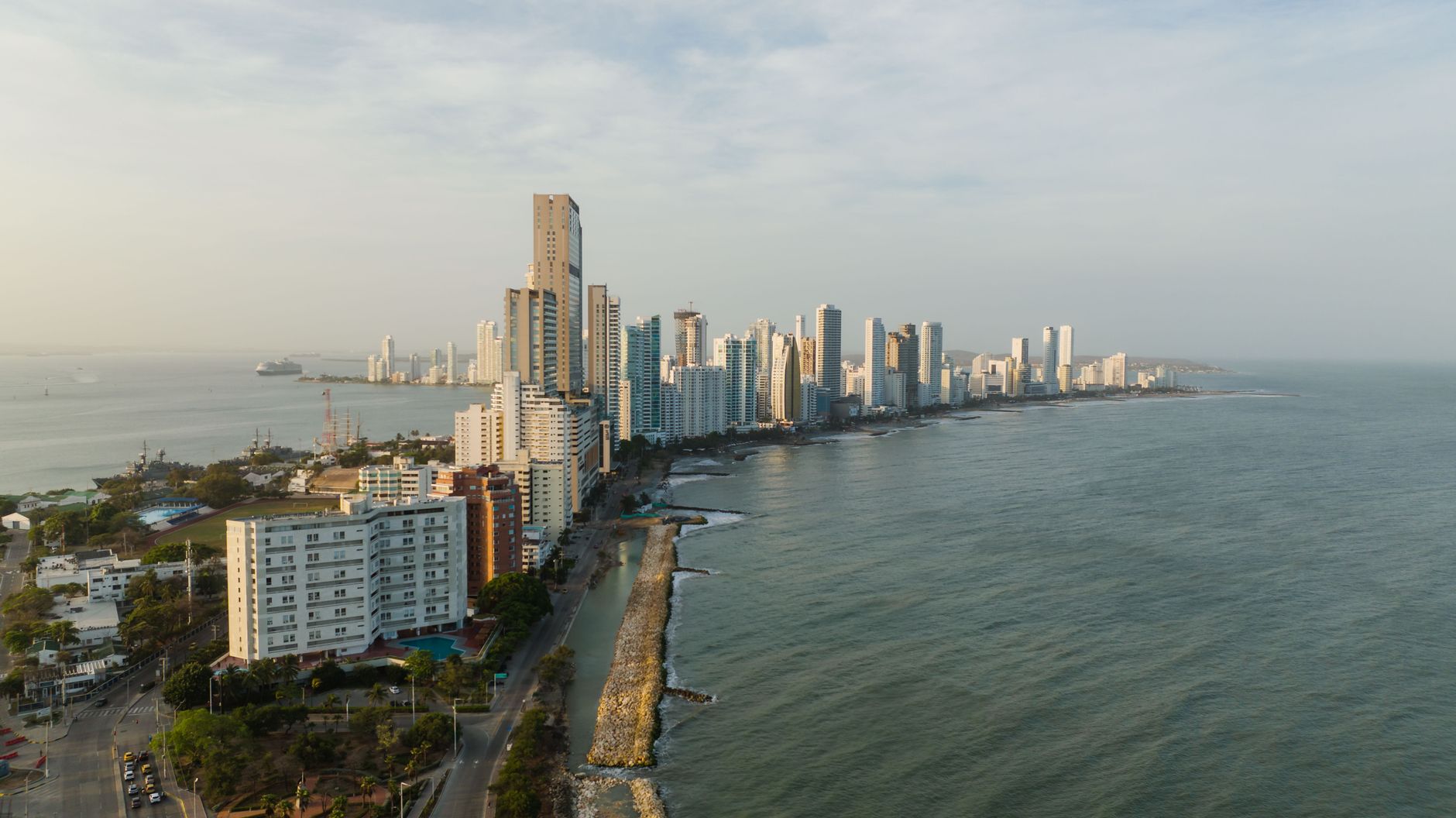
The residential tip of the peninsula: lower and quieter than Bocagrande, facing the bay, with little street retail. Houses and low-rise buildings sit alongside new towers, and single-family homes still exist. It is a dead end: access is through Bocagrande with no through road at the far tip, which keeps it free of passing traffic.
- whether the property faces the bay or the open sea, because the swell, the smell and the façade upkeep are not comparable
- what building height the rules allow on the lot, which is not uniform across the peninsula and is the first fact omitted when a lot is sold
- how ground stability was addressed, given this is land reclaimed from the sea, and what the soil study for the building says
What to verify, step by step
- Ask the DIAN, about your own case, how tax residence is determined, what is reported in Colombia for holding the property and what is reported on its sale, and which withholdings apply to someone who is not a tax resident.
- The questions a Colombian living abroad has to settle before closing: that your Colombian cédula is current and its details match the registry, including any change of marital status or surname; whether in your particular case the transfer must be registered as foreign investment with the Banco de la República, and whether or not you are a Colombian tax resident for DIAN purposes and whether a treaty exists between Colombia and the country where you live, and what it says about rental income and about ganancia ocasional, with an accountant in each country.
- Take those same questions to an accountant in your own country and ask in writing whether a treaty exists between Colombia and that country and, if it does, what it says about rental income and about ganancia ocasional. That answer is theirs to give, not the DIAN's and not ours.
- Ask the Cancillería which tax-residence certificates and which documents need an apostille or legalisation for one administration to accept them from the other.
- Before transferring, confirm with the Banco de la República how the investment ends up registered, because the exchange registration is what later supports moving funds out, and the tax question is asked on that basis.
- Decide with your accountant, before the promesa and not after, whether you buy personally or through a company, because the titleholder does not change without another deed.
Mistakes that cost money
- Asking about tax after signing. The structure of the purchase is decided beforehand, and it is the only part still open to choice.
- Assuming a treaty exists because someone said so in a buyers' group. Whether one exists, and what it says, is confirmed in writing by an accountant in each country.
- Believing that if tax was withheld in Colombia there is nothing left to do at home. There are two administrations and two separate filings; how they interact is exactly the question to settle.
Frequently asked questions
- Is there a treaty between Colombia and my country?
- We neither assert nor deny it here: the list is amended and a stale answer would cost you money. Ask the DIAN and an accountant in your own country, and get the answer in writing.
- Will I pay twice on the same thing?
- That is the right question and it has no general answer: it depends on your tax residence, on each country's rules and on whether a treaty exists. It is the conversation to have with an accountant in each country before signing.
- Can a Colombian living abroad handle this without an accountant?
- The DIAN explains the Colombian side, but neither administration resolves the combination of the two for you. That is what the accountant in each country is for.
Where to check it
- DIAN — the tax ID, withholding on sale and the capital gains tax
- Cancillería de Colombia — current visa requirements and the apostille of foreign documents
- Banco de la República — registration of foreign investment and the official exchange rate
- Cartagena de Indias — the rules of the municipality Castillogrande belongs to
Official bodies. Specific figures are requested there, not copied from a listing.
Updated 2026-11-06
Interested in a property in this area?
Write to us and we will send you the available options.