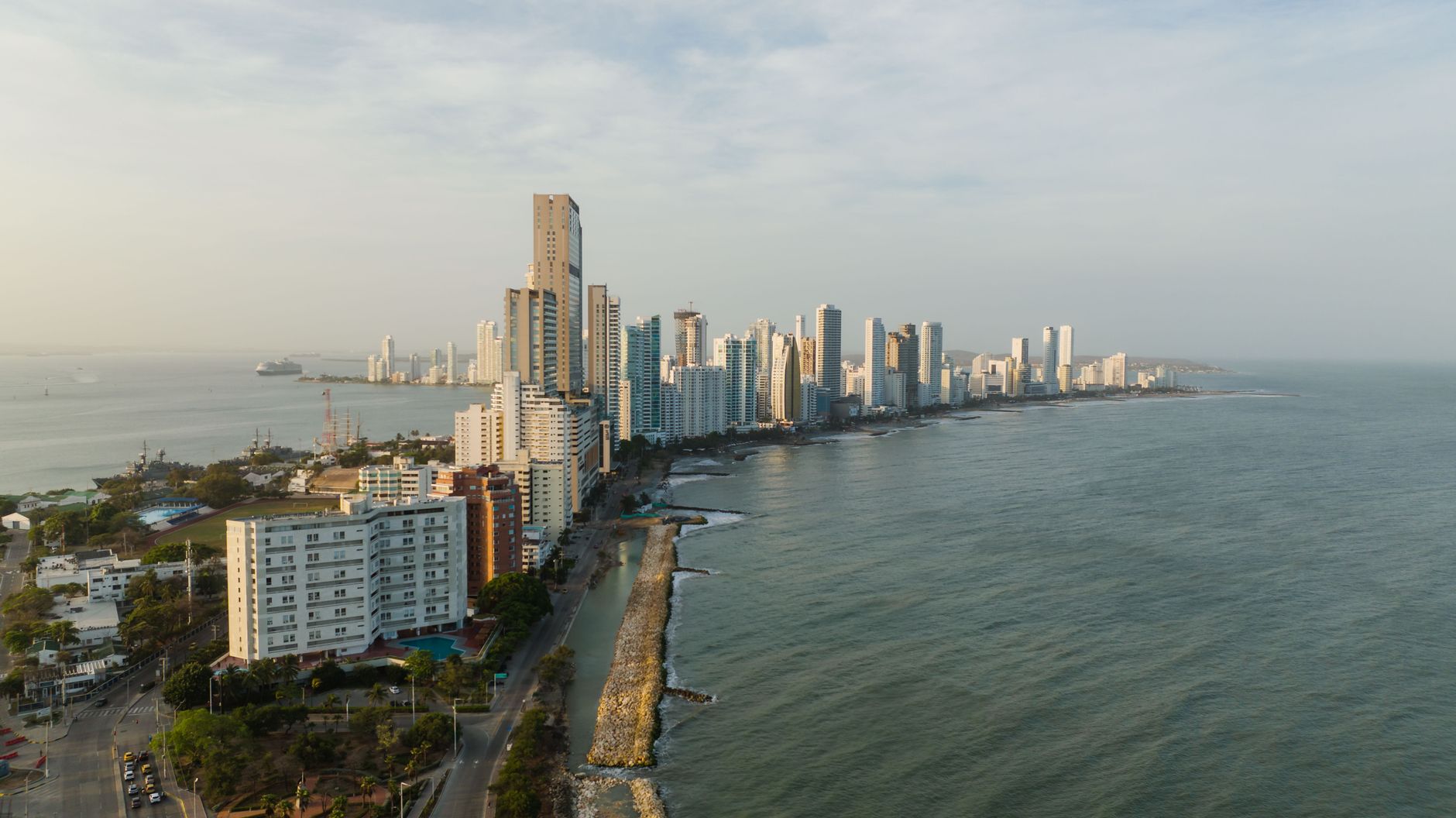
Along this coast the ground is sand, fill and a high water table, and the foundation is the one part of a property you cannot see and cannot fix cheaply. The estudio de suelos —the geotechnical report— is the document that speaks to it, and what you should ask for depends on what you are buying.
A geotechnical engineer prepares the estudio de suelos with borings and laboratory testing, and it feeds the structural design filed with the licencia de construcción, the building permit. For an aparta-estudio (studio unit) that turns into different questions: asking for the report that will support work not yet built is not the same as asking for the one that supported a building put up years ago. The report states what the exploration found and what foundation the engineer recommended; it does not certify that the work was built to that recommendation, it does not replace the environmental permit where mangrove, a water setback or a ciénaga is involved, and it does not assert that the property is sound today. Where no report exists, what remains is rebuilding the file: approved drawings, the filed permit, and the history of repairs the owners' association has voted.
An aparta-estudio, a single-room studio unit, is bought differently because it is the smallest unit in the tower, and that has consequences the floor plan does not show. Its coeficiente de copropiedad, the ownership share, is low, so its weight at the asamblea is low too; and in buildings made of identical units, decisions fall to whoever can assemble a crowd of small owners. Meanwhile several building costs are not shared by size but by occupancy: lifts, front desk, lobby, water, waste and wear on common areas all track how many people come and go, and a studio generates as much turnover as a large unit while contributing a far smaller share. The second consequence is the market. These units are bought almost entirely to rent out, so what the reglamento says about renting by the day is not a detail of use but a feature of the asset, since it defines who you can resell to. The third is physical: in a single room, kitchen, bathroom and ventilation share walls with neighbors, so whatever the copropiedad resolved about noise, extraction and quiet hours weighs more here than in a conventional apartment.
In Castillogrande the typical deal is not a unit in a condominium but a house and its lot, which puts the weight of the file back on the chain of title to the land: you climb through the deeds to the parcelación, the original subdivision that created the block, because those platting deeds registered conditions, setbacks and easements that still bind and that are invisible from the street. There is no building manager to issue a paz y salvo, a no-arrears certificate, and no assembly to settle anything, so boundary questions with a neighbor are argued between private parties and what governs is the title and the survey, not a set of house rules. The counterparty is usually an old city family and, fairly often, a family company that owns the property: then you must decide whether to buy the real estate or the company's shares, two different transactions with different paperwork and different exposure, and request the certificado de existencia y representación, the corporate good-standing and signing-authority certificate, together with the resolution approving the sale. And because the neighborhood is fully built out, any construction is permitted on an already developed lot, with neighbors entitled to take part in the proceeding.
What is specific to Castillogrande
The residential tip of the peninsula: lower and quieter than Bocagrande, facing the bay, with little street retail. Houses and low-rise buildings sit alongside new towers, and single-family homes still exist. It is a dead end: access is through Bocagrande with no through road at the far tip, which keeps it free of passing traffic.
- whether the property faces the bay or the open sea, because the swell, the smell and the façade upkeep are not comparable
- what building height the rules allow on the lot, which is not uniform across the peninsula and is the first fact omitted when a lot is sold
- how ground stability was addressed, given this is land reclaimed from the sea, and what the soil study for the building says
What to verify, step by step
- Ask who signed the estudio de suelos and request the full report with its boring logs, not the cover sheet.
- Confirm with the curaduría urbana —the private office that issues building permits— whether that report is in the permit file, and whether the approved drawings match what stands on site.
- Ask Cardique whether the land is affected by mangrove, a water setback or a ciénaga, since that governs what can be founded there.
- Review what belongs to aparta-estudio units and is not covered by the report alone: whether the reglamento de propiedad horizontal allows daily rentals, since this is the unit type most often bought for exactly that and the ban never shows up in the brochure; whether the deed places kitchen and bathroom inside the área privada rather than treating them as shared services that cannot later be enclosed and how many identical units the tower holds, and what the administración rules about lift and lobby use by short-stay guests.
- Add what the ground in Castillogrande imposes: whether the property faces the bay or the open sea, because the swell, the smell and the façade upkeep are not comparable; what building height the rules allow on the lot, which is not uniform across the peninsula and is the first fact omitted when a lot is sold and how ground stability was addressed, given this is land reclaimed from the sea, and what the soil study for the building says.
- If no report exists because the building is old, commission an engineer to assess its present condition and ask the District for whatever risk information it holds on the property.
Mistakes that cost money
- Accepting the neighbouring lot's report. Exploration is site-specific, and in coastal fill it changes from one property to the next.
- Reading the report as a certificate that the building was properly built. It records what the engineer recommended, not what the builder did.
- Buying with a visible crack and a verbal promise that the administración will repair it. What counts is the minute in which the owners voted the work and how it is paid for.
Frequently asked questions
- Can the soil study for an aparta-estudio (studio unit) be sent to me by email?
- Yes, it is a file and can be reviewed from abroad. The person who has to read it with judgement is an engineer, not the broker.
- What if the seller says the report was lost?
- Ask the curaduría for the permit file, where it was filed, and in parallel order an assessment of present condition.
- Does the soil study cover beach erosion?
- No. That is a separate question, put to the environmental and maritime authorities rather than to the geotechnical engineer.
Where to check it
- Curadurías Urbanas de Cartagena — whether a current building or subdivision permit exists and exactly what it authorises
- Cardique, autoridad ambiental del Canal del Dique — environmental permits, water setbacks and mangrove or wetland constraints
- Alcaldía Mayor de Cartagena de Indias — property tax, betterment levies and District procedures
- Cartagena de Indias — the rules of the municipality Castillogrande belongs to
Official bodies. Specific figures are requested there, not copied from a listing.
Updated 2026-11-06
Interested in a property in this area?
Write to us and we will send you the available options.