Water running on the day of the visit does not prove that availability has been certified, and the meter feeding an aparta-estudio (studio unit) is not always registered to the property itself. These are two separate documents, issued by different bodies, and a buyer who asks for neither inherits whatever was never checked.
Service availability is evidenced by a certification from the utility company for that specific property, and it is the document the curaduría looks at when a permit is requested. A seller's word, a temporary hook-up or a line drawn from a neighbour are not the same thing, and the difference decides whether an aparta-estudio (studio unit) can be lived in, conveyed or remodelled. Alongside that sits the bill: in Colombia utility balances follow the property rather than the person who ran them up, so the account status and the name recorded on the meter belong in the promesa de compraventa (the binding promise of sale) and not in an act of trust. How much is owed is for the utility to state; who pays it is what gets agreed in writing before signing.
An aparta-estudio, a single-room studio unit, is bought differently because it is the smallest unit in the tower, and that has consequences the floor plan does not show. Its coeficiente de copropiedad, the ownership share, is low, so its weight at the asamblea is low too; and in buildings made of identical units, decisions fall to whoever can assemble a crowd of small owners. Meanwhile several building costs are not shared by size but by occupancy: lifts, front desk, lobby, water, waste and wear on common areas all track how many people come and go, and a studio generates as much turnover as a large unit while contributing a far smaller share. The second consequence is the market. These units are bought almost entirely to rent out, so what the reglamento says about renting by the day is not a detail of use but a feature of the asset, since it defines who you can resell to. The third is physical: in a single room, kitchen, bathroom and ventilation share walls with neighbors, so whatever the copropiedad resolved about noise, extraction and quiet hours weighs more here than in a conventional apartment.
What you buy in Morros is not land but a private unit created by subdividing a single folio matriz, the parent registry record, and that changes the file. The chain of title on the land was settled once by the builder; what remains to review is the registered reglamento de propiedad horizontal, the condominium bylaws, any acta de asamblea, owners' meeting minutes, that amended them, and the coeficiente de copropiedad, the ownership share assigned to the unit, which governs both voting and billing. The counterparty differs from the undeveloped north as well: usually an individual owner living outside Cartagena, so closing depends on a power of attorney from that person, on a spouse's consent where it applies, and on the paz y salvo, a no-arrears certificate signed by the building manager, a document that does not even exist for rural land. Decisions here belong to the owners' assembly and the manager it appoints, not to a public office; the District and the curaduría urbana, the private licensing office, had their say when the tower was permitted. Internal infrastructure, from pumping to the generator and security, is private and funded by the budget that same assembly approves, so the minutes describe the property better than any tour.
What is specific to Morros
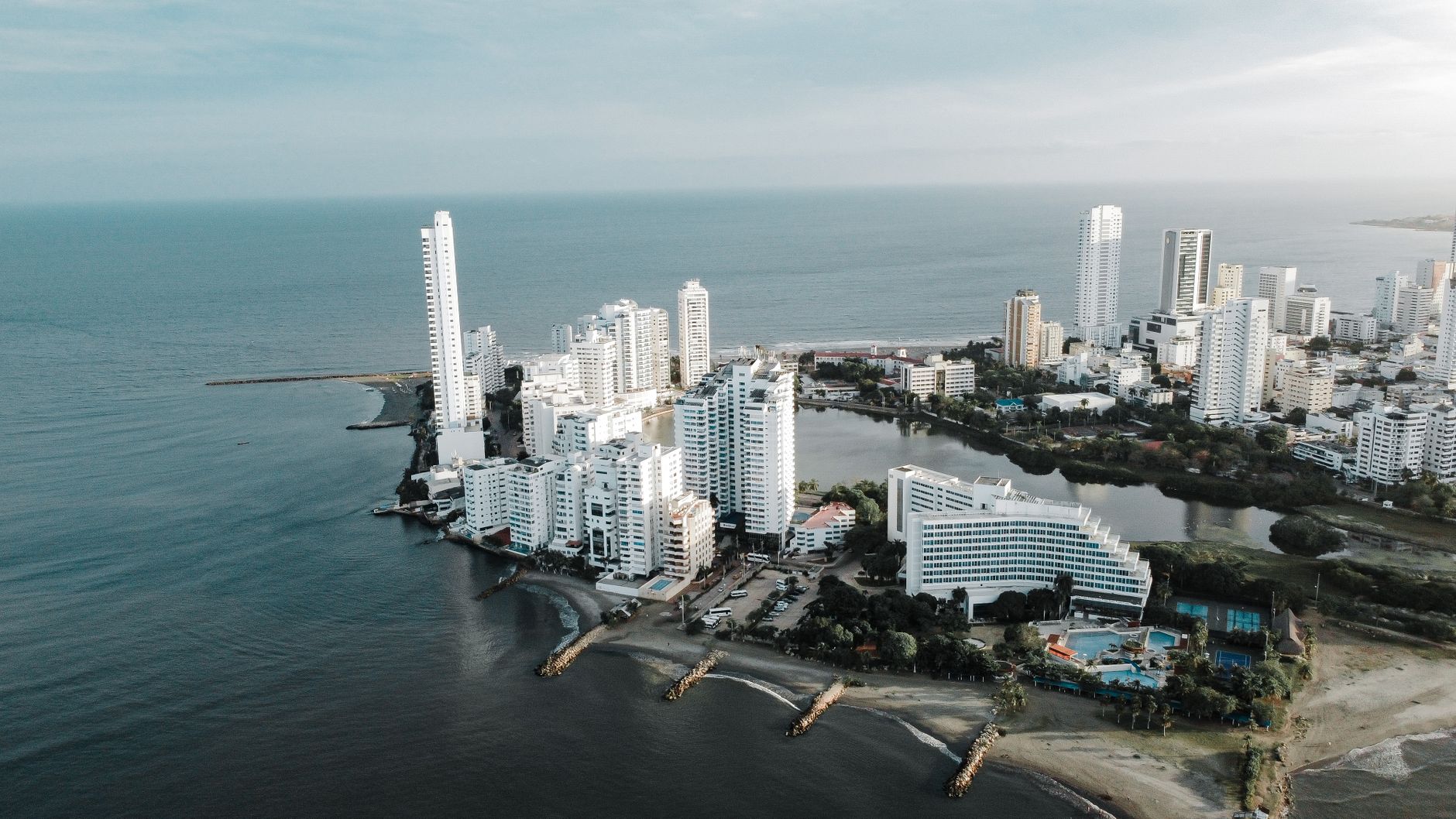
The first consolidated stretch of the Zona Norte: gated tower complexes along the road, beach in front and their own amenities. Almost everything is high-rise condominium, much of it bought as a second home and rented out seasonally. It sits minutes from the airport along the Anillo Vial, which is its only real way in and out.
- what the condominium bylaws say about daily rentals, because several complexes restrict them and buyers find out after signing
- the state of the maintenance dues and the reserve fund, which in seafront buildings goes into façade upkeep
- whether the tower holds a concession or permit for the beach in front, which does not come with the apartment
What to verify, step by step
- Ask the utility company for a water and sewer availability certification issued for the property's registry folio, not for the development or the sector.
- Request the latest account statement for each service and ask the company whether there are payment arrangements, refinancings or disputed charges on that meter.
- Check whose name the meter is in and whether it matches the unit being shown: in a copropiedad, individual meters sit next to common-area services billed through the dues.
- Check what belongs to an aparta-estudio (studio unit) itself and does not change with the sector: whether the reglamento de propiedad horizontal allows daily rentals, since this is the unit type most often bought for exactly that and the ban never shows up in the brochure; whether the deed places kitchen and bathroom inside the área privada rather than treating them as shared services that cannot later be enclosed and how many identical units the tower holds, and what the administración rules about lift and lobby use by short-stay guests.
- Check in addition what Morros requires in particular, with the authority that imposes it: what the condominium bylaws say about daily rentals, because several complexes restrict them and buyers find out after signing; the state of the maintenance dues and the reserve fund, which in seafront buildings goes into façade upkeep and whether the tower holds a concession or permit for the beach in front, which does not come with the apartment.
- Have the promesa state who answers for balances predating closing, and ask for the paz y salvo (a clearance certificate for the account) before signing; it can be requested without being in Colombia.
Mistakes that cost money
- Treating the bill the seller shows you as an account statement. A bill covers one billing period; a statement shows the balance and any arrangements in force.
- Assuming service because the main runs along the street. A main in front of the lot and a metered connection to the lot are different things, and on land purchases that is exactly where the sums fail.
- Forgetting common-area services. In a copropiedad the lift, pump and lighting consumption arrives through the administration dues, not through the unit's own bill.
Frequently asked questions
- Does the seller's utility debt pass to the buyer?
- The balance is charged against the property, so it is a point to be agreed expressly in the promesa. Ask the utility for a certification of the account status and have your attorney review how that clause was drafted.
- Who issues the availability certification?
- The company that provides the service at that property. The curaduría and the Alcaldía require it as an annex, but they do not issue it.
- Can all of this be requested from outside Colombia?
- The account statement and the certification are requested from the utility and in several cases handled online. Where the request has to come from the owner, the seller files it and you receive the document in writing.
Where to check it
- Alcaldía Mayor de Cartagena de Indias — property tax, betterment levies and District procedures
- Plan de Ordenamiento Territorial de Cartagena — land use, the rules applying to the property and protected land
- Curadurías Urbanas de Cartagena — whether a current building or subdivision permit exists and exactly what it authorises
- Cartagena de Indias — the rules of the municipality Morros belongs to
Official bodies. Specific figures are requested there, not copied from a listing.
Updated 2026-11-06
Interested in a property in this area?
Write to us and we will send you the available options.