Closing is not a single payment: different taxes are settled with different authorities, and some are withheld by someone who is not a party to the deal. The nature of the property changes what gets settled, which is why the closing list for a lot is not the closing list for an unit under propiedad horizontal.
The question that really decides money is not how much, but who settles it and what happens if it was settled wrongly. The notaría withholds and declares in the deed whatever the law tells it to; the registry office charges its own fees to record the transfer; the District answers for the impuesto predial (annual property tax) and for any contribución de valorización (betterment levy) attached to the land; and the DIAN is the authority that states, according to the nature and the intended use of the property, which withholding applies to the transaction and who is obliged to apply it. When what you are buying is an off-plan new construction, that answer shifts: undeveloped land, an unit under propiedad horizontal and a property destined for a commercial activity are not settled the same way. And what was left unpaid in the past does not stay with the seller: the land arrives with its own history, which is why the paz y salvo (clearance certificate) is requested before signing and not after.
Off-plan new construction is bought differently because at signing the property does not yet exist: what exists is a project, a permit and a company that has to stay standing until delivery. The document, not the apartment, is therefore what gets reviewed. The first thing that changes is the path of the money: instalments are paid into a patrimonio autónomo —a trust estate— administered by a fiduciaria rather than into the builder's own account, and it is worth knowing what conditions must be met before those funds are released to the works. The second is that what you sign may be a promesa de compraventa, a binding promise of sale, or only an encargo fiduciario, a trust deposit instruction; they do not bind alike and do not unwind alike, and what happens if the project never starts depends on which one it is. The third is that the unit's identity rests on a plan that allows adjustment, so read which tolerances and specification changes the seller reserved and how the buyer is told of them. The fourth, for a buyer abroad, is duration: every transfer has to be documented and someone has to be empowered to sign and take delivery years later.
What you buy in Morros is not land but a private unit created by subdividing a single folio matriz, the parent registry record, and that changes the file. The chain of title on the land was settled once by the builder; what remains to review is the registered reglamento de propiedad horizontal, the condominium bylaws, any acta de asamblea, owners' meeting minutes, that amended them, and the coeficiente de copropiedad, the ownership share assigned to the unit, which governs both voting and billing. The counterparty differs from the undeveloped north as well: usually an individual owner living outside Cartagena, so closing depends on a power of attorney from that person, on a spouse's consent where it applies, and on the paz y salvo, a no-arrears certificate signed by the building manager, a document that does not even exist for rural land. Decisions here belong to the owners' assembly and the manager it appoints, not to a public office; the District and the curaduría urbana, the private licensing office, had their say when the tower was permitted. Internal infrastructure, from pumping to the generator and security, is private and funded by the budget that same assembly approves, so the minutes describe the property better than any tour.
What is specific to Morros
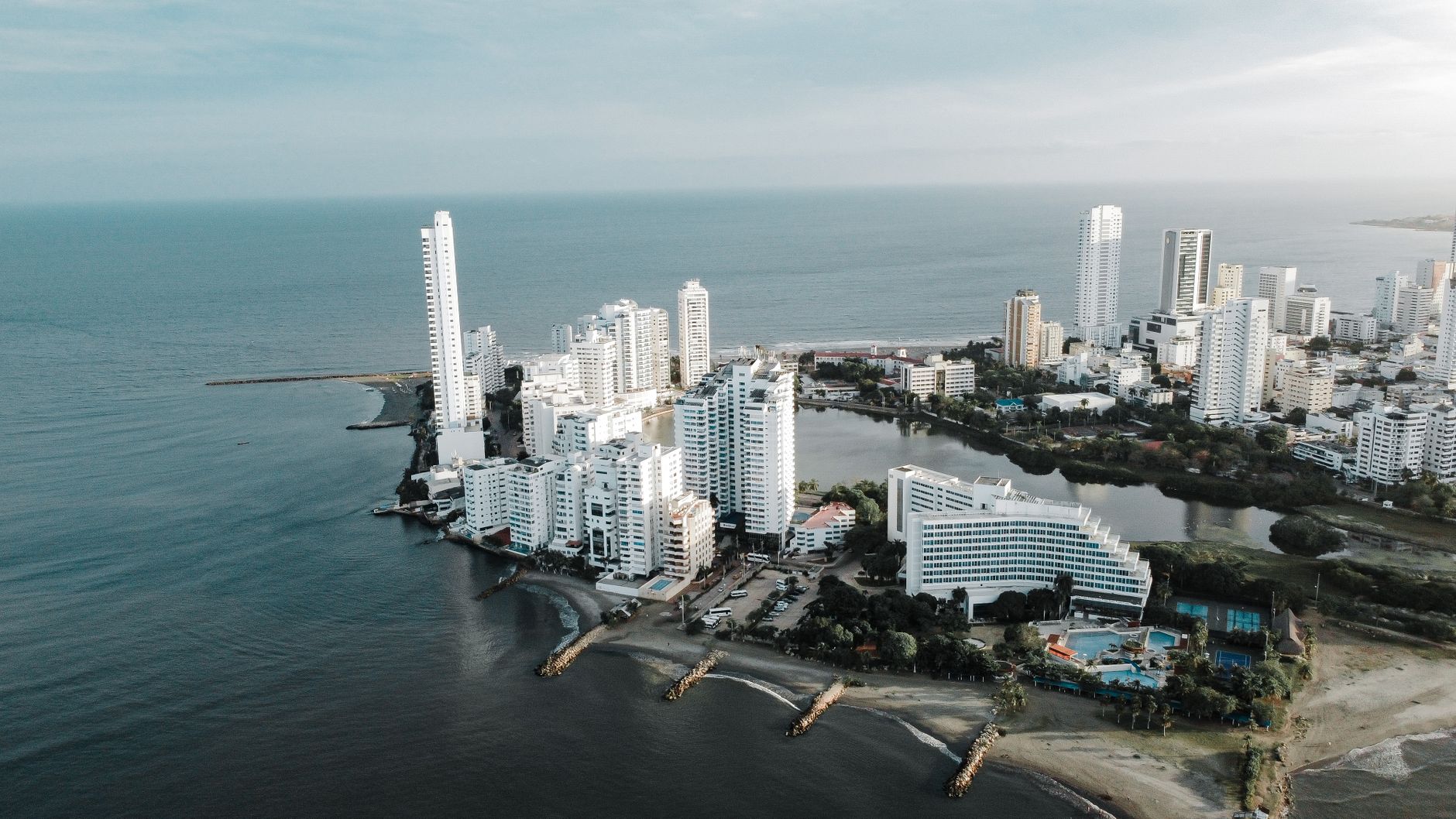
The first consolidated stretch of the Zona Norte: gated tower complexes along the road, beach in front and their own amenities. Almost everything is high-rise condominium, much of it bought as a second home and rented out seasonally. It sits minutes from the airport along the Anillo Vial, which is its only real way in and out.
- what the condominium bylaws say about daily rentals, because several complexes restrict them and buyers find out after signing
- the state of the maintenance dues and the reserve fund, which in seafront buildings goes into façade upkeep
- whether the tower holds a concession or permit for the beach in front, which does not come with the apartment
What to verify, step by step
- Ask the DIAN which withholdings and which taxes are settled on a sale like yours, who is obliged to apply them and at what point in the closing. The answer depends on the nature of the property and on the seller's status, not on what the parties agree.
- What the nature of an off-plan new construction forces you to check before accepting the closing statement: which patrimonio autónomo (the trust estate holding buyers' funds) the instalments are paid into and which fiduciaria administers it, because the money should not reach the builder's own account; whether the licencia de construcción has actually been issued or the project is still in prelanzamiento, and what punto de equilibrio (the pre-sale threshold) must be met before building starts and what the signed document says about the return of funds if that threshold is never met, and whether you signed a promesa de compraventa or only an encargo fiduciario (a trust deposit instruction).
- Ask the District for the paz y salvo on the impuesto predial and for the status of any betterment levy on the property in Morros, recently dated and issued against the registry folio rather than against the seller's name.
- Order the certificado de tradición y libertad from the Superintendencia de Notariado y Registro and read whether any attachment, mortgage or encumbrance is still to be released, because that is cleared before the transfer can be recorded.
- Ask the building manager for the paz y salvo on ordinary dues and on approved special assessments, and ask whether any has been approved but not yet billed.
- Ask the notaría for the closing statement in writing before signing, with each item listed separately and with the authority each one goes to, and have your accountant review it before you transfer.
Mistakes that cost money
- Negotiating who pays what without knowing who is legally obliged to withhold. Splitting costs between the parties does not displace the statutory duty, and the shortfall shows up in the deed or at recording.
- Requesting the clearance certificate in the seller's name. It is the land that is charged: ask for it against the matrícula inmobiliaria (registry folio).
- Treating signature as the end of the closing. Until the deed is recorded, anything still unsettled keeps holding up registration.
Frequently asked questions
- Why do you not publish what closing costs?
- Because rates and taxable bases change, and because they depend on the nature of the property and on the seller's status. The actual statement comes from the notaría in writing and is confirmed by the DIAN.
- Does anything change if I buy an off-plan new construction rather than something else?
- What gets settled, and with whom. That is why the first step is to ask the DIAN about your specific transaction, with the property's intended use on the table.
- Who do I ask for the clearance certificate?
- Property tax and betterment levy, the District; dues, the condominium manager; and the state of encumbrances, the certificado de tradición y libertad.
Where to check it
- DIAN — the tax ID, withholding on sale and the capital gains tax
- Alcaldía Mayor de Cartagena de Indias — property tax, betterment levies and District procedures
- Superintendencia de Notariado y Registro — the certificate of title and encumbrances, which is the property's full history
- Cartagena de Indias — the rules of the municipality Morros belongs to
Official bodies. Specific figures are requested there, not copied from a listing.
Updated 2026-11-06
Interested in a property in this area?
Write to us and we will send you the available options.