Along this coast the ground is sand, fill and a high water table, and the foundation is the one part of a property you cannot see and cannot fix cheaply. The estudio de suelos —the geotechnical report— is the document that speaks to it, and what you should ask for depends on what you are buying.
A geotechnical engineer prepares the estudio de suelos with borings and laboratory testing, and it feeds the structural design filed with the licencia de construcción, the building permit. For a retail unit that turns into different questions: asking for the report that will support work not yet built is not the same as asking for the one that supported a building put up years ago. The report states what the exploration found and what foundation the engineer recommended; it does not certify that the work was built to that recommendation, it does not replace the environmental permit where mangrove, a water setback or a ciénaga is involved, and it does not assert that the property is sound today. Where no report exists, what remains is rebuilding the file: approved drawings, the filed permit, and the history of repairs the owners' association has voted.
A retail unit is bought differently because you are not buying a space but the possibility that someone can trade in it, and that possibility is granted by third parties. Two permissions are needed and nobody bundles them: the one the land-use rules give for that specific lot, and the one the copropiedad's reglamento gives, which need not agree. On top of those sit the tenant's own business permits, applied for activity by activity. The second difference is the relationship with the tenant. A lease of premises for commercial purposes runs under rules distinct from residential tenancies, with an expectation of continuity for the tenant that is worth having a lawyer spell out before signing, because the buyer steps into a contract that already exists and inherits its history. The third is that the unit depends on what lies outside it: façade, signage, pavement, loading area and public access are normally bien común, common property, or public space. What makes the unit profitable, in other words, is not inside its walls and is not decided from within the unit.
Bocagrande works like a mature resale market, with consequences that do not repeat up north. The counterparty is almost never a builder: it is a long-standing owner or, very often, an unsettled sucesión, an estate proceeding, whose heirs live in different countries, so closing depends not on one power of attorney but on several, and on the partition among them. The registry record is old too: it was opened when the building was submitted to the condominium regime, it carries legacy entries such as cancelled mortgages, patrimonio de familia and afectación a vivienda familiar, both family-home protections, or lifted attachments, and the recorded area does not always match a current survey, so you compare the registry record against the deed and against the unit's floor plan. The peninsula is also land reclaimed from the sea under subdivisions the District authorized in their day, and the oldest deeds still carry references to those parcelaciones, the original platting. Day-to-day power sits with the owners' assembly and its manager, so in a tower with a long record of decisions the minutes and the status of the condominium's lawsuits matter more than the brochure.
What is specific to Bocagrande
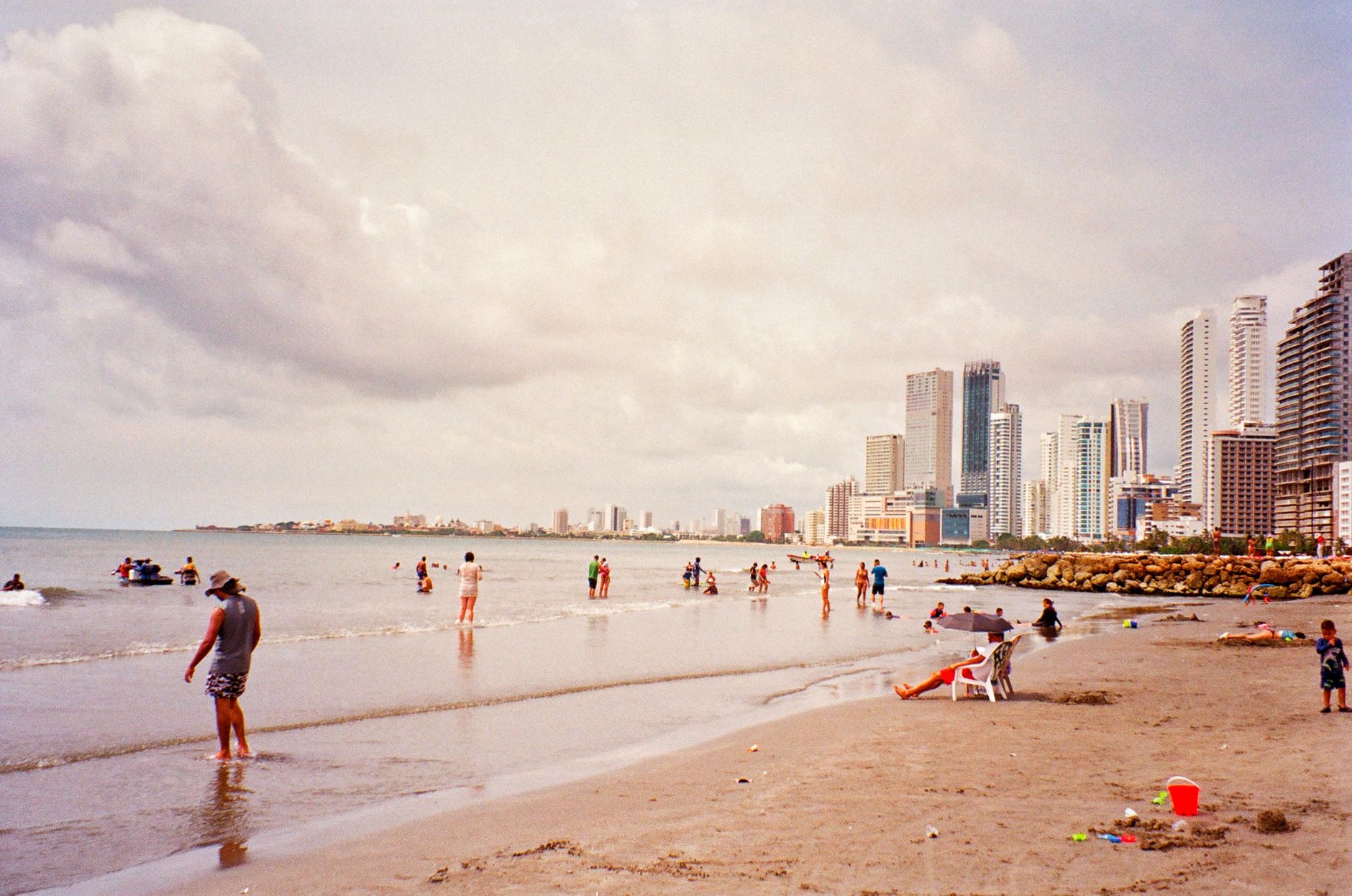
Cartagena's dense, vertical peninsula: open sea on one side, bay on the other, and built out to the last lot. Condominium towers from very different eras, from the sixties to recent construction, on the same block. Groceries, restaurants and beach are walkable, and access is through a few roads that saturate in high season.
- the building's actual age and whether it has a structural vulnerability study, since much of the stock was built under seismic codes earlier than those now in force
- what the condominium bylaws say about daily rentals, which on this peninsula is the difference between being able to rent and not
- how many parking spaces the unit holds in the deed, not in the brochure, because older towers do not have one per apartment
What to verify, step by step
- Ask who signed the estudio de suelos and request the full report with its boring logs, not the cover sheet.
- Confirm with the curaduría urbana —the private office that issues building permits— whether that report is in the permit file, and whether the approved drawings match what stands on site.
- Ask Cardique whether the land is affected by mangrove, a water setback or a ciénaga, since that governs what can be founded there.
- Review what belongs to retail units and is not covered by the report alone: whether the POT (the city's land-use plan) allows commercial use on that specific lot and whether the reglamento de propiedad horizontal admits it — two separate permissions, and you need both; whether the particular activity planned requires a concepto de uso de suelo (a land-use ruling) and who applies for it, owner or tenant and how façade, signage, pavement and loading area are allocated, since these are usually bien común even though the unit uses them daily.
- Add what the ground in Bocagrande imposes: the building's actual age and whether it has a structural vulnerability study, since much of the stock was built under seismic codes earlier than those now in force; what the condominium bylaws say about daily rentals, which on this peninsula is the difference between being able to rent and not and how many parking spaces the unit holds in the deed, not in the brochure, because older towers do not have one per apartment.
- If no report exists because the building is old, commission an engineer to assess its present condition and ask the District for whatever risk information it holds on the property.
Mistakes that cost money
- Accepting the neighbouring lot's report. Exploration is site-specific, and in coastal fill it changes from one property to the next.
- Reading the report as a certificate that the building was properly built. It records what the engineer recommended, not what the builder did.
- Buying with a visible crack and a verbal promise that the administración will repair it. What counts is the minute in which the owners voted the work and how it is paid for.
Frequently asked questions
- Can the soil study for a retail unit be sent to me by email?
- Yes, it is a file and can be reviewed from abroad. The person who has to read it with judgement is an engineer, not the broker.
- What if the seller says the report was lost?
- Ask the curaduría for the permit file, where it was filed, and in parallel order an assessment of present condition.
- Does the soil study cover beach erosion?
- No. That is a separate question, put to the environmental and maritime authorities rather than to the geotechnical engineer.
Where to check it
- Curadurías Urbanas de Cartagena — whether a current building or subdivision permit exists and exactly what it authorises
- Cardique, autoridad ambiental del Canal del Dique — environmental permits, water setbacks and mangrove or wetland constraints
- Alcaldía Mayor de Cartagena de Indias — property tax, betterment levies and District procedures
- Cartagena de Indias — the rules of the municipality Bocagrande belongs to
Official bodies. Specific figures are requested there, not copied from a listing.
Updated 2026-11-06
Interested in a property in this area?
Write to us and we will send you the available options.