An avalúo comercial —a signed appraisal report— is not an opinion about price: it is a document a licensed perito avaluador stands behind. Before any money moves, find out who prepared it, by what method and for whom, because the appraisal the lender orders and the one the seller shows you are two different documents.
The method follows the nature of the property, which is why the appraisal of a beach lot is not assembled like any other. Where comparable units exist in the same sector the perito works by market comparison; where the subject is undeveloped land or a property with no close referents, the residual and replacement-cost methods appear, and those rest on planning and construction assumptions a buyer can read and challenge. On top of that sits a common confusion: the avalúo catastral published by IGAC —the assessed value— is the base for the impuesto predial, the property tax, and never claims to be market value. And an appraisal commissioned by a lender exists to measure that lender's own collateral, under prudential criteria that are not the buyer's. All of it decides money: how much the bank advances, how much the seller asks, and what ends up written in the deed.
A beach lot is bought differently because the first question is not what you may build but whether a private owner ever existed. Along the coastal strip you find land that could lawfully be granted, land that never left the public domain, and land someone occupied and then transferred without holding the right, so the chain of title may rest on mere possession or on falsa tradición, a transfer by someone who never held registered ownership. No deed, no notaría and no lapse of time fixes that, because property in the public domain cannot be acquired by prescription. Investigating the origin of title therefore outranks everything else and comes before any other conversation. The second difference is that the object itself moves: the shoreline advances or retreats, and the area shown on the folio may not be the land that is dry today. The third is that a substantial part of the terrain is not buildable at all, between the public strip, the ronda hídrica (protected water margin) and environmental setbacks, so the usable lot is always smaller than the lot purchased, and it is worth fixing that with a survey and with the environmental authority.
What you buy in Morros is not land but a private unit created by subdividing a single folio matriz, the parent registry record, and that changes the file. The chain of title on the land was settled once by the builder; what remains to review is the registered reglamento de propiedad horizontal, the condominium bylaws, any acta de asamblea, owners' meeting minutes, that amended them, and the coeficiente de copropiedad, the ownership share assigned to the unit, which governs both voting and billing. The counterparty differs from the undeveloped north as well: usually an individual owner living outside Cartagena, so closing depends on a power of attorney from that person, on a spouse's consent where it applies, and on the paz y salvo, a no-arrears certificate signed by the building manager, a document that does not even exist for rural land. Decisions here belong to the owners' assembly and the manager it appoints, not to a public office; the District and the curaduría urbana, the private licensing office, had their say when the tower was permitted. Internal infrastructure, from pumping to the generator and security, is private and funded by the budget that same assembly approves, so the minutes describe the property better than any tour.
What is specific to Morros
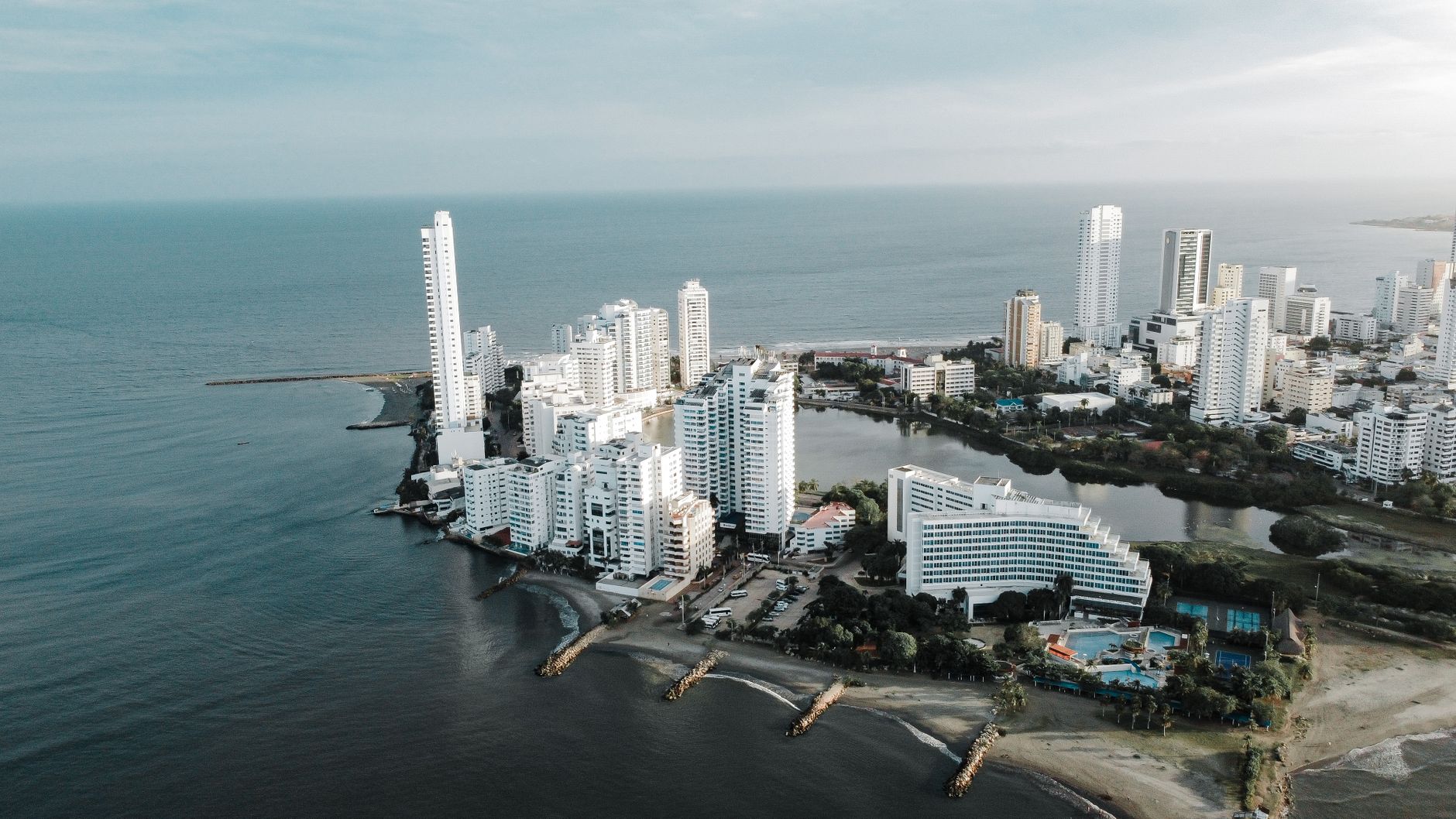
The first consolidated stretch of the Zona Norte: gated tower complexes along the road, beach in front and their own amenities. Almost everything is high-rise condominium, much of it bought as a second home and rented out seasonally. It sits minutes from the airport along the Anillo Vial, which is its only real way in and out.
- what the condominium bylaws say about daily rentals, because several complexes restrict them and buyers find out after signing
- the state of the maintenance dues and the reserve fund, which in seafront buildings goes into façade upkeep
- whether the tower holds a concession or permit for the beach in front, which does not come with the apartment
What to verify, step by step
- Ask for the complete appraisal report rather than the summary page: it has to name the signer, the perito's registration, the date and the method used.
- Check the appraiser against the open register kept by the Lonja de Propiedad Raíz de Bolívar, which can be consulted from abroad.
- Compare the area, boundaries and identification of the property in the appraisal against the IGAC cadastral record and the certificado de tradición y libertad, the registry history of the property.
- Go through the items specific to beach lots that the appraiser should have had in front of him: where the zona de bajamar ends: it is public domain of the Nation, cannot be sold, and no private deed cures it; whether the lot has its own matrícula inmobiliaria or was never split out, and whether the chain of title carries falsa tradición (a transfer by someone who never held registered ownership) or mere possession and how much of the lot is actually buildable once the public strip, the ronda hídrica (protected water margin) and the environmental setback are taken out.
- Add what the sector itself forces you to check in Morros: what the condominium bylaws say about daily rentals, because several complexes restrict them and buyers find out after signing; the state of the maintenance dues and the reserve fund, which in seafront buildings goes into façade upkeep and whether the tower holds a concession or permit for the beach in front, which does not come with the apartment.
- If there will be a mortgage, ask the lender which appraisal it requires and confirm with the Superintendencia Financiera that the institution is supervised before handing over documents or funds.
Mistakes that cost money
- Treating the seller's appraisal as neutral. The seller paid for it and it was written to support the asking figure; still ask for it, but read who commissioned it.
- Asking the appraiser for a number instead of the report. What lets you argue about value are the assumptions and the comparables, not the conclusion.
- Assuming the appraisal replaces a title search. The perito values the property; he does not establish who may sell it.
Frequently asked questions
- Can I commission my own appraisal of a beach lot without being in Cartagena?
- Yes. The perito needs access to the property and its documents, not the buyer's presence; the signed report can be delivered by email.
- Why is the lender's appraisal below the asking price?
- Because it measures the institution's collateral, not the negotiation between the parties. They are two documents with different purposes and it is worth having both.
- Is the avalúo catastral useful for negotiating?
- It is useful for understanding the base of the impuesto predial, which is what IGAC and the District publish. For market value you order an appraisal from a registered perito.
Where to check it
- Lonja de Propiedad Raíz de Bolívar — commercial appraisals and appraisers listed on the open register
- Instituto Geográfico Agustín Codazzi — the cadastral record, area, boundaries and assessed value of the property
- Superintendencia Financiera de Colombia — whether a trust company exists and is supervised, before transferring money to a patrimonio autónomo
- Cartagena de Indias — the rules of the municipality Morros belongs to
Official bodies. Specific figures are requested there, not copied from a listing.
Updated 2026-11-06
Interested in a property in this area?
Write to us and we will send you the available options.