Almost every buyer arrives with a remodel in mind, and for a serviced lot that remodel goes through two separate doors that get confused constantly: the copropiedad and the curaduría urbana. The work the seller already did matters too, because an unauthorised alteration passes to whoever buys.
The curaduría urbana is the body that issues construction permits and their variants, and what it requires depends on whether the work touches structure, façade, built area or only finishes. The copropiedad issues no permits: it authorises —or refuses— work on common property, sets how the job runs inside the building, and answers for what the reglamento says about façade and enclosures. The two doors are cumulative, and neither replaces the other. For a serviced lot, the split between what may be touched and what may not is written in the deed and the reglamento, not on the seller's drawing. In a resale there is a prior question: whether what stands matches the approved plans, because work done without a permit where one was required can surface in a Distrito inspection and complicate a later filing. Which permit variant fits your remodel is for the curaduría to define, and what the copropiedad allows is for the asamblea.
A serviced lot is bought differently because what you acquire is a capacity to build, not a built thing. The value sits in what the rules allow on that specific parcel and in the state of the surrounding development, not in what you see on a site visit, which looks much the same on every lot of the block. Three consequences follow. First, the folio tends to be young, since it was created by splitting a larger parent parcel, so the useful history lives in that parent folio and in how areas, roads and public land dedications were divided. Second, the developer does not vanish with the sale: if water, sewer, road or green- area works are still unbuilt, or obligaciones urbanísticas (duties owed to the city by the developer) are still outstanding, there remains a counterparty, and it is worth knowing who answers for them and against what security. Third, the asset produces nothing until it is built on, while still generating impuesto predial, development dues and the cost of watching over empty land. For a buyer abroad, a lot also means a permit process and a construction job run from Colombia, by someone authorized to sign.
Bocagrande works like a mature resale market, with consequences that do not repeat up north. The counterparty is almost never a builder: it is a long-standing owner or, very often, an unsettled sucesión, an estate proceeding, whose heirs live in different countries, so closing depends not on one power of attorney but on several, and on the partition among them. The registry record is old too: it was opened when the building was submitted to the condominium regime, it carries legacy entries such as cancelled mortgages, patrimonio de familia and afectación a vivienda familiar, both family-home protections, or lifted attachments, and the recorded area does not always match a current survey, so you compare the registry record against the deed and against the unit's floor plan. The peninsula is also land reclaimed from the sea under subdivisions the District authorized in their day, and the oldest deeds still carry references to those parcelaciones, the original platting. Day-to-day power sits with the owners' assembly and its manager, so in a tower with a long record of decisions the minutes and the status of the condominium's lawsuits matter more than the brochure.
What is specific to Bocagrande
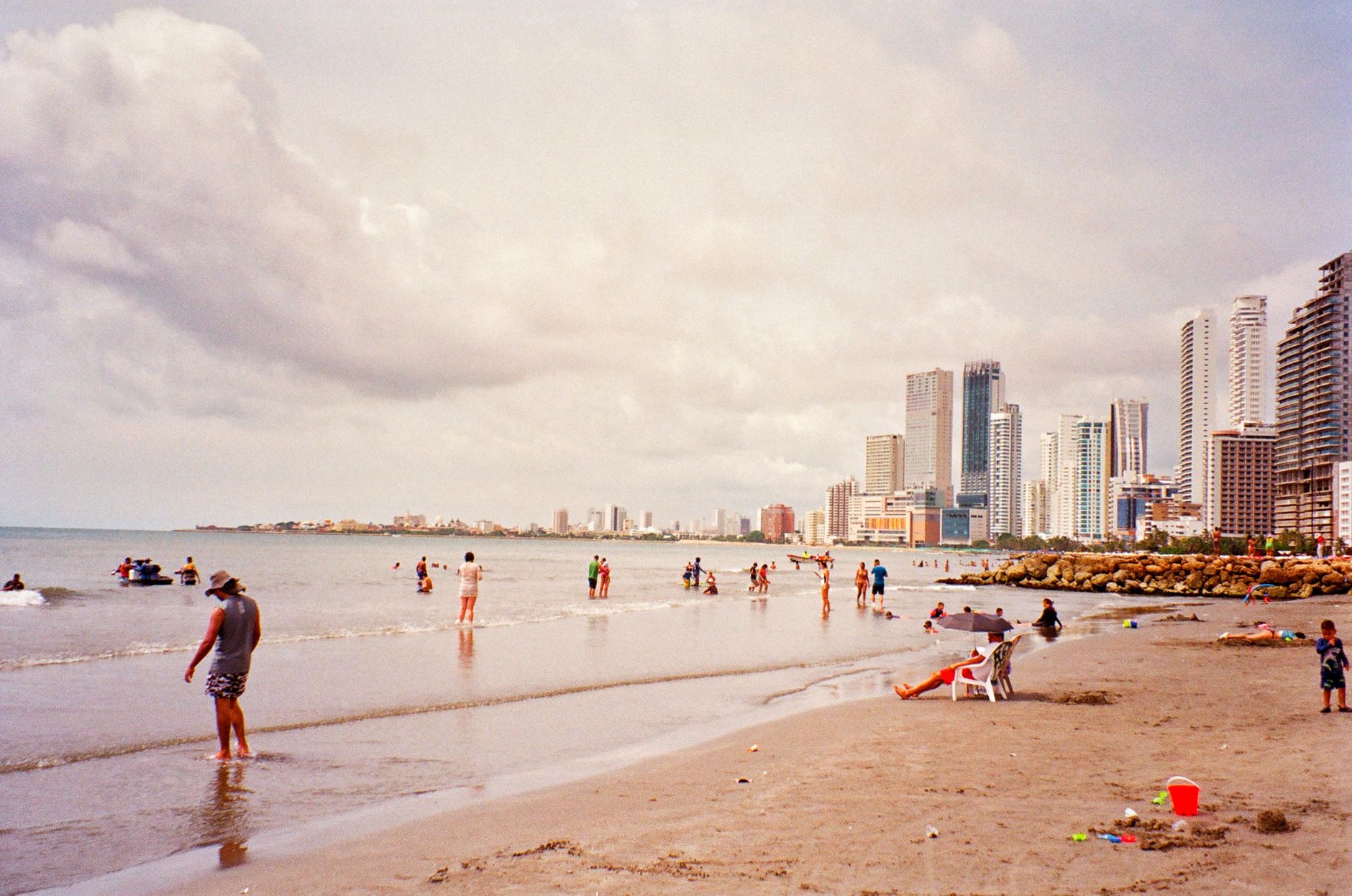
Cartagena's dense, vertical peninsula: open sea on one side, bay on the other, and built out to the last lot. Condominium towers from very different eras, from the sixties to recent construction, on the same block. Groceries, restaurants and beach are walkable, and access is through a few roads that saturate in high season.
- the building's actual age and whether it has a structural vulnerability study, since much of the stock was built under seismic codes earlier than those now in force
- what the condominium bylaws say about daily rentals, which on this peninsula is the difference between being able to rent and not
- how many parking spaces the unit holds in the deed, not in the brochure, because older towers do not have one per apartment
What to verify, step by step
- Describe the remodel in writing —what is touched, what is opened, what is closed— and ask the curaduría urbana which permit variant or filing applies to that work on that property.
- Request the original licencia de construcción with its approved drawings and compare what was approved against what stands today.
- Ask the administrador for the recorded reglamento and the minutes, and read which works require asamblea authorisation and under what conditions work may run inside the building.
- Check what belongs to a serviced lot itself and decides what may be altered: whether the lot has been split out with its own matrícula inmobiliaria or still sits inside a larger undivided parcel; what the rules let you build on that specific lot —use, height, setbacks, ground coverage— and whether the licencia de urbanismo is current and which obligaciones urbanísticas (developer duties owed to the city) are still outstanding and whether they pass to the buyer, since they fall due before you can build.
- Ask the Oficina de Registro whether there are entries about alterations, mergers or subdivisions of the folio, and ask the Alcaldía whether any administrative proceeding is open over unpermitted work at the property.
- Have the promesa state what happens if unauthorised work turns up and who answers for regularising it, because after closing the Distrito's counterpart is the new owner.
Mistakes that cost money
- Believing the administrador's permission replaces the permit. The administrador issues no permits, and the curaduría does not read the reglamento.
- Buying with the work already done and never asking for the approved drawings. Extra construction does not show on the certificado de tradición y libertad, and it surfaces the next time something is filed.
- Treating bien común de uso exclusivo as if it were área privada. Terrace, façade and assigned patio often belong to someone other than whoever uses them daily.
Frequently asked questions
- Who issues the permit to remodel?
- The curaduría urbana, under whichever variant matches the work. The copropiedad authorises what touches common property and sets how the job runs, but it issues no permit.
- What if the seller already remodelled without a permit?
- That risk is identified by comparing the approved drawings against what stands and asking the Alcaldía whether any proceeding is open. What route to regularisation exists is for the curaduría and your attorney to say.
- Can the filing be advanced without being in Cartagena?
- The preliminary enquiry and the application can be handled by a professional in the city, and the owner's signature is given by power of attorney. Which power the filing requires is confirmed by the curaduría.
Where to check it
- Curadurías Urbanas de Cartagena — whether a current building or subdivision permit exists and exactly what it authorises
- Alcaldía Mayor de Cartagena de Indias — property tax, betterment levies and District procedures
- Superintendencia de Notariado y Registro — the certificate of title and encumbrances, which is the property's full history
- Cartagena de Indias — the rules of the municipality Bocagrande belongs to
Official bodies. Specific figures are requested there, not copied from a listing.
Updated 2026-11-06
Interested in a property in this area?
Write to us and we will send you the available options.