A property in Colombia can carry tax consequences in two countries at once, and neither is settled at the sales office. What follows are not answers: they are the questions a Mexican buyer needs settled before signing, and who to put them to.
We do not state here which countries have a treaty with Colombia, nor what anyone is required to declare, and the reason is practical: those lists and rules get amended, and one wrong assertion would repeat across every page. What can be set out is how the problem is built. There are two tax administrations with their own rules; there are two moments treated differently —holding the property, with its rental income, and selling it, with its ganancia ocasional (the gain taxed on sale)— and there is a personal condition, tax residence, which is not chosen but determined by rules and which changes what is withheld and what is filed. The DIAN is the authority on the Colombian side; the other side needs an accountant in that country; and the Cancillería explains the apostille of the certificates each administration will ask the other for. The seller substitutes for none of those three conversations.
Two currencies are called pesos in this transaction, so always say which one you mean: the contract is signed in Colombian pesos while the money leaves in Mexican pesos. The transfer is converted, enters through the regulated exchange market with its declaración de cambio and is registered as foreign investment with the Banco de la República, which is who to ask about how and in whose name. The poder for signing from abroad is granted before a Colombian consul in the city where you live or before a notario público and then apostilled, and which of the two the Cartagena notaría wants is confirmed with that notaría and with the Cancillería before you fly anywhere to sign. Visa rules and the cédula de extranjería are not the same for every nationality and belong to Migración Colombia: entering without a visa to visit the city and settling in it are two different situations. The tax question to settle with an accountant in each country is whether a treaty exists between Colombia and your country and what it says about rental income and about ganancia ocasional.
What sets Cielo Mar apart is that much of the buying happens before the property legally exists. Units sell off plan, and the counterparty is not an owner but a fiduciaria, a trust company, managing a patrimonio autónomo, a segregated trust estate, into which the landowner contributed the site. That changes the whole process. The first document signed is not a deed but an enrollment in the project; the money goes into a trust account rather than to a seller; and the deed is granted once the punto de equilibrio, the pre-sales break-even threshold, is reached and the building goes up, so in the early stage there is no unit folio to certify because none has been opened. Ask for the trust agreement and ask what happens if that threshold is never reached, who returns the money and on what terms. Who decides changes too: the governing document is the permit issued by the curaduría urbana, the private licensing office, and the condominium bylaws are still unregistered, so you read a draft. Utilities may be run by private operators belonging to the development itself, meaning the supply relationship does not start with the city water company.
What is specific to Cielo Mar
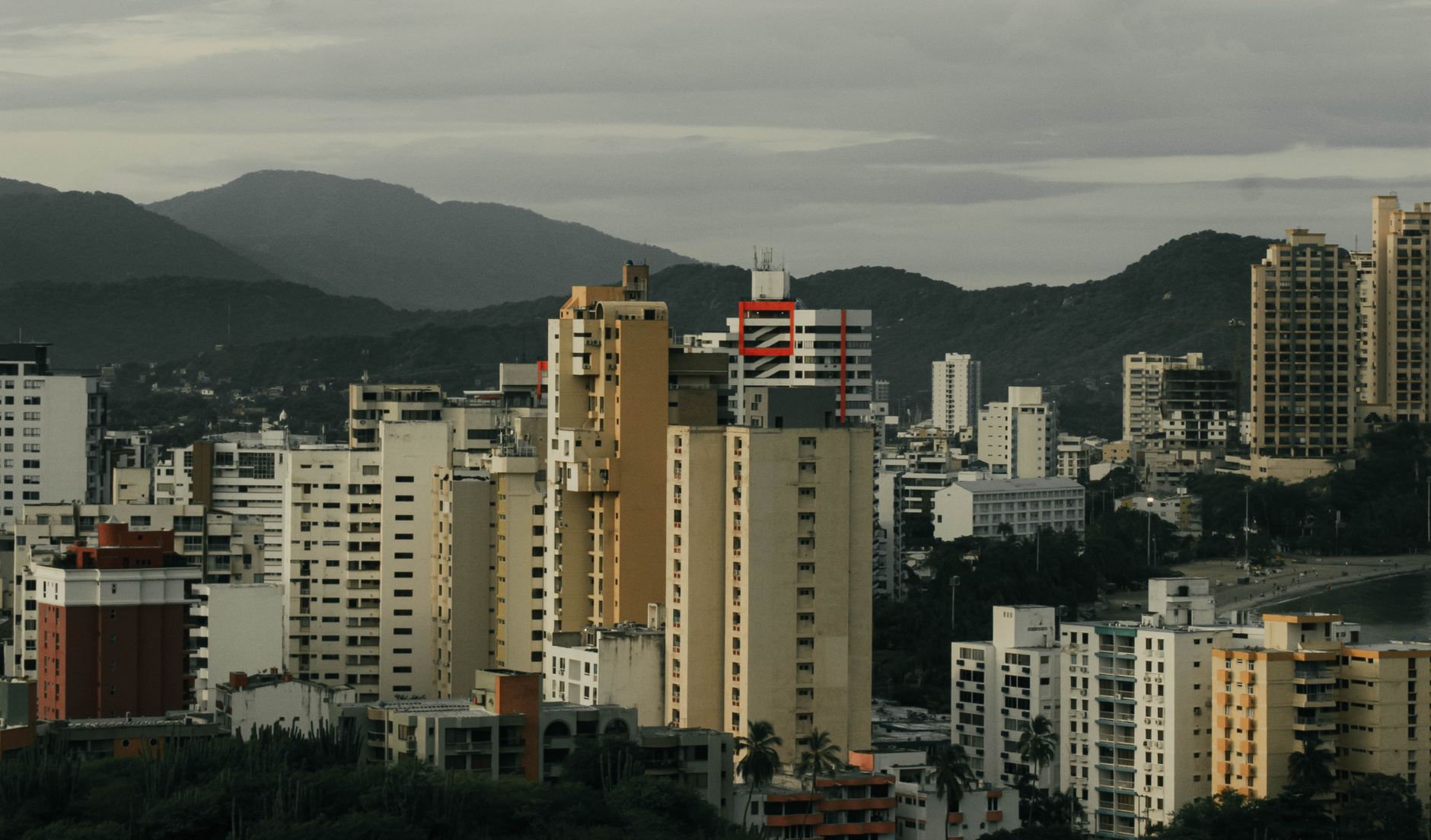
Morros continued northward: newer development and less established street retail. Recently built towers with undeveloped lots still sitting between them. It depends entirely on the Anillo Vial; groceries and school are not walkable.
- what has been permitted on the neighbouring lot, because a new tower next door changes the view and the sunlight you paid for
- how drinking water arrives and where the sewage goes, which along this northern stretch is not always the public network
- whether the building permit is current and matches what the sales office is offering
What to verify, step by step
- Ask the DIAN, about your own case, how tax residence is determined, what is reported in Colombia for holding the property and what is reported on its sale, and which withholdings apply to someone who is not a tax resident.
- The questions a Mexican buyer has to settle before closing: that every figure in the contract says which peso it is in, and that the transfer is registered as foreign investment with the Banco de la República; whether they want a power of attorney before a Colombian consul or an apostilled notarial one, asked of the notaría and the Cancillería and whether a treaty exists between Colombia and your country, and what it says about rental income and about ganancia ocasional, with an accountant in each country.
- Take those same questions to an accountant in your own country and ask in writing whether a treaty exists between Colombia and that country and, if it does, what it says about rental income and about ganancia ocasional. That answer is theirs to give, not the DIAN's and not ours.
- Ask the Cancillería which tax-residence certificates and which documents need an apostille or legalisation for one administration to accept them from the other.
- Before transferring, confirm with the Banco de la República how the investment ends up registered, because the exchange registration is what later supports moving funds out, and the tax question is asked on that basis.
- Decide with your accountant, before the promesa and not after, whether you buy personally or through a company, because the titleholder does not change without another deed.
Mistakes that cost money
- Asking about tax after signing. The structure of the purchase is decided beforehand, and it is the only part still open to choice.
- Assuming a treaty exists because someone said so in a buyers' group. Whether one exists, and what it says, is confirmed in writing by an accountant in each country.
- Believing that if tax was withheld in Colombia there is nothing left to do at home. There are two administrations and two separate filings; how they interact is exactly the question to settle.
Frequently asked questions
- Is there a treaty between Colombia and my country?
- We neither assert nor deny it here: the list is amended and a stale answer would cost you money. Ask the DIAN and an accountant in your own country, and get the answer in writing.
- Will I pay twice on the same thing?
- That is the right question and it has no general answer: it depends on your tax residence, on each country's rules and on whether a treaty exists. It is the conversation to have with an accountant in each country before signing.
- Can a Mexican buyer handle this without an accountant?
- The DIAN explains the Colombian side, but neither administration resolves the combination of the two for you. That is what the accountant in each country is for.
Where to check it
- DIAN — the tax ID, withholding on sale and the capital gains tax
- Cancillería de Colombia — current visa requirements and the apostille of foreign documents
- Banco de la República — registration of foreign investment and the official exchange rate
- Cartagena de Indias — the rules of the municipality Cielo Mar belongs to
Official bodies. Specific figures are requested there, not copied from a listing.
Updated 2026-11-06
Interested in a property in this area?
Write to us and we will send you the available options.