Most foreign buyers assume the building is already insured and that this covers them. The association's policy and the owner's own policy cover different things, and between the two sits a gap that shows up on the day of a loss.
The association's policy covers the building's common property and the administrador takes it out against the budget; the owner's policy covers the private area, the contents and third-party liability, and you take that one out. For an apartment under propiedad horizontal the boundary between them does not fall in the same place, and that is the exposure: what is bien común de uso exclusivo for one unit is private area for another, and a terrace, a boundary wall or an air-conditioning unit can end up outside both policies. Where there is a mortgage the lender also requires its own cover as a condition of disbursement, and charges it inside the instalment. Before signing any of them, confirm with the Superintendencia Financiera that the insurer is supervised, and before insuring anything, find out what risk information the District holds on that property.
Buying under propiedad horizontal —Colombia's condominium regime— means joining a legal entity that already exists and whose rules are not negotiated at the closing table. You accept the reglamento whole, together with what earlier asambleas (owners' meetings) resolved and whatever future ones resolve by majority, with no veto. That changes what due diligence is about. On a house, a title review follows the chain of ownership of the lot; here it also has to read the internal life of a community you become a compulsory member of: who administers it, which body approves an extraordinary levy, what the recent asambleas decided, and whether the building is current on what it must repair. It changes who collects, too. Beyond the municipal impuesto predial, the unit generates a monthly dues payment made to the administración for as long as you own it, whether or not you use the apartment, and whatever a previous owner left unpaid follows the unit rather than the person, which makes the administración's certificate as important as the registry's. For a buyer living abroad, the practical consequence is appointing someone to receive notices and vote, because the asamblea does not wait.
What sets Cielo Mar apart is that much of the buying happens before the property legally exists. Units sell off plan, and the counterparty is not an owner but a fiduciaria, a trust company, managing a patrimonio autónomo, a segregated trust estate, into which the landowner contributed the site. That changes the whole process. The first document signed is not a deed but an enrollment in the project; the money goes into a trust account rather than to a seller; and the deed is granted once the punto de equilibrio, the pre-sales break-even threshold, is reached and the building goes up, so in the early stage there is no unit folio to certify because none has been opened. Ask for the trust agreement and ask what happens if that threshold is never reached, who returns the money and on what terms. Who decides changes too: the governing document is the permit issued by the curaduría urbana, the private licensing office, and the condominium bylaws are still unregistered, so you read a draft. Utilities may be run by private operators belonging to the development itself, meaning the supply relationship does not start with the city water company.
What is specific to Cielo Mar
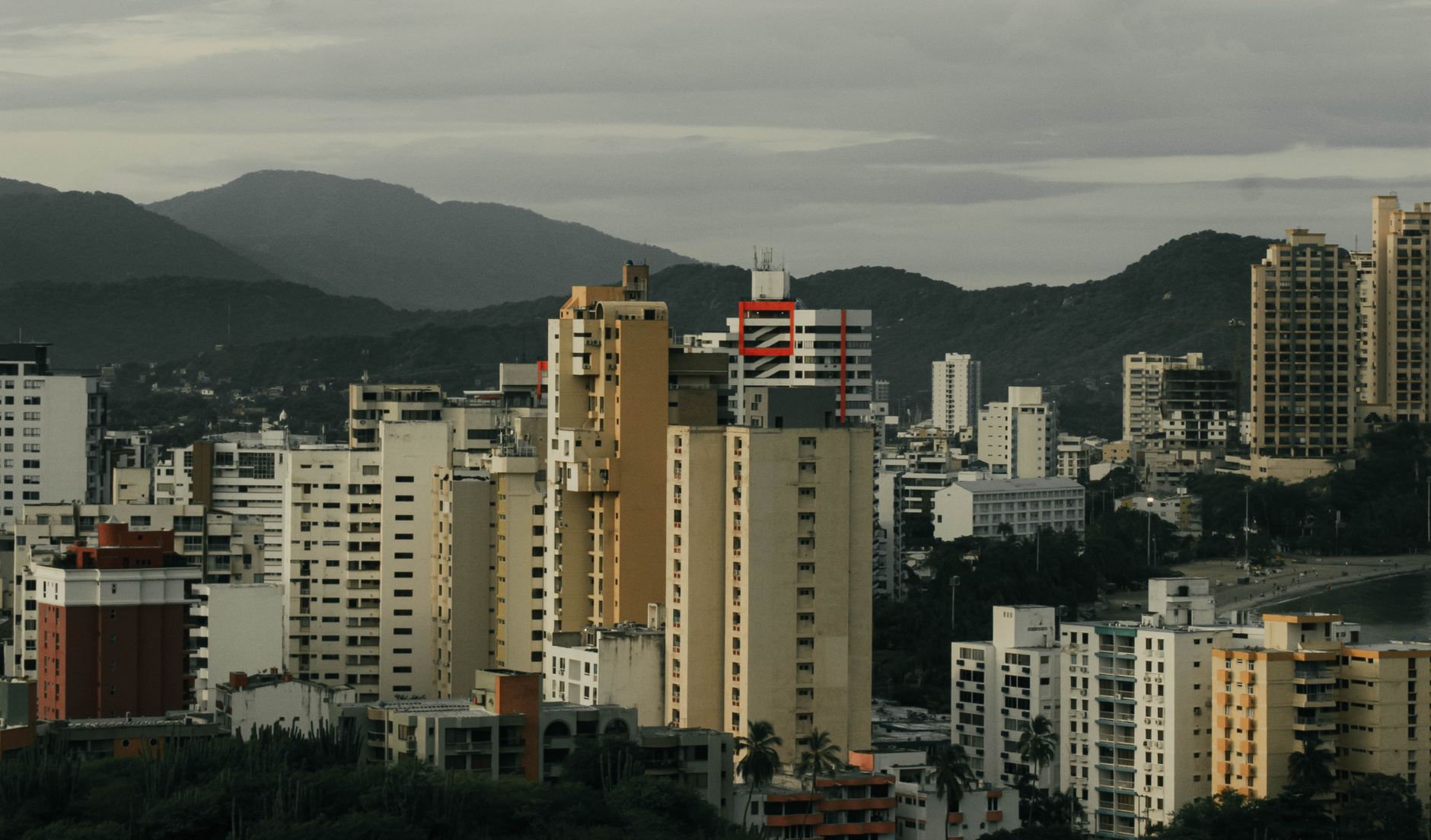
Morros continued northward: newer development and less established street retail. Recently built towers with undeveloped lots still sitting between them. It depends entirely on the Anillo Vial; groceries and school are not walkable.
- what has been permitted on the neighbouring lot, because a new tower next door changes the view and the sunlight you paid for
- how drinking water arrives and where the sewage goes, which along this northern stretch is not always the public network
- whether the building permit is current and matches what the sales office is offering
What to verify, step by step
- Ask the administrador for the current certificate of the association's policy, with its cover, exclusions and the insurer's name.
- Ask for the reglamento and the deed so you know where the unit's private area ends and common property begins, which is the line that decides which policy responds.
- Verify with the Superintendencia Financiera that the insurer and the intermediary are supervised before paying any premium.
- Review what has to be insured because it is apartments under propiedad horizontal: the unit's coeficiente de copropiedad —its ownership share— as recorded in the reglamento, since it drives both the monthly dues and the weight of the vote at the asamblea; which bienes comunes de uso exclusivo (common property assigned to one unit for its sole use) the deed attaches to the apartment —parking, storage, patio— and whether they match what is being shown and whether the reglamento de propiedad horizontal and the minutes of the last asamblea agree on interior remodelling, pets and renting.
- Add the exposures particular to Cielo Mar: what has been permitted on the neighbouring lot, because a new tower next door changes the view and the sunlight you paid for; how drinking water arrives and where the sewage goes, which along this northern stretch is not always the public network and whether the building permit is current and matches what the sales office is offering.
- Ask the District what risk information it holds on the property and hand that to your insurance broker before asking for quotes.
Mistakes that cost money
- Assuming the building's policy covers the inside of the apartment. It insures common property, and your own contents fall outside it.
- Buying the lender's policy without reading what it covers. It protects the creditor's collateral, which is not the same as protecting you.
- Letting the certificate lapse and finding out at the moment of a loss. Ask the administrador for the renewal date and ask again each year.
Frequently asked questions
- Can I insure an apartment under propiedad horizontal from abroad?
- Yes, through an insurer supervised in Colombia, arranged by email with a broker; payment and billing are coordinated with him.
- Who files the claim when the damage is to common property?
- The administración, under the association's policy. The owner claims his own loss under his own policy, which is why both should be identified before buying.
- Does the lender's policy work as my property insurance?
- It answers what the institution requires for its collateral. What is missing for you is a question for your broker, with the reglamento and the deed in front of him.
Where to check it
- Superintendencia Financiera de Colombia — whether a trust company exists and is supervised, before transferring money to a patrimonio autónomo
- Alcaldía Mayor de Cartagena de Indias — property tax, betterment levies and District procedures
- Cartagena de Indias — the rules of the municipality Cielo Mar belongs to
Official bodies. Specific figures are requested there, not copied from a listing.
Updated 2026-11-06
Interested in a property in this area?
Write to us and we will send you the available options.