Not everything that is rented out is rented under the same contract, and the one for an apartment under propiedad horizontal does not look like the neighbouring unit's when the nature of the property differs. Before thinking about the tenant, the contract has to fit inside what the reglamento and the use rules admit.
Colombian lease law distinguishes by purpose: urban housing, commercial premises and short-stay lodging are not governed by the same rules, and what you sign conditions what may and may not be agreed. On top of that regime sits the private layer: the reglamento de propiedad horizontal (the condominium bylaws) can ban or condition an use the law does not ban, and a later asamblea may have tightened it without the recorded reglamento reflecting it yet. So the contract for an apartment under propiedad horizontal is built the other way round from how it is usually done: first verify what use the property admits, then which contract matches that use, and only then the clauses. Which regime applies to your case and how each clause is drafted is work for your Colombian attorney; what a buyer can verify before signing is what the reglamento says, what the last asamblea minutes say, what the land-use certificate says and, where the purpose is short-stay lodging, what the registro nacional de turismo says.
Buying under propiedad horizontal —Colombia's condominium regime— means joining a legal entity that already exists and whose rules are not negotiated at the closing table. You accept the reglamento whole, together with what earlier asambleas (owners' meetings) resolved and whatever future ones resolve by majority, with no veto. That changes what due diligence is about. On a house, a title review follows the chain of ownership of the lot; here it also has to read the internal life of a community you become a compulsory member of: who administers it, which body approves an extraordinary levy, what the recent asambleas decided, and whether the building is current on what it must repair. It changes who collects, too. Beyond the municipal impuesto predial, the unit generates a monthly dues payment made to the administración for as long as you own it, whether or not you use the apartment, and whatever a previous owner left unpaid follows the unit rather than the person, which makes the administración's certificate as important as the registry's. For a buyer living abroad, the practical consequence is appointing someone to receive notices and vote, because the asamblea does not wait.
What you buy in Morros is not land but a private unit created by subdividing a single folio matriz, the parent registry record, and that changes the file. The chain of title on the land was settled once by the builder; what remains to review is the registered reglamento de propiedad horizontal, the condominium bylaws, any acta de asamblea, owners' meeting minutes, that amended them, and the coeficiente de copropiedad, the ownership share assigned to the unit, which governs both voting and billing. The counterparty differs from the undeveloped north as well: usually an individual owner living outside Cartagena, so closing depends on a power of attorney from that person, on a spouse's consent where it applies, and on the paz y salvo, a no-arrears certificate signed by the building manager, a document that does not even exist for rural land. Decisions here belong to the owners' assembly and the manager it appoints, not to a public office; the District and the curaduría urbana, the private licensing office, had their say when the tower was permitted. Internal infrastructure, from pumping to the generator and security, is private and funded by the budget that same assembly approves, so the minutes describe the property better than any tour.
What is specific to Morros
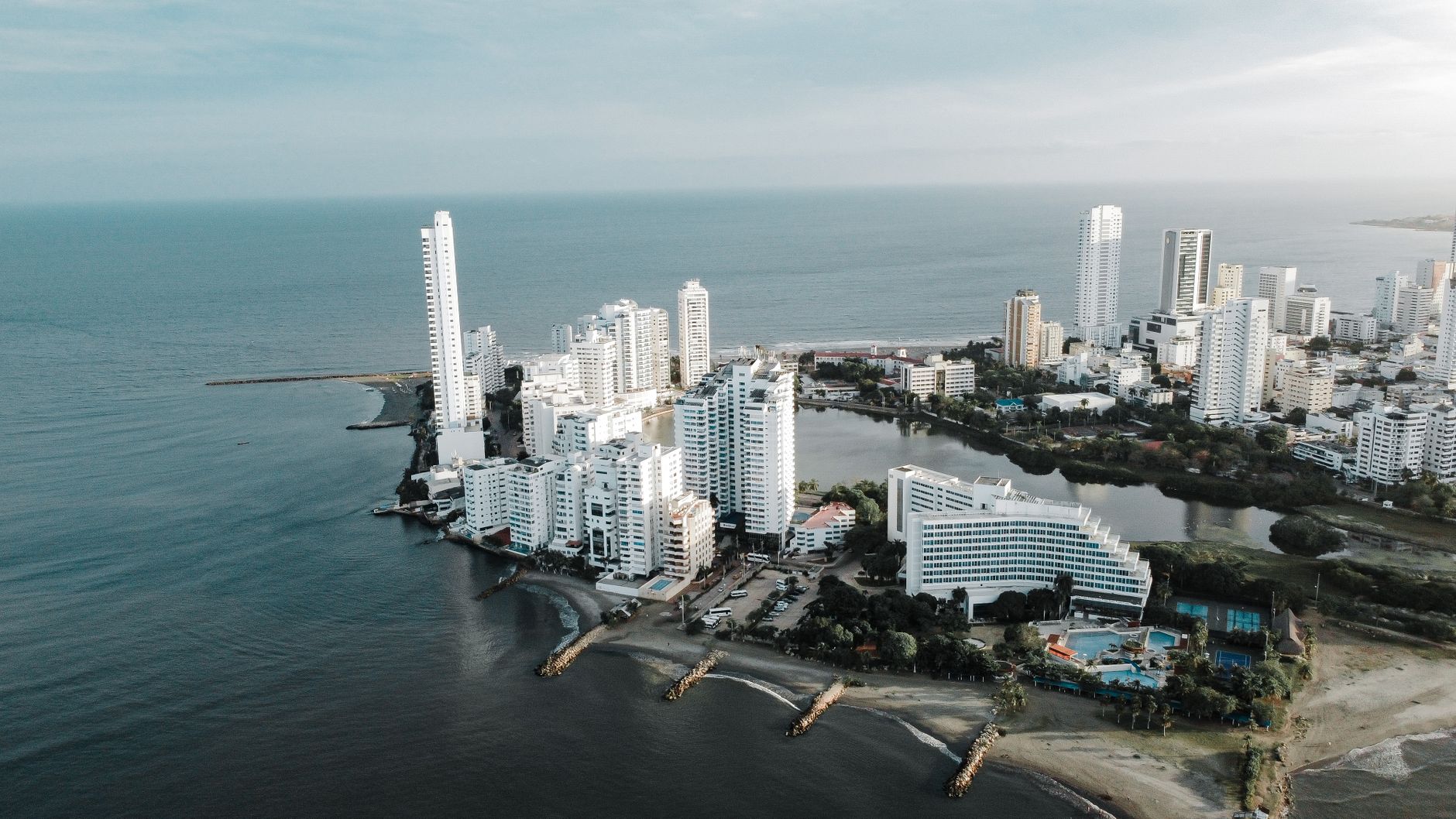
The first consolidated stretch of the Zona Norte: gated tower complexes along the road, beach in front and their own amenities. Almost everything is high-rise condominium, much of it bought as a second home and rented out seasonally. It sits minutes from the airport along the Anillo Vial, which is its only real way in and out.
- what the condominium bylaws say about daily rentals, because several complexes restrict them and buyers find out after signing
- the state of the maintenance dues and the reserve fund, which in seafront buildings goes into façade upkeep
- whether the tower holds a concession or permit for the beach in front, which does not come with the apartment
What to verify, step by step
- Request the recorded reglamento de propiedad horizontal and the minutes of the last asamblea, and read what they say about renting, permitted use and short-stay guests.
- Ask the Alcaldía for the land-use certificate covering the activity you plan to host, because the reglamento and the planning rules are two separate permissions.
- Check what belongs to an apartment under propiedad horizontal itself and changes the contract's clauses: the unit's coeficiente de copropiedad —its ownership share— as recorded in the reglamento, since it drives both the monthly dues and the weight of the vote at the asamblea; which bienes comunes de uso exclusivo (common property assigned to one unit for its sole use) the deed attaches to the apartment —parking, storage, patio— and whether they match what is being shown and whether the reglamento de propiedad horizontal and the minutes of the last asamblea agree on interior remodelling, pets and renting.
- Ask the administrador what the copropiedad requires of a tenant —occupant registration, access rules, use of common areas— and get it in writing rather than by word of mouth.
- Where the purpose is short-stay lodging, check the registro nacional de turismo and ask in whose name it stands and what becomes of it when the owner changes.
- Search the Rama Judicial for pending proceedings over the property or against the seller on tenancy matters before buying the asset with a contract inside it.
Mistakes that cost money
- Signing a residential lease for an use that is not residential, or the reverse, because that template was to hand. The contract's stated purpose conditions what can be agreed.
- Reading the recorded reglamento but not the minutes. The asamblea may have set later conditions on use, and the buyer meets them afterwards.
- Buying a property with a tenant in place without reading the contract in force. What the seller agreed does not vanish because the owner changes, so read with your attorney where it leaves you.
Frequently asked questions
- Can the reglamento prohibit renting?
- The reglamento governs the use of units and common property, and in practice it is where rental restrictions appear. Ask for the recorded version together with the minutes, and have your attorney read how far it reaches.
- Do I need a registro nacional de turismo to rent out?
- That depends on whether the activity is tourist lodging. The RNT and what it requires are matters for the tourism authority, and the copropiedad can still restrict the use with the register in order.
- Who do I verify the contract against?
- The administrador for the reglamento and the minutes, the Alcaldía for land use, and the Rama Judicial for litigation. Drafting the contract itself is work with a Colombian attorney.
Where to check it
- Rama Judicial — whether there is pending litigation over the property or its owners
- Registro Nacional de Turismo — whether a property may legally be used for tourist accommodation and who has registered it
- Alcaldía Mayor de Cartagena de Indias — property tax, betterment levies and District procedures
- Cartagena de Indias — the rules of the municipality Morros belongs to
Official bodies. Specific figures are requested there, not copied from a listing.
Updated 2026-11-06
Interested in a property in this area?
Write to us and we will send you the available options.