Handover is the one moment when the buyer has the property in front of him and still holds something to pay or to demand. Whatever is left out of the acta that day stops being a claim and becomes a conversation.
Taking delivery of a penthouse is not signing that the keys arrived: it is recording the condition in which the property is received, the open items, and how and when they will be addressed. The acta de entrega is a private document between the parties, and its worth lies in its detail: an inventory of what is handed over, meter readings, the state of finishes and equipment, keys and remotes, and the list of observations signed by both sides. New construction adds the recibo de obra and whatever the builder has warranted; a resale adds whatever the seller undertook in the promesa de compraventa, the binding promise of sale. After handover the claim changes counterpart: it stops being a conversation with a seller or a builder and becomes a contractual matter, which is where it starts to matter whether there are proceedings open against the person who sold to you.
A penthouse is bought differently because what you acquire is attached to the building's edge. The top unit enjoys, for itself alone, elements it does not own: the roof slab that closes it, the façade that wraps it and, very often, the space holding the tower's water tanks, pressure equipment and antennas. That asymmetry is the whole point. What you enjoy alone you do not control alone: enclosing the terrace, adding a pool or changing the window frames is not interior remodelling but work on bien común, common property, and the body that authorizes it is the asamblea under whatever majority the reglamento demands, not the owner. At the same time the coeficiente de copropiedad —the unit's ownership share— is usually the highest in the tower, so the unit carries the largest fraction of every building expense, including the ones that originate directly above it. Conservation differs as well: sun, salt air and water damage concentrate on the roof slab and the upper façade. So the useful question before signing is not how the apartment looks inside, but how the copropiedad has been handling waterproofing and what it has resolved about it.
What you buy in Morros is not land but a private unit created by subdividing a single folio matriz, the parent registry record, and that changes the file. The chain of title on the land was settled once by the builder; what remains to review is the registered reglamento de propiedad horizontal, the condominium bylaws, any acta de asamblea, owners' meeting minutes, that amended them, and the coeficiente de copropiedad, the ownership share assigned to the unit, which governs both voting and billing. The counterparty differs from the undeveloped north as well: usually an individual owner living outside Cartagena, so closing depends on a power of attorney from that person, on a spouse's consent where it applies, and on the paz y salvo, a no-arrears certificate signed by the building manager, a document that does not even exist for rural land. Decisions here belong to the owners' assembly and the manager it appoints, not to a public office; the District and the curaduría urbana, the private licensing office, had their say when the tower was permitted. Internal infrastructure, from pumping to the generator and security, is private and funded by the budget that same assembly approves, so the minutes describe the property better than any tour.
What is specific to Morros
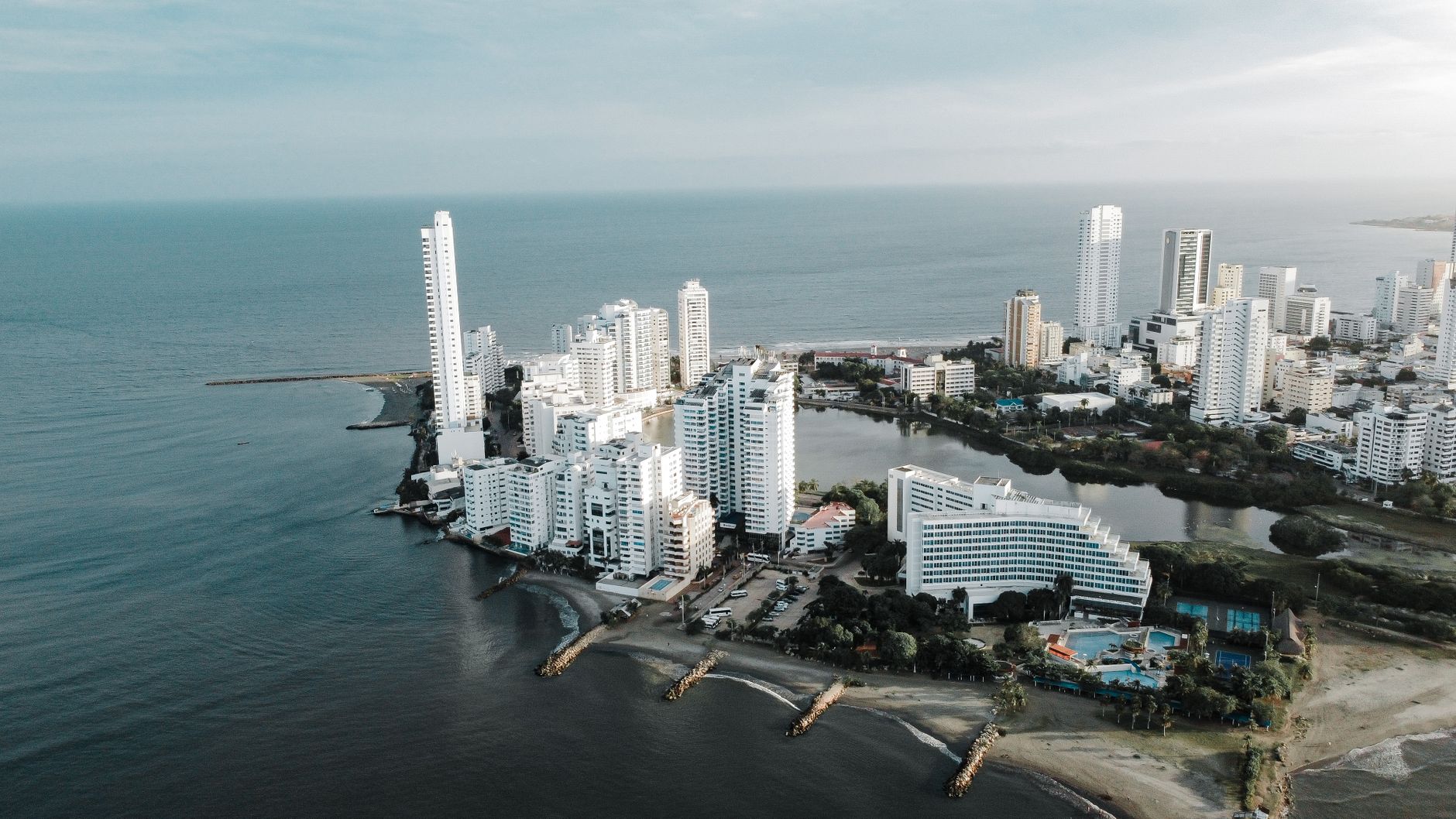
The first consolidated stretch of the Zona Norte: gated tower complexes along the road, beach in front and their own amenities. Almost everything is high-rise condominium, much of it bought as a second home and rented out seasonally. It sits minutes from the airport along the Anillo Vial, which is its only real way in and out.
- what the condominium bylaws say about daily rentals, because several complexes restrict them and buyers find out after signing
- the state of the maintenance dues and the reserve fund, which in seafront buildings goes into façade upkeep
- whether the tower holds a concession or permit for the beach in front, which does not come with the apartment
What to verify, step by step
- Ask for the acta template before the appointment and read it with your lawyer: anything without a field will not get written down.
- Walk the property with the permit and the approved drawings in hand and compare what was built against what the curaduría authorised.
- Put meter readings, the inventory of keys and remotes, and every observation with the open item it creates in writing.
- Check the handover points that belong to penthouses: which part of the terrace is área privada (privately owned area) and which is bien común de uso exclusivo, because that line decides who pays to waterproof the roof slab when it leaks; the coeficiente de copropiedad assigned to the unit, which on the top floor is usually the building's highest and fixes the dues permanently and whether the roof slab carries the building's tanks, machinery and antennas, and what access rights the administración holds over the terrace.
- Add what has to be verified in Morros: what the condominium bylaws say about daily rentals, because several complexes restrict them and buyers find out after signing; the state of the maintenance dues and the reserve fund, which in seafront buildings goes into façade upkeep and whether the tower holds a concession or permit for the beach in front, which does not come with the apartment.
- If you cannot attend, grant a power of attorney to someone who receives on your behalf, and require the signed acta plus photographs and video of the walkthrough the same day.
Mistakes that cost money
- Signing the acta with no observations so as not to delay handover. It is the most expensive waiver in the process, and it is made out of politeness.
- Taking delivery without clearance certificates for dues and utilities. The unpaid account follows the property, not the seller who left.
- Leaving an open item in a WhatsApp message. The acta gets signed; the message gets deleted.
Frequently asked questions
- Can I take delivery of a penthouse without travelling to Cartagena?
- Yes, with a power of attorney granted before a Colombian consul or apostilled. Whoever receives should be someone technical, not the same broker who sold it.
- Who do I claim from after handover?
- It depends on what was signed: the builder for what was warranted, the seller for what was promised, and the administración for anything that is common property. That is why the acta is drafted with names in it.
- Is video of the walkthrough worth anything?
- It backs up what was written in the acta. It does not replace it: the signed document is what binds.
Where to check it
- Curadurías Urbanas de Cartagena — whether a current building or subdivision permit exists and exactly what it authorises
- Alcaldía Mayor de Cartagena de Indias — property tax, betterment levies and District procedures
- Rama Judicial — whether there is pending litigation over the property or its owners
- Cartagena de Indias — the rules of the municipality Morros belongs to
Official bodies. Specific figures are requested there, not copied from a listing.
Updated 2026-11-06
Interested in a property in this area?
Write to us and we will send you the available options.