Handover is the one moment when the buyer has the property in front of him and still holds something to pay or to demand. Whatever is left out of the acta that day stops being a claim and becomes a conversation.
Taking delivery of a retail unit is not signing that the keys arrived: it is recording the condition in which the property is received, the open items, and how and when they will be addressed. The acta de entrega is a private document between the parties, and its worth lies in its detail: an inventory of what is handed over, meter readings, the state of finishes and equipment, keys and remotes, and the list of observations signed by both sides. New construction adds the recibo de obra and whatever the builder has warranted; a resale adds whatever the seller undertook in the promesa de compraventa, the binding promise of sale. After handover the claim changes counterpart: it stops being a conversation with a seller or a builder and becomes a contractual matter, which is where it starts to matter whether there are proceedings open against the person who sold to you.
A retail unit is bought differently because you are not buying a space but the possibility that someone can trade in it, and that possibility is granted by third parties. Two permissions are needed and nobody bundles them: the one the land-use rules give for that specific lot, and the one the copropiedad's reglamento gives, which need not agree. On top of those sit the tenant's own business permits, applied for activity by activity. The second difference is the relationship with the tenant. A lease of premises for commercial purposes runs under rules distinct from residential tenancies, with an expectation of continuity for the tenant that is worth having a lawyer spell out before signing, because the buyer steps into a contract that already exists and inherits its history. The third is that the unit depends on what lies outside it: façade, signage, pavement, loading area and public access are normally bien común, common property, or public space. What makes the unit profitable, in other words, is not inside its walls and is not decided from within the unit.
What sets Cielo Mar apart is that much of the buying happens before the property legally exists. Units sell off plan, and the counterparty is not an owner but a fiduciaria, a trust company, managing a patrimonio autónomo, a segregated trust estate, into which the landowner contributed the site. That changes the whole process. The first document signed is not a deed but an enrollment in the project; the money goes into a trust account rather than to a seller; and the deed is granted once the punto de equilibrio, the pre-sales break-even threshold, is reached and the building goes up, so in the early stage there is no unit folio to certify because none has been opened. Ask for the trust agreement and ask what happens if that threshold is never reached, who returns the money and on what terms. Who decides changes too: the governing document is the permit issued by the curaduría urbana, the private licensing office, and the condominium bylaws are still unregistered, so you read a draft. Utilities may be run by private operators belonging to the development itself, meaning the supply relationship does not start with the city water company.
What is specific to Cielo Mar
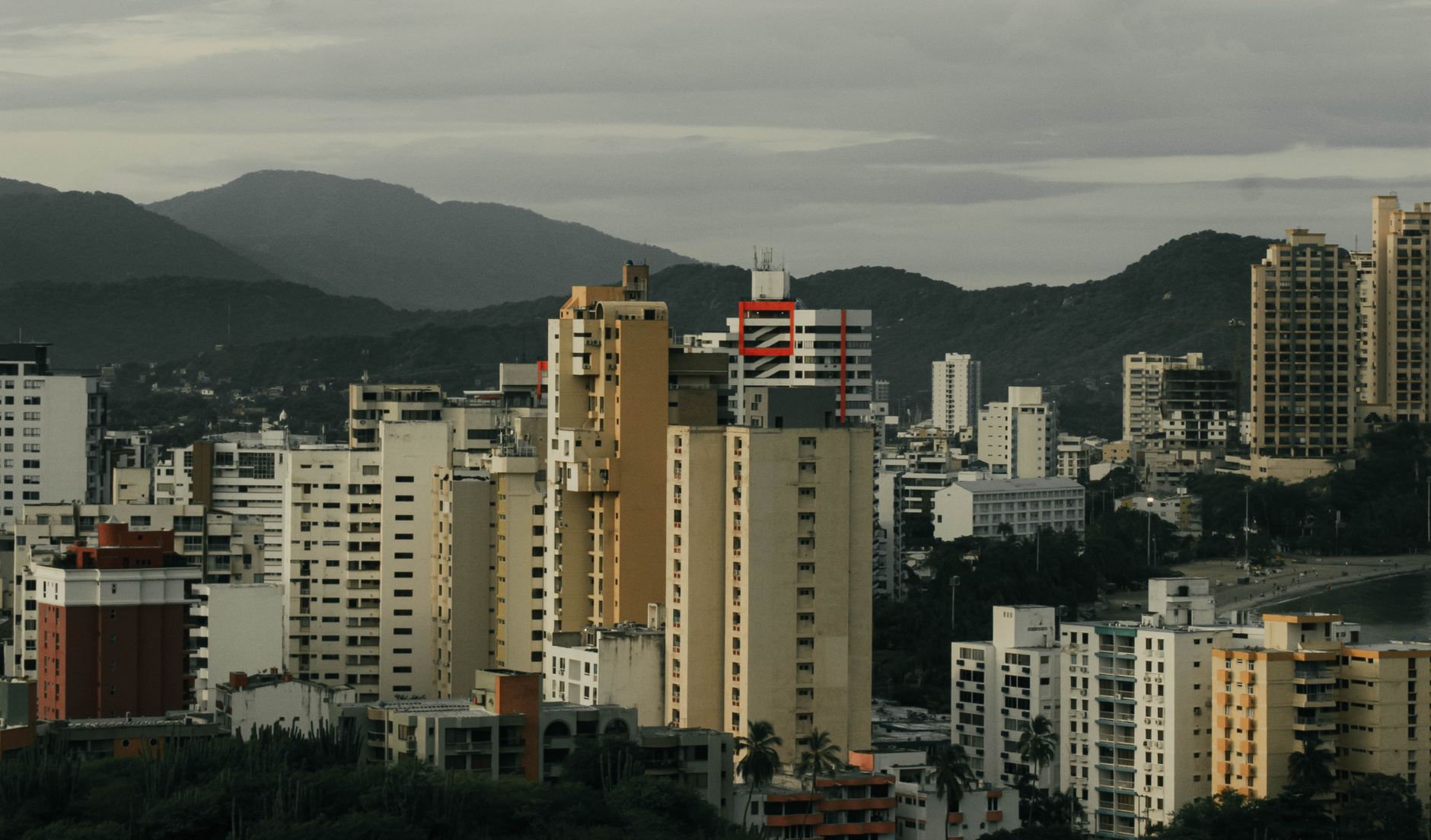
Morros continued northward: newer development and less established street retail. Recently built towers with undeveloped lots still sitting between them. It depends entirely on the Anillo Vial; groceries and school are not walkable.
- what has been permitted on the neighbouring lot, because a new tower next door changes the view and the sunlight you paid for
- how drinking water arrives and where the sewage goes, which along this northern stretch is not always the public network
- whether the building permit is current and matches what the sales office is offering
What to verify, step by step
- Ask for the acta template before the appointment and read it with your lawyer: anything without a field will not get written down.
- Walk the property with the permit and the approved drawings in hand and compare what was built against what the curaduría authorised.
- Put meter readings, the inventory of keys and remotes, and every observation with the open item it creates in writing.
- Check the handover points that belong to retail units: whether the POT (the city's land-use plan) allows commercial use on that specific lot and whether the reglamento de propiedad horizontal admits it — two separate permissions, and you need both; whether the particular activity planned requires a concepto de uso de suelo (a land-use ruling) and who applies for it, owner or tenant and how façade, signage, pavement and loading area are allocated, since these are usually bien común even though the unit uses them daily.
- Add what has to be verified in Cielo Mar: what has been permitted on the neighbouring lot, because a new tower next door changes the view and the sunlight you paid for; how drinking water arrives and where the sewage goes, which along this northern stretch is not always the public network and whether the building permit is current and matches what the sales office is offering.
- If you cannot attend, grant a power of attorney to someone who receives on your behalf, and require the signed acta plus photographs and video of the walkthrough the same day.
Mistakes that cost money
- Signing the acta with no observations so as not to delay handover. It is the most expensive waiver in the process, and it is made out of politeness.
- Taking delivery without clearance certificates for dues and utilities. The unpaid account follows the property, not the seller who left.
- Leaving an open item in a WhatsApp message. The acta gets signed; the message gets deleted.
Frequently asked questions
- Can I take delivery of a retail unit without travelling to Cartagena?
- Yes, with a power of attorney granted before a Colombian consul or apostilled. Whoever receives should be someone technical, not the same broker who sold it.
- Who do I claim from after handover?
- It depends on what was signed: the builder for what was warranted, the seller for what was promised, and the administración for anything that is common property. That is why the acta is drafted with names in it.
- Is video of the walkthrough worth anything?
- It backs up what was written in the acta. It does not replace it: the signed document is what binds.
Where to check it
- Curadurías Urbanas de Cartagena — whether a current building or subdivision permit exists and exactly what it authorises
- Alcaldía Mayor de Cartagena de Indias — property tax, betterment levies and District procedures
- Rama Judicial — whether there is pending litigation over the property or its owners
- Cartagena de Indias — the rules of the municipality Cielo Mar belongs to
Official bodies. Specific figures are requested there, not copied from a listing.
Updated 2026-11-06
Interested in a property in this area?
Write to us and we will send you the available options.