Every property carries a recorded economic use in the cadastre, and the one attached to a dúplex (two-level unit) is not always the use it actually serves. That line is no administrative detail: it is the basis on which property tax is assessed and the record checked whenever a permit is requested.
Economic use is the classification IGAC assigns to a property on its cadastral record —residential, commercial, vacant land, mixed— and it travels together with the area, the boundaries and the valuation. When the record says one thing and the property does another, the mismatch surfaces at three awkward moments: when the Distrito assesses property tax, when a ruling or a permit is applied for and the file does not line up, and when the buyer comes to sell and the title search compares the cadastral record against the registry folio. For a dúplex (two-level unit) the mismatch has typical causes, and it is worth knowing which one is yours before signing, because the correction is filed with the cadastral authority and is not solved at the notaría on signing day. What classification your property carries and how it is corrected are questions for IGAC or the Distrito's cadastral authority; what it means for your taxes is one for your adviser.
A dúplex is bought differently because what you see and what is recorded may not be the same thing. Two levels joined by an internal staircase are lived in as one home, yet the registry may still see two: two matrículas inmobiliarias (registry folios), two ownership shares, two chains of title and two separate arrears accounts with the building. That gap between the physical thing and the legal thing organizes the entire purchase. If there are two folios, you are really signing two acquisitions that end up tied in fact but not in law, and each one can be taxed, mortgaged, attached and sold on its own, so a future buyer may find half a home on offer. If there is a single folio, you need to know when and how the merger happened, because joining units is an amendment to the reglamento and not merely building work. What gets examined here, then, is the identity of the property before its condition: how the unit came into being, which document recognizes it, and whether the copropiedad was ever told. For a buyer abroad, each folio may also carry its own paperwork and its own power of attorney.
What you buy in Morros is not land but a private unit created by subdividing a single folio matriz, the parent registry record, and that changes the file. The chain of title on the land was settled once by the builder; what remains to review is the registered reglamento de propiedad horizontal, the condominium bylaws, any acta de asamblea, owners' meeting minutes, that amended them, and the coeficiente de copropiedad, the ownership share assigned to the unit, which governs both voting and billing. The counterparty differs from the undeveloped north as well: usually an individual owner living outside Cartagena, so closing depends on a power of attorney from that person, on a spouse's consent where it applies, and on the paz y salvo, a no-arrears certificate signed by the building manager, a document that does not even exist for rural land. Decisions here belong to the owners' assembly and the manager it appoints, not to a public office; the District and the curaduría urbana, the private licensing office, had their say when the tower was permitted. Internal infrastructure, from pumping to the generator and security, is private and funded by the budget that same assembly approves, so the minutes describe the property better than any tour.
What is specific to Morros
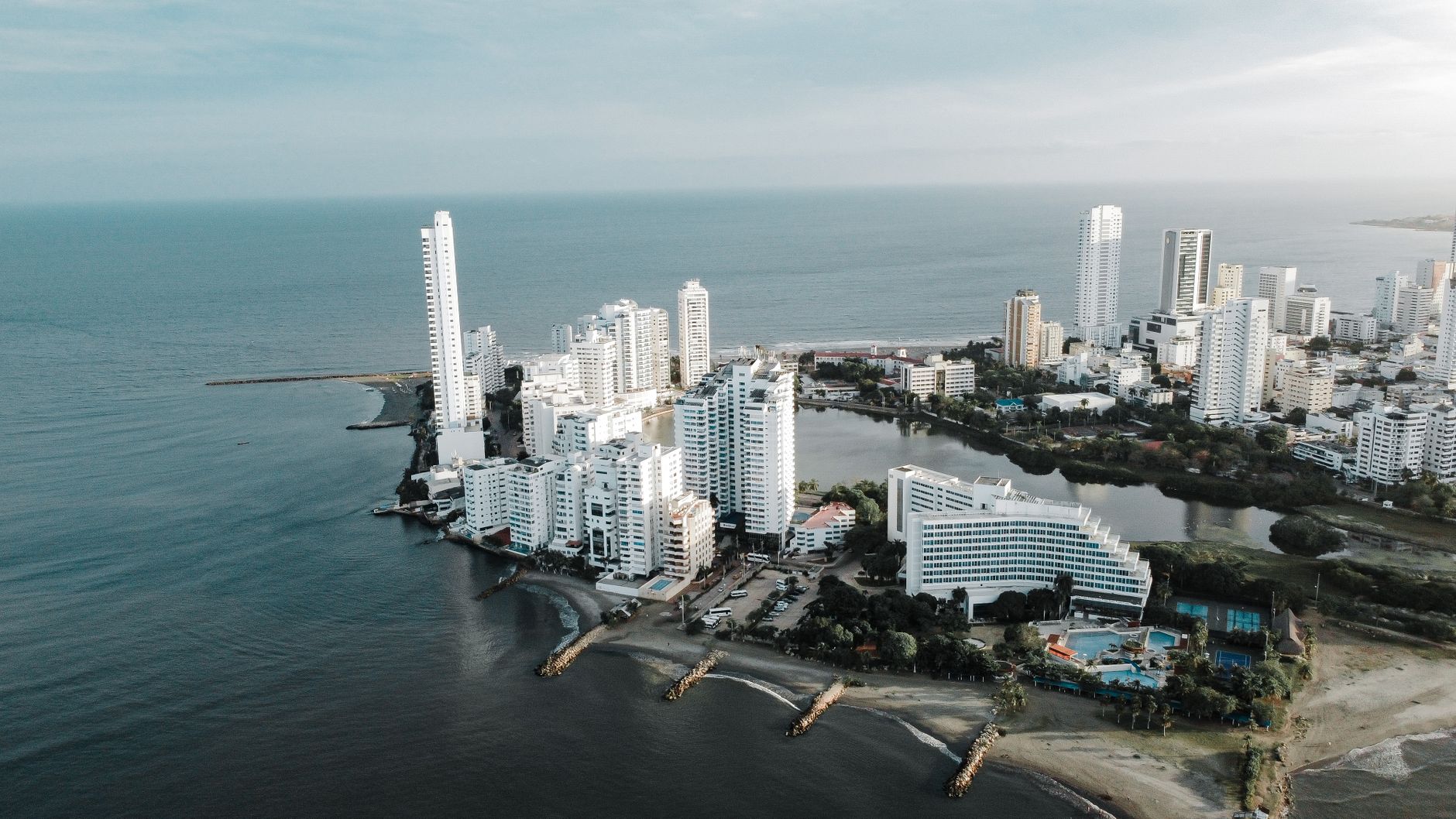
The first consolidated stretch of the Zona Norte: gated tower complexes along the road, beach in front and their own amenities. Almost everything is high-rise condominium, much of it bought as a second home and rented out seasonally. It sits minutes from the airport along the Anillo Vial, which is its only real way in and out.
- what the condominium bylaws say about daily rentals, because several complexes restrict them and buyers find out after signing
- the state of the maintenance dues and the reserve fund, which in seafront buildings goes into façade upkeep
- whether the tower holds a concession or permit for the beach in front, which does not come with the apartment
What to verify, step by step
- Order the property's cadastral record by its registry folio and read the recorded economic use, the built area and the land area exactly as they appear, not as the listing describes them.
- Compare that record against the certificado de tradición y libertad (the title and encumbrances certificate) from the Ventanilla Única de Registro: property identification, area and boundaries must tell the same story.
- Ask the Alcaldía which use the property tax is currently being assessed under, and since when.
- Check what belongs to a dúplex (two-level unit) itself and explains why its record may not match: whether both levels sit on a single matrícula inmobiliaria (registry folio) or on two, since that decides whether it conveys as one property or as two; whether the internal staircase appears on the plans approved with the licencia de construcción or was cut later to join two units and how the coeficiente de copropiedad was restated after the merger, because if the reglamento was never amended the dues may still be billed twice.
- Where there is a mismatch, ask the cadastral authority which correction or mutación application applies, who may file it and what supporting documents it takes; the filing starts without travelling, with a power of attorney where a signature is needed.
- Have the promesa state who files the correction, with what supporting documents, and what happens to closing if the cadastral authority has not yet ruled.
Mistakes that cost money
- Confusing cadastral use with POT land use. The POT says what is allowed in the polygon; the cadastre says how the property is classified, and you can be in order with one and not the other.
- Taking the record the seller hands you at face value. Order it yourself and recently dated, because a cadastral mutación changes the record without changing the deed.
- Assuming the correction is notarial business. The record is amended by the cadastral authority, and a deed does not take its place.
Frequently asked questions
- Where is the recorded economic use consulted?
- On the property's cadastral record, with IGAC or whichever cadastral authority operates in the municipality. The registry folio from the Ventanilla Única de Registro is used to cross-check it.
- Can a deed be signed while the recorded use is out of date?
- That is a question for the notary and your attorney, since it depends on what the particular transaction requires. What you can verify before signing is what the record says today and what filing is pending.
- Who is asked for the correction when the record does not match?
- The competent cadastral authority, which is what amends the record. The Alcaldía comes in for whatever affects the property tax assessment.
Where to check it
- Instituto Geográfico Agustín Codazzi — the cadastral record, area, boundaries and assessed value of the property
- Ventanilla Única de Registro (VUR) — checking the registry folio online and ordering the certificate without visiting the office
- Alcaldía Mayor de Cartagena de Indias — property tax, betterment levies and District procedures
- Cartagena de Indias — the rules of the municipality Morros belongs to
Official bodies. Specific figures are requested there, not copied from a listing.
Updated 2026-11-06
Interested in a property in this area?
Write to us and we will send you the available options.