Common expenses are not negotiated with the seller: a registered document sets them and an ownership share already written down divides them. What the buyer decides is whether to read that before signing or to discover it with the first bill.
For a penthouse the base of the monthly charge can come from different places, and that is where the differences start. Where the property is under propiedad horizontal —the Colombian condominium regime— the reglamento, recorded in a public deed and registered, assigns each unit its coeficiente de copropiedad, the ownership share, and that share divides the expensas comunes and the weight of the vote at the asamblea. Where there is no propiedad horizontal there may be a neighbours' association or a subdivision covenant charging on another base, and it is worth knowing which document it charges under. On top of the ordinary charge come the levies the asamblea approves and, separately, the impuesto predial and betterment levies collected by the District, which are not common expenses at all. And one debt matters more than the charge itself: the seller's, because unpaid expensas are pursued against the property rather than against whoever left.
A penthouse is bought differently because what you acquire is attached to the building's edge. The top unit enjoys, for itself alone, elements it does not own: the roof slab that closes it, the façade that wraps it and, very often, the space holding the tower's water tanks, pressure equipment and antennas. That asymmetry is the whole point. What you enjoy alone you do not control alone: enclosing the terrace, adding a pool or changing the window frames is not interior remodelling but work on bien común, common property, and the body that authorizes it is the asamblea under whatever majority the reglamento demands, not the owner. At the same time the coeficiente de copropiedad —the unit's ownership share— is usually the highest in the tower, so the unit carries the largest fraction of every building expense, including the ones that originate directly above it. Conservation differs as well: sun, salt air and water damage concentrate on the roof slab and the upper façade. So the useful question before signing is not how the apartment looks inside, but how the copropiedad has been handling waterproofing and what it has resolved about it.
Bocagrande works like a mature resale market, with consequences that do not repeat up north. The counterparty is almost never a builder: it is a long-standing owner or, very often, an unsettled sucesión, an estate proceeding, whose heirs live in different countries, so closing depends not on one power of attorney but on several, and on the partition among them. The registry record is old too: it was opened when the building was submitted to the condominium regime, it carries legacy entries such as cancelled mortgages, patrimonio de familia and afectación a vivienda familiar, both family-home protections, or lifted attachments, and the recorded area does not always match a current survey, so you compare the registry record against the deed and against the unit's floor plan. The peninsula is also land reclaimed from the sea under subdivisions the District authorized in their day, and the oldest deeds still carry references to those parcelaciones, the original platting. Day-to-day power sits with the owners' assembly and its manager, so in a tower with a long record of decisions the minutes and the status of the condominium's lawsuits matter more than the brochure.
What is specific to Bocagrande
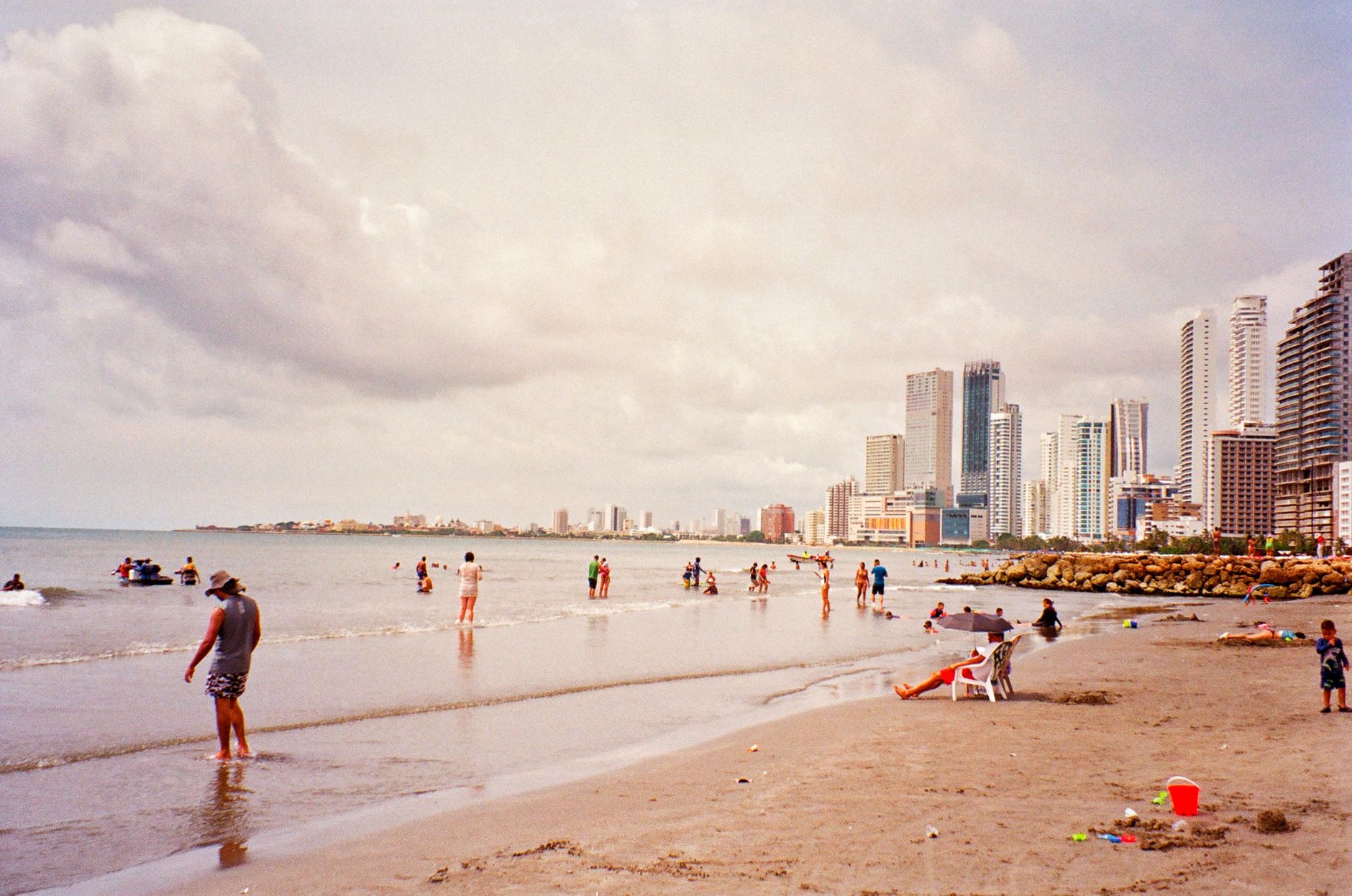
Cartagena's dense, vertical peninsula: open sea on one side, bay on the other, and built out to the last lot. Condominium towers from very different eras, from the sixties to recent construction, on the same block. Groceries, restaurants and beach are walkable, and access is through a few roads that saturate in high season.
- the building's actual age and whether it has a structural vulnerability study, since much of the stock was built under seismic codes earlier than those now in force
- what the condominium bylaws say about daily rentals, which on this peninsula is the difference between being able to rent and not
- how many parking spaces the unit holds in the deed, not in the brochure, because older towers do not have one per apartment
What to verify, step by step
- Request the reglamento de propiedad horizontal exactly as registered and look for the table of coeficientes, not a summary forwarded by chat.
- Confirm on the certificado de tradición y libertad that the reglamento and its amendments are registered against the property's folio.
- Ask the administrador for the unit's account statement, the approved budget, recent asamblea minutes and a clearance certificate in the seller's name.
- Review what sets the charging base for penthouses: which part of the terrace is área privada (privately owned area) and which is bien común de uso exclusivo, because that line decides who pays to waterproof the roof slab when it leaks; the coeficiente de copropiedad assigned to the unit, which on the top floor is usually the building's highest and fixes the dues permanently and whether the roof slab carries the building's tanks, machinery and antennas, and what access rights the administración holds over the terrace.
- Add what is worth confirming in Bocagrande: the building's actual age and whether it has a structural vulnerability study, since much of the stock was built under seismic codes earlier than those now in force; what the condominium bylaws say about daily rentals, which on this peninsula is the difference between being able to rent and not and how many parking spaces the unit holds in the deed, not in the brochure, because older towers do not have one per apartment.
- Ask the District about the standing of the impuesto predial and any betterment levy on the property, and search the Rama Judicial for collection proceedings against the seller or over the property.
Mistakes that cost money
- Asking how much the dues are and settling for the spoken answer. The share and the budget set them, and both are documents.
- Confusing the dues with the impuesto predial. They are paid to different bodies and claimed through different routes.
- Treating the debt as settled because the seller says he is current. The clearance certificate is issued by the administrador, not by the seller.
Frequently asked questions
- Can I get the account statement for a penthouse from abroad?
- Yes. The administrador issues it by email on a written request from you or your attorney-in-fact, and the seller usually has to authorise it.
- Can my unit's ownership share be changed?
- That is an amendment to the reglamento, decided by the asamblea under the majorities the reglamento itself requires. It is not something a buyer arranges with the administrador.
- What if the property is not under propiedad horizontal?
- Then ask whether a neighbours' association exists and under which document it charges, because the obligation comes from that document and not from custom.
Where to check it
- Superintendencia de Notariado y Registro — the certificate of title and encumbrances, which is the property's full history
- Alcaldía Mayor de Cartagena de Indias — property tax, betterment levies and District procedures
- Rama Judicial — whether there is pending litigation over the property or its owners
- Cartagena de Indias — the rules of the municipality Bocagrande belongs to
Official bodies. Specific figures are requested there, not copied from a listing.
Updated 2026-11-06
Interested in a property in this area?
Write to us and we will send you the available options.