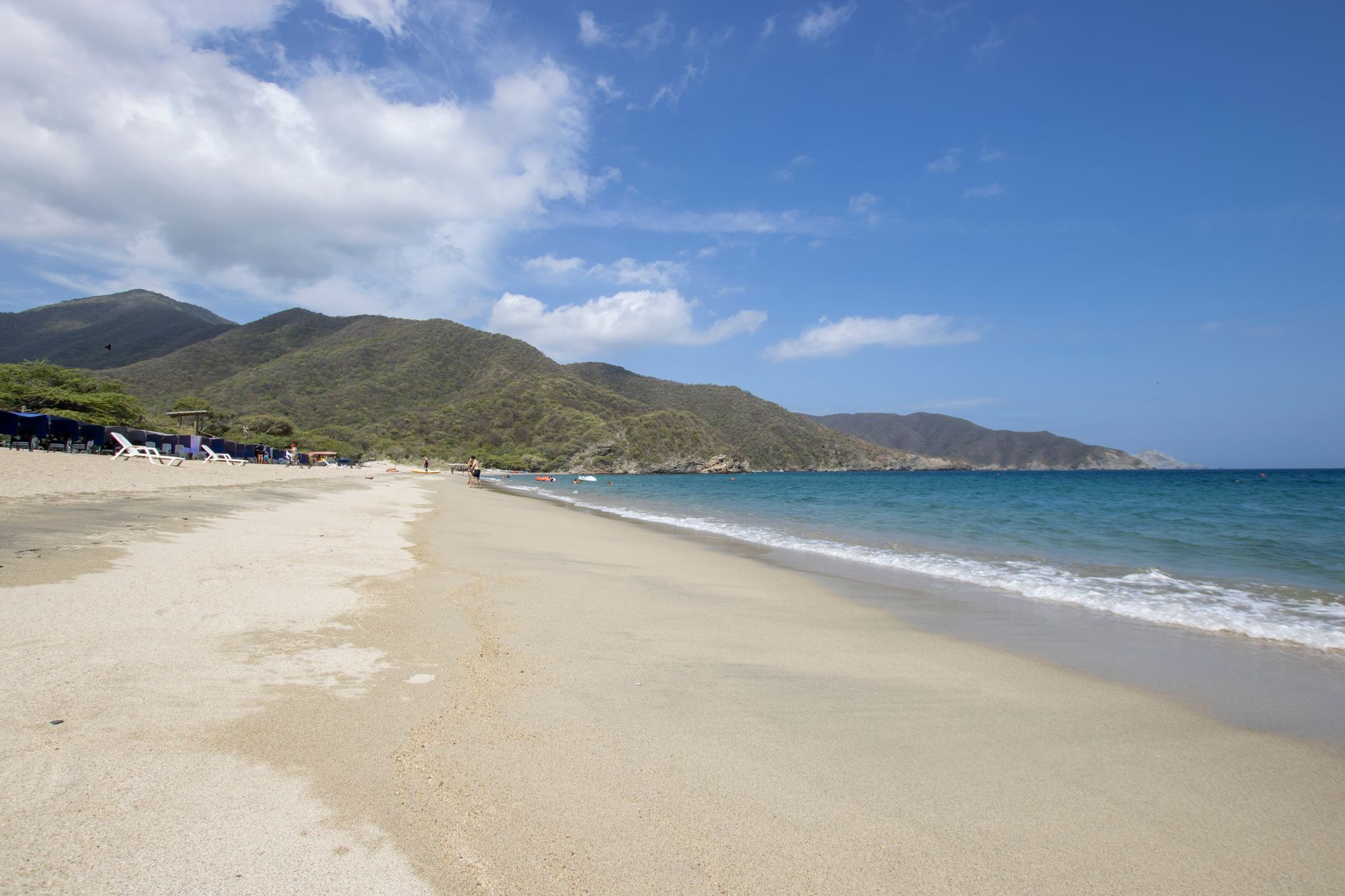
The front row in Punta Canoa and the block behind it are marketed as the same product with a different view. They are not. The upkeep you pay, the bylaws that bind you and your rights over the sand you look at all differ.
Sitting on the water is a physical condition that turns into money three ways. Façades, windows, railings and metal equipment degrade in salt air, and that is paid through maintenance dues and the reserve fund, not through the purchase price. The condominium bylaws of a front-row building usually regulate more: balcony enclosures, awnings, air conditioning units, guest traffic. And the beach in front does not come with the apartment: the zona de bajamar (the tidal strip, public domain of the Nation) cannot be privately owned, and any exclusive use rests on a concession held by the building or the hotel, not by your unit. Buying a few blocks back lowers all three costs and removes direct access. Both decisions are made on documents, not on a site visit.
What is sold in Punta Canoa is often not a lot but a share in a tract still held en común y proindiviso, in undivided co-ownership, and buying a share gives no right to a specific piece of ground, only an abstract fraction of the whole: the buyer ends up co-owning with strangers and needs a partición, a partition, or a physical division before being able to say which part is his. That is the process that sets this sector apart: identifying every co-owner, finding out whether anyone has already petitioned for division, and seeing how the predial, the property tax, has been paid on an asset nobody uses exclusively. The counterparty differs from the village too: sometimes it is a land-holding company based elsewhere, in which case you request its certificado de existencia y representación, the corporate good-standing and signing-authority certificate, along with the resolution authorizing the sale. Who decides differs as well: lying outside consolidated urban land, permitting runs through the rural regime and the environmental opinions of Cardique rather than a neighborhood licensing office, with DIMAR, the maritime authority, involved at the beach edge. Nor is infrastructure networked: each parcel arranges its own water, power and wastewater.
What is specific to Punta Canoa
A low-density coastal village to the north, with open beach and very little high-rise building. Lots and houses dominate; towers are the exception. It lies along the coastal road toward Barranquilla, far from the centre and without full urban services.
- whether the property has its own registry folio or sits inside a larger parcel that was never subdivided
- whether there is certified utility availability, not merely a promise that services are coming
- whether the property lies in a coastal erosion risk zone, which is documented along this stretch
What to verify, step by step
- Request the building's approved budget and the status of its reserve fund, and ask the manager when the façade was last worked on and what is planned.
- Request the owners' meeting minutes and look for special assessments approved: in the front row that is where the real cost of living on the water shows up.
- Ask DIMAR where the zona de bajamar ends in front of the Punta Canoa property, and whether a beach concession exists, in whose name and for how long.
- Read the façade and common-area chapters of the condominium bylaws, and confirm what you may and may not alter on the balcony.
- Check the deed for what is assigned to the unit and what is bien común de uso exclusivo (common property assigned for exclusive use), since that decides who pays for each repair.
- Compare, through the same broker, one front-row unit and one set back in Punta Canoa, asking for the dues, the bylaws and the certificate of title for both.
Mistakes that cost money
- Comparing front-row and inland prices without comparing dues. The cost of being on the water is not all in the purchase price.
- Assuming beach access comes with the deed. It comes from the tidal-zone regime and from a concession, and it is revocable.
- Looking at the window and not at the neighbour. Where undeveloped lots remain alongside, today's view can be built out, and you check that at the curaduría, not at the sales office.
Frequently asked questions
- Does the building own the beach in front of it?
- No. The tidal strip is public domain of the Nation. What can exist is an use concession, and DIMAR will tell you in whose name it is held.
- Why are dues different in a seafront building?
- Because salt air forces more frequent façade and equipment maintenance. Ask for the budget and the minutes: the figure is there, not in the brochure.
- Is the front row better than a block back?
- It depends what you are buying it for and what level of dues you are willing to carry. We will not make that call for you; we will tell you which documents to compare.
Where to check it
- Dirección General Marítima (DIMAR) — public-domain tidal land and concessions over the beach
- Superintendencia de Notariado y Registro — the certificate of title and encumbrances, which is the property's full history
- Curadurías Urbanas de Cartagena — whether a current building or subdivision permit exists and exactly what it authorises
- Plan de Ordenamiento Territorial de Cartagena — land use, the rules applying to the property and protected land
- Alcaldía Mayor de Cartagena de Indias — property tax, betterment levies and District procedures
- Cartagena de Indias — the rules of the municipality Punta Canoa belongs to
Official bodies. Specific figures are requested there, not copied from a listing.
Updated 2026-11-06
More about Punta Canoa
- Penthouse and terrace in Punta Canoa: what is yours and what is common property assigned for exclusive use
- House in a gated community in Punta Canoa: what you are actually buying
- Buying land to build in Punta Canoa: your own registry folio, utilities and planning rules
- The high end in Punta Canoa: what actually sets an exclusive property apart
- Appraising an apartment under propiedad horizontal in Punta Canoa: who signs the avalúo comercial and how
The same, in other neighbourhoods
- Beachfront apartment in Bocagrande: what changes versus being a few blocks back
- Beachfront apartment in Castillogrande: what changes versus being a few blocks back
- Beachfront apartment in Crespo: what changes versus being a few blocks back
- Beachfront apartment in El Laguito: what changes versus being a few blocks back
Interested in a property in this area?
Write to us and we will send you the available options.