Handover is the one moment when the buyer has the property in front of him and still holds something to pay or to demand. Whatever is left out of the acta that day stops being a claim and becomes a conversation.
Taking delivery of a beachfront house is not signing that the keys arrived: it is recording the condition in which the property is received, the open items, and how and when they will be addressed. The acta de entrega is a private document between the parties, and its worth lies in its detail: an inventory of what is handed over, meter readings, the state of finishes and equipment, keys and remotes, and the list of observations signed by both sides. New construction adds the recibo de obra and whatever the builder has warranted; a resale adds whatever the seller undertook in the promesa de compraventa, the binding promise of sale. After handover the claim changes counterpart: it stops being a conversation with a seller or a builder and becomes a contractual matter, which is where it starts to matter whether there are proceedings open against the person who sold to you.
A beachfront house is bought differently because one of its boundaries was not drawn by a surveyor: the water draws it and the State defines it. In front of the lot lies a strip that is bien de uso público of the Nation —public domain— which cannot be sold, fenced or acquired by the passage of time. So part of what you enjoy from the terrace will never belong to anyone, and the public keeps its right of access. That condition reshapes the whole review. A clean deed and a clean folio are not enough: you need to know where that line sits today, whether any structure on the lot crossed it, and whether a proceeding is open before the maritime or environmental authority, because building on public land is not cured with money or at a notaría. The second point is that the property lives inside a medium that attacks it. Salt air and surf work on the structure year round, so what you buy includes maintenance that never pauses and, very often, a coastal protection work whose owner and whose duty to repair are worth identifying before signing, especially when it sits outside the boundary or is shared with neighbors.
What is sold in Punta Canoa is often not a lot but a share in a tract still held en común y proindiviso, in undivided co-ownership, and buying a share gives no right to a specific piece of ground, only an abstract fraction of the whole: the buyer ends up co-owning with strangers and needs a partición, a partition, or a physical division before being able to say which part is his. That is the process that sets this sector apart: identifying every co-owner, finding out whether anyone has already petitioned for division, and seeing how the predial, the property tax, has been paid on an asset nobody uses exclusively. The counterparty differs from the village too: sometimes it is a land-holding company based elsewhere, in which case you request its certificado de existencia y representación, the corporate good-standing and signing-authority certificate, along with the resolution authorizing the sale. Who decides differs as well: lying outside consolidated urban land, permitting runs through the rural regime and the environmental opinions of Cardique rather than a neighborhood licensing office, with DIMAR, the maritime authority, involved at the beach edge. Nor is infrastructure networked: each parcel arranges its own water, power and wastewater.
What is specific to Punta Canoa
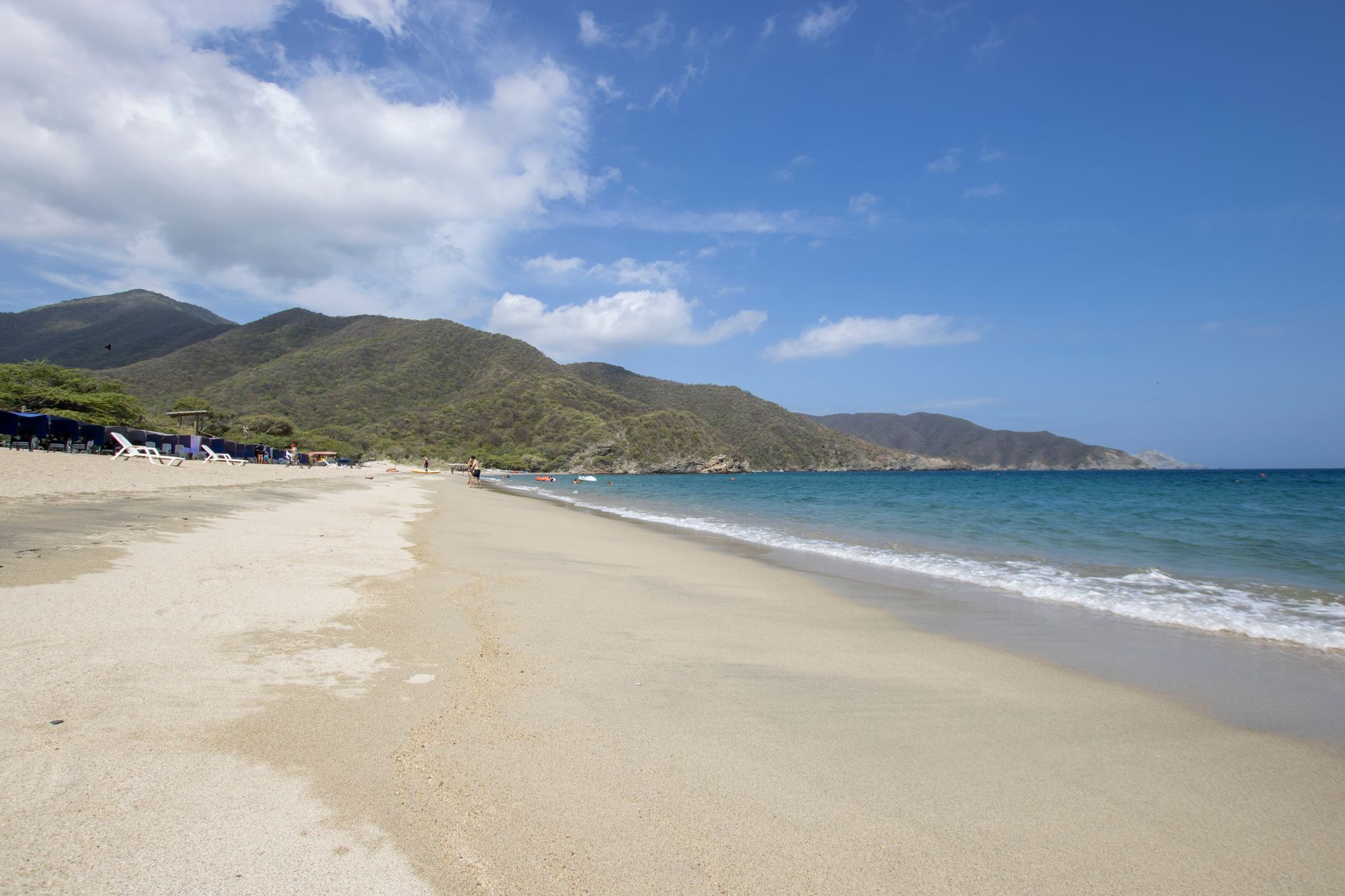
A low-density coastal village to the north, with open beach and very little high-rise building. Lots and houses dominate; towers are the exception. It lies along the coastal road toward Barranquilla, far from the centre and without full urban services.
- whether the property has its own registry folio or sits inside a larger parcel that was never subdivided
- whether there is certified utility availability, not merely a promise that services are coming
- whether the property lies in a coastal erosion risk zone, which is documented along this stretch
What to verify, step by step
- Ask for the acta template before the appointment and read it with your lawyer: anything without a field will not get written down.
- Walk the property with the permit and the approved drawings in hand and compare what was built against what the curaduría authorised.
- Put meter readings, the inventory of keys and remotes, and every observation with the open item it creates in writing.
- Check the handover points that belong to beachfront houses: where the zona de bajamar (the tidal strip, public domain of the Nation) ends in front of the lot, because nothing built on it conveys with the house; whether the fence, pool or terrace encroach on that strip, and whether any proceeding is open before the maritime or environmental authority and how wave protection was solved and who owns the protection works, which often sit outside the boundary line.
- Add what has to be verified in Punta Canoa: whether the property has its own registry folio or sits inside a larger parcel that was never subdivided; whether there is certified utility availability, not merely a promise that services are coming and whether the property lies in a coastal erosion risk zone, which is documented along this stretch.
- If you cannot attend, grant a power of attorney to someone who receives on your behalf, and require the signed acta plus photographs and video of the walkthrough the same day.
Mistakes that cost money
- Signing the acta with no observations so as not to delay handover. It is the most expensive waiver in the process, and it is made out of politeness.
- Taking delivery without clearance certificates for dues and utilities. The unpaid account follows the property, not the seller who left.
- Leaving an open item in a WhatsApp message. The acta gets signed; the message gets deleted.
Frequently asked questions
- Can I take delivery of a beachfront house without travelling to Cartagena?
- Yes, with a power of attorney granted before a Colombian consul or apostilled. Whoever receives should be someone technical, not the same broker who sold it.
- Who do I claim from after handover?
- It depends on what was signed: the builder for what was warranted, the seller for what was promised, and the administración for anything that is common property. That is why the acta is drafted with names in it.
- Is video of the walkthrough worth anything?
- It backs up what was written in the acta. It does not replace it: the signed document is what binds.
Where to check it
- Curadurías Urbanas de Cartagena — whether a current building or subdivision permit exists and exactly what it authorises
- Alcaldía Mayor de Cartagena de Indias — property tax, betterment levies and District procedures
- Rama Judicial — whether there is pending litigation over the property or its owners
- Cartagena de Indias — the rules of the municipality Punta Canoa belongs to
Official bodies. Specific figures are requested there, not copied from a listing.
Updated 2026-11-06
Interested in a property in this area?
Write to us and we will send you the available options.