Most foreign buyers assume the building is already insured and that this covers them. The association's policy and the owner's own policy cover different things, and between the two sits a gap that shows up on the day of a loss.
The association's policy covers the building's common property and the administrador takes it out against the budget; the owner's policy covers the private area, the contents and third-party liability, and you take that one out. For an off-plan new construction the boundary between them does not fall in the same place, and that is the exposure: what is bien común de uso exclusivo for one unit is private area for another, and a terrace, a boundary wall or an air-conditioning unit can end up outside both policies. Where there is a mortgage the lender also requires its own cover as a condition of disbursement, and charges it inside the instalment. Before signing any of them, confirm with the Superintendencia Financiera that the insurer is supervised, and before insuring anything, find out what risk information the District holds on that property.
Off-plan new construction is bought differently because at signing the property does not yet exist: what exists is a project, a permit and a company that has to stay standing until delivery. The document, not the apartment, is therefore what gets reviewed. The first thing that changes is the path of the money: instalments are paid into a patrimonio autónomo —a trust estate— administered by a fiduciaria rather than into the builder's own account, and it is worth knowing what conditions must be met before those funds are released to the works. The second is that what you sign may be a promesa de compraventa, a binding promise of sale, or only an encargo fiduciario, a trust deposit instruction; they do not bind alike and do not unwind alike, and what happens if the project never starts depends on which one it is. The third is that the unit's identity rests on a plan that allows adjustment, so read which tolerances and specification changes the seller reserved and how the buyer is told of them. The fourth, for a buyer abroad, is duration: every transfer has to be documented and someone has to be empowered to sign and take delivery years later.
What is sold in Punta Canoa is often not a lot but a share in a tract still held en común y proindiviso, in undivided co-ownership, and buying a share gives no right to a specific piece of ground, only an abstract fraction of the whole: the buyer ends up co-owning with strangers and needs a partición, a partition, or a physical division before being able to say which part is his. That is the process that sets this sector apart: identifying every co-owner, finding out whether anyone has already petitioned for division, and seeing how the predial, the property tax, has been paid on an asset nobody uses exclusively. The counterparty differs from the village too: sometimes it is a land-holding company based elsewhere, in which case you request its certificado de existencia y representación, the corporate good-standing and signing-authority certificate, along with the resolution authorizing the sale. Who decides differs as well: lying outside consolidated urban land, permitting runs through the rural regime and the environmental opinions of Cardique rather than a neighborhood licensing office, with DIMAR, the maritime authority, involved at the beach edge. Nor is infrastructure networked: each parcel arranges its own water, power and wastewater.
What is specific to Punta Canoa
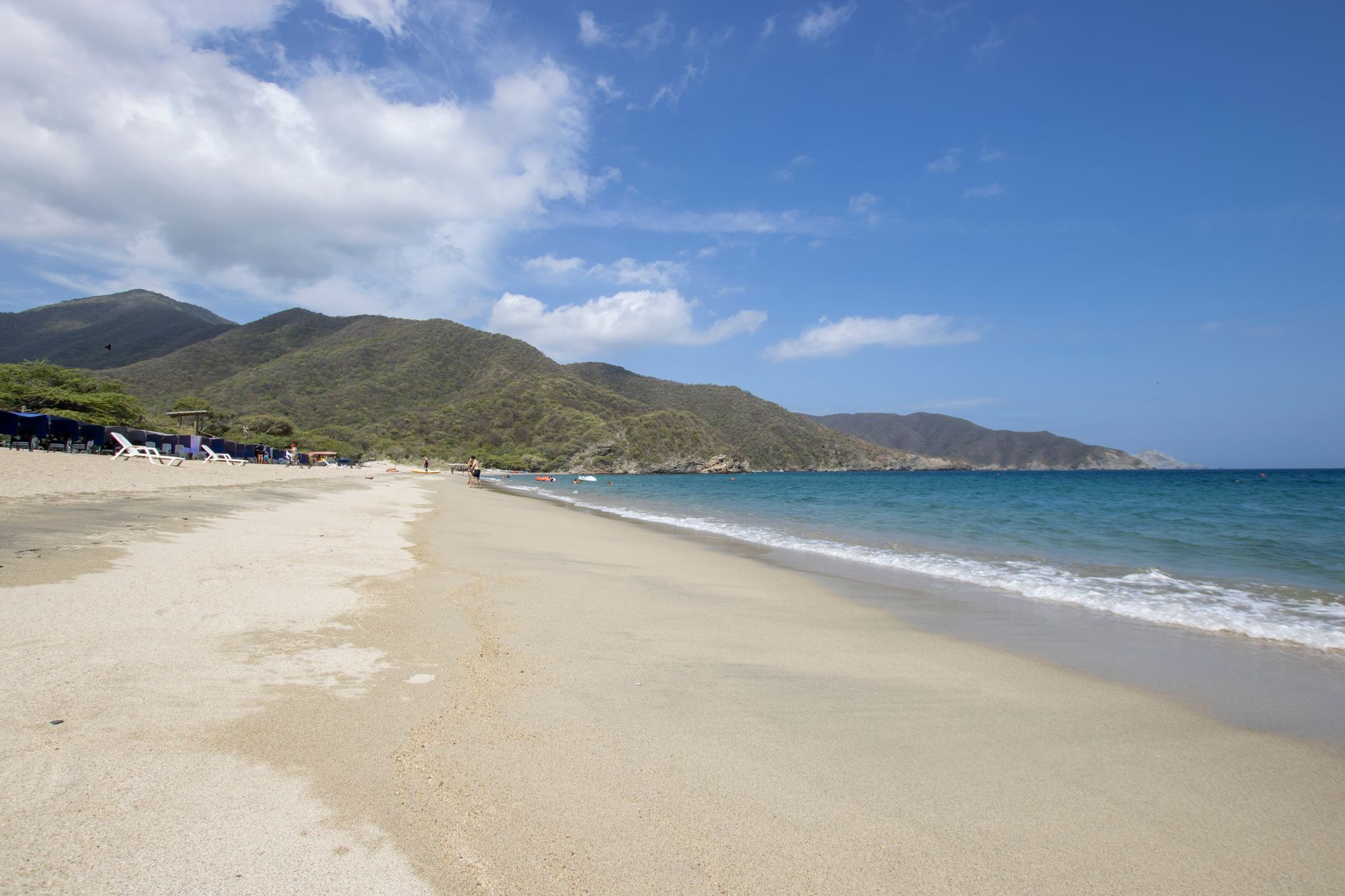
A low-density coastal village to the north, with open beach and very little high-rise building. Lots and houses dominate; towers are the exception. It lies along the coastal road toward Barranquilla, far from the centre and without full urban services.
- whether the property has its own registry folio or sits inside a larger parcel that was never subdivided
- whether there is certified utility availability, not merely a promise that services are coming
- whether the property lies in a coastal erosion risk zone, which is documented along this stretch
What to verify, step by step
- Ask the administrador for the current certificate of the association's policy, with its cover, exclusions and the insurer's name.
- Ask for the reglamento and the deed so you know where the unit's private area ends and common property begins, which is the line that decides which policy responds.
- Verify with the Superintendencia Financiera that the insurer and the intermediary are supervised before paying any premium.
- Review what has to be insured because it is off-plan new constructions: which patrimonio autónomo (the trust estate holding buyers' funds) the instalments are paid into and which fiduciaria administers it, because the money should not reach the builder's own account; whether the licencia de construcción has actually been issued or the project is still in prelanzamiento, and what punto de equilibrio (the pre-sale threshold) must be met before building starts and what the signed document says about the return of funds if that threshold is never met, and whether you signed a promesa de compraventa or only an encargo fiduciario (a trust deposit instruction).
- Add the exposures particular to Punta Canoa: whether the property has its own registry folio or sits inside a larger parcel that was never subdivided; whether there is certified utility availability, not merely a promise that services are coming and whether the property lies in a coastal erosion risk zone, which is documented along this stretch.
- Ask the District what risk information it holds on the property and hand that to your insurance broker before asking for quotes.
Mistakes that cost money
- Assuming the building's policy covers the inside of the apartment. It insures common property, and your own contents fall outside it.
- Buying the lender's policy without reading what it covers. It protects the creditor's collateral, which is not the same as protecting you.
- Letting the certificate lapse and finding out at the moment of a loss. Ask the administrador for the renewal date and ask again each year.
Frequently asked questions
- Can I insure an off-plan new construction from abroad?
- Yes, through an insurer supervised in Colombia, arranged by email with a broker; payment and billing are coordinated with him.
- Who files the claim when the damage is to common property?
- The administración, under the association's policy. The owner claims his own loss under his own policy, which is why both should be identified before buying.
- Does the lender's policy work as my property insurance?
- It answers what the institution requires for its collateral. What is missing for you is a question for your broker, with the reglamento and the deed in front of him.
Where to check it
- Superintendencia Financiera de Colombia — whether a trust company exists and is supervised, before transferring money to a patrimonio autónomo
- Alcaldía Mayor de Cartagena de Indias — property tax, betterment levies and District procedures
- Cartagena de Indias — the rules of the municipality Punta Canoa belongs to
Official bodies. Specific figures are requested there, not copied from a listing.
Updated 2026-11-06
Interested in a property in this area?
Write to us and we will send you the available options.