A title review tells you who may sell; a technical inspection tells you what is being sold. They are two separate engagements, both paid for by the buyer, and in Punta Canoa the second one is usually skipped because the buyer is not in the city to open the door.
What gets inspected is not the same checklist for every property: when what you are buying is an apartment under propiedad horizontal, the report has to address what the nature of that property actually puts at risk, not a generic form about damp patches and sockets. That matters for money and for timing. For money, because a repair not found before the promesa de compraventa is signed gets paid for afterwards by the buyer, and in a propiedad horizontal (condominium regime) it can end up shared among all owners through a special assessment. For timing, because before the promesa whatever turns up is a matter for negotiation, and afterwards it is only a claim. The report is signed by a professional who answers for what it says; nobody signs the brochure.
Buying under propiedad horizontal —Colombia's condominium regime— means joining a legal entity that already exists and whose rules are not negotiated at the closing table. You accept the reglamento whole, together with what earlier asambleas (owners' meetings) resolved and whatever future ones resolve by majority, with no veto. That changes what due diligence is about. On a house, a title review follows the chain of ownership of the lot; here it also has to read the internal life of a community you become a compulsory member of: who administers it, which body approves an extraordinary levy, what the recent asambleas decided, and whether the building is current on what it must repair. It changes who collects, too. Beyond the municipal impuesto predial, the unit generates a monthly dues payment made to the administración for as long as you own it, whether or not you use the apartment, and whatever a previous owner left unpaid follows the unit rather than the person, which makes the administración's certificate as important as the registry's. For a buyer living abroad, the practical consequence is appointing someone to receive notices and vote, because the asamblea does not wait.
What is sold in Punta Canoa is often not a lot but a share in a tract still held en común y proindiviso, in undivided co-ownership, and buying a share gives no right to a specific piece of ground, only an abstract fraction of the whole: the buyer ends up co-owning with strangers and needs a partición, a partition, or a physical division before being able to say which part is his. That is the process that sets this sector apart: identifying every co-owner, finding out whether anyone has already petitioned for division, and seeing how the predial, the property tax, has been paid on an asset nobody uses exclusively. The counterparty differs from the village too: sometimes it is a land-holding company based elsewhere, in which case you request its certificado de existencia y representación, the corporate good-standing and signing-authority certificate, along with the resolution authorizing the sale. Who decides differs as well: lying outside consolidated urban land, permitting runs through the rural regime and the environmental opinions of Cardique rather than a neighborhood licensing office, with DIMAR, the maritime authority, involved at the beach edge. Nor is infrastructure networked: each parcel arranges its own water, power and wastewater.
What is specific to Punta Canoa
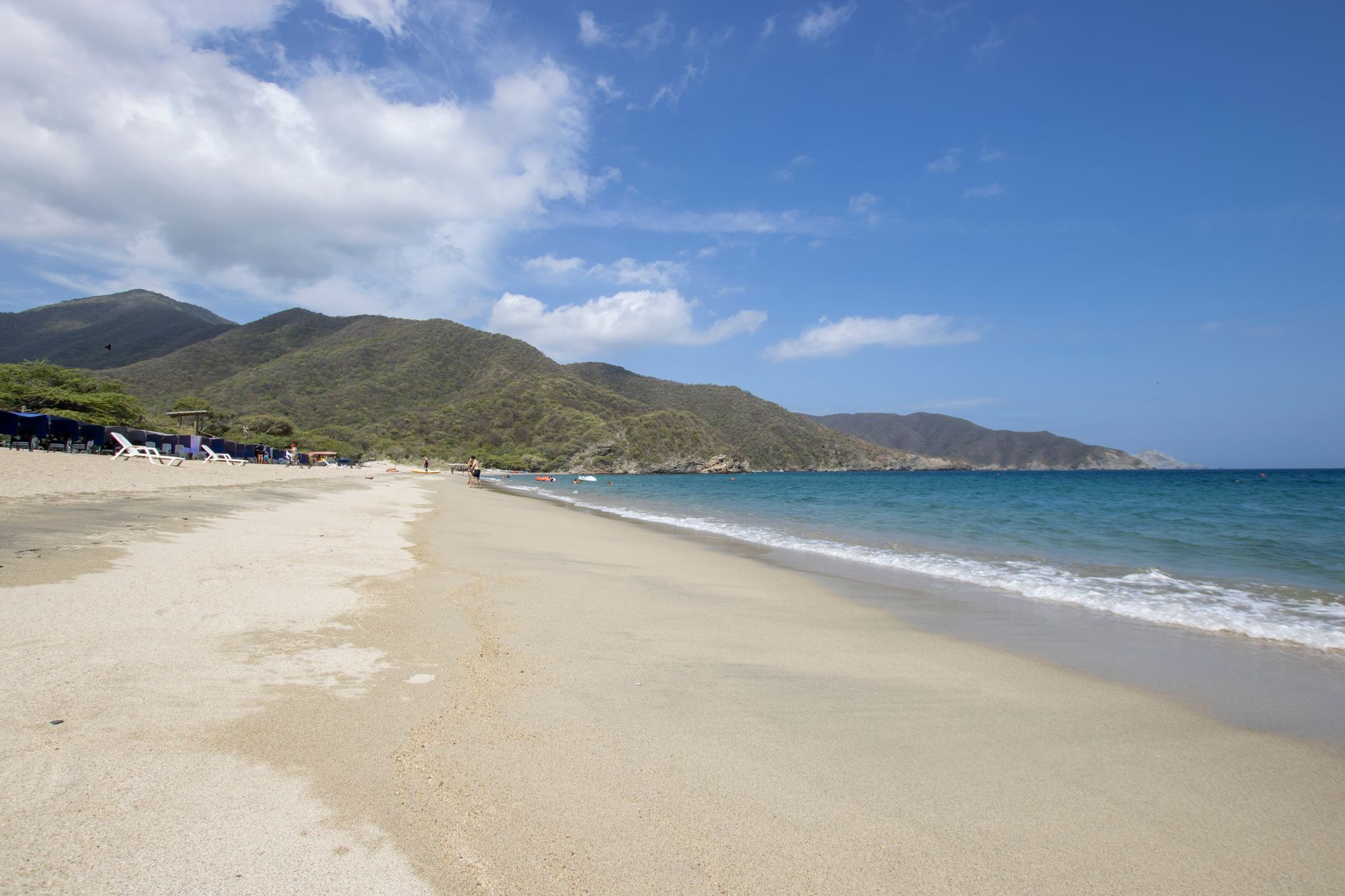
A low-density coastal village to the north, with open beach and very little high-rise building. Lots and houses dominate; towers are the exception. It lies along the coastal road toward Barranquilla, far from the centre and without full urban services.
- whether the property has its own registry folio or sits inside a larger parcel that was never subdivided
- whether there is certified utility availability, not merely a promise that services are coming
- whether the property lies in a coastal erosion risk zone, which is documented along this stretch
What to verify, step by step
- Ask the curaduría urbana (the private permitting office) for the licencia de construcción and the approved plans, and check what use, area and height that permit actually authorised against what you are being shown. Anything built beyond it is not cured by the deed.
- What the report has to address point by point for an apartment under propiedad horizontal: the unit's coeficiente de copropiedad —its ownership share— as recorded in the reglamento, since it drives both the monthly dues and the weight of the vote at the asamblea; which bienes comunes de uso exclusivo (common property assigned to one unit for its sole use) the deed attaches to the apartment —parking, storage, patio— and whether they match what is being shown and whether the reglamento de propiedad horizontal and the minutes of the last asamblea agree on interior remodelling, pets and renting.
- And what the same report should pick up for the sector in Punta Canoa: whether the property has its own registry folio or sits inside a larger parcel that was never subdivided; whether there is certified utility availability, not merely a promise that services are coming and whether the property lies in a coastal erosion risk zone, which is documented along this stretch.
- Engage the visit with an engineer or architect you hire yourself, not the one the seller offers, and require a written report with dated photographs, a signature and the professional's licence number. Ask Camacol Bolívar who carries out technical surveys in the region and ask for references you can check.
- Agree in writing with the seller on the date of the visit and on access to the property before signing the promesa, and attach the report to the promesa together with the agreed repairs and who pays for them.
- Ask the District whether any administrative proceeding is open against the property for building without a permit or for breaching planning rules, because that follows the property and not the seller.
Mistakes that cost money
- Accepting the report the seller or the developer hands over. The useful report is the one the buyer commissioned and can question.
- Leaving the inspection until after the promesa, when the price is already agreed. Whatever surfaces then is argued from the weaker position.
- Confusing the technical inspection with the title review. One looks at the construction and the other at the chain of ownership; you need both, and not from the same person.
Frequently asked questions
- Can the inspection be done without being in Cartagena?
- Yes, and it usually is: you hire the professional, arrange access with the seller and receive the signed report. What you should not delegate is choosing who does it.
- Does the inspection change with the type of property?
- In substance, yes. What has to be verified on an apartment under propiedad horizontal comes from the nature of the property —what is privately owned, what is common property, what the permit authorises— and not from a general list of finishes.
- Who pays for repairs the report turns up?
- Whoever agreed to in writing. If the report is attached to the promesa with the fixes and who owes them, you have something to enforce; if it lives in an email, you do not.
Where to check it
- Curadurías Urbanas de Cartagena — whether a current building or subdivision permit exists and exactly what it authorises
- Camacol Bolívar — the industry's own figures on housing starts and launches in Bolívar
- Alcaldía Mayor de Cartagena de Indias — property tax, betterment levies and District procedures
- Cartagena de Indias — the rules of the municipality Punta Canoa belongs to
Official bodies. Specific figures are requested there, not copied from a listing.
Updated 2026-11-06
Interested in a property in this area?
Write to us and we will send you the available options.