The deed identifies the buyer by a number, and a foreign passport is not always the number the paperwork expects. A Colombian living abroad who reaches the signing without having sorted out their Colombian tax identification finds the date slipping, and not over price.
Two things get conflated here. The RUT is the tax registry held by the DIAN, and the NIT is the number that registry assigns to someone without a Colombian cédula; together they are the identity under which you exist for tax purposes and under which the property's tax and any future sale are settled. The cédula de extranjería (foreigner ID card) and a visa are a different matter and a different authority. What decides money is the sequence: whoever appears on the escritura, whoever sends the funds and whoever holds the tax identification have to be the same party, and fixing a mismatch after recording is a separate procedure. The DIAN states which documents from each country it accepts and in what form, the Cancillería explains apostille and legalisation of those documents, and the notaría states which identification it will draw the deed with.
This is the case apart. You need no visa and no cédula de extranjería, because your document is the Colombian cédula, and that is exactly what gets neglected: check that the cédula is current and that its details match the registry, because an unrecorded change of marital status or surname stops the deed. The money, though, does come from abroad, so the transfer enters through the regulated exchange market with its declaración de cambio like anyone else's, and if you are not a Colombian tax resident that inflow may have to be registered as foreign investment with the Banco de la República: they are who to ask whether your particular case requires it. What really changes is how you file. Tax residence is not chosen, it is determined by rules, and not being a Colombian tax resident alters what is withheld from you and what you report to the DIAN, both on rent and on sale. For signing from abroad, the Colombian consulate where you live grants the poder. And the tax question is whether a treaty exists between Colombia and the country where you live and what it says about rental income and about ganancia ocasional, with an accountant in each country.
What is sold in Punta Canoa is often not a lot but a share in a tract still held en común y proindiviso, in undivided co-ownership, and buying a share gives no right to a specific piece of ground, only an abstract fraction of the whole: the buyer ends up co-owning with strangers and needs a partición, a partition, or a physical division before being able to say which part is his. That is the process that sets this sector apart: identifying every co-owner, finding out whether anyone has already petitioned for division, and seeing how the predial, the property tax, has been paid on an asset nobody uses exclusively. The counterparty differs from the village too: sometimes it is a land-holding company based elsewhere, in which case you request its certificado de existencia y representación, the corporate good-standing and signing-authority certificate, along with the resolution authorizing the sale. Who decides differs as well: lying outside consolidated urban land, permitting runs through the rural regime and the environmental opinions of Cardique rather than a neighborhood licensing office, with DIMAR, the maritime authority, involved at the beach edge. Nor is infrastructure networked: each parcel arranges its own water, power and wastewater.
What is specific to Punta Canoa
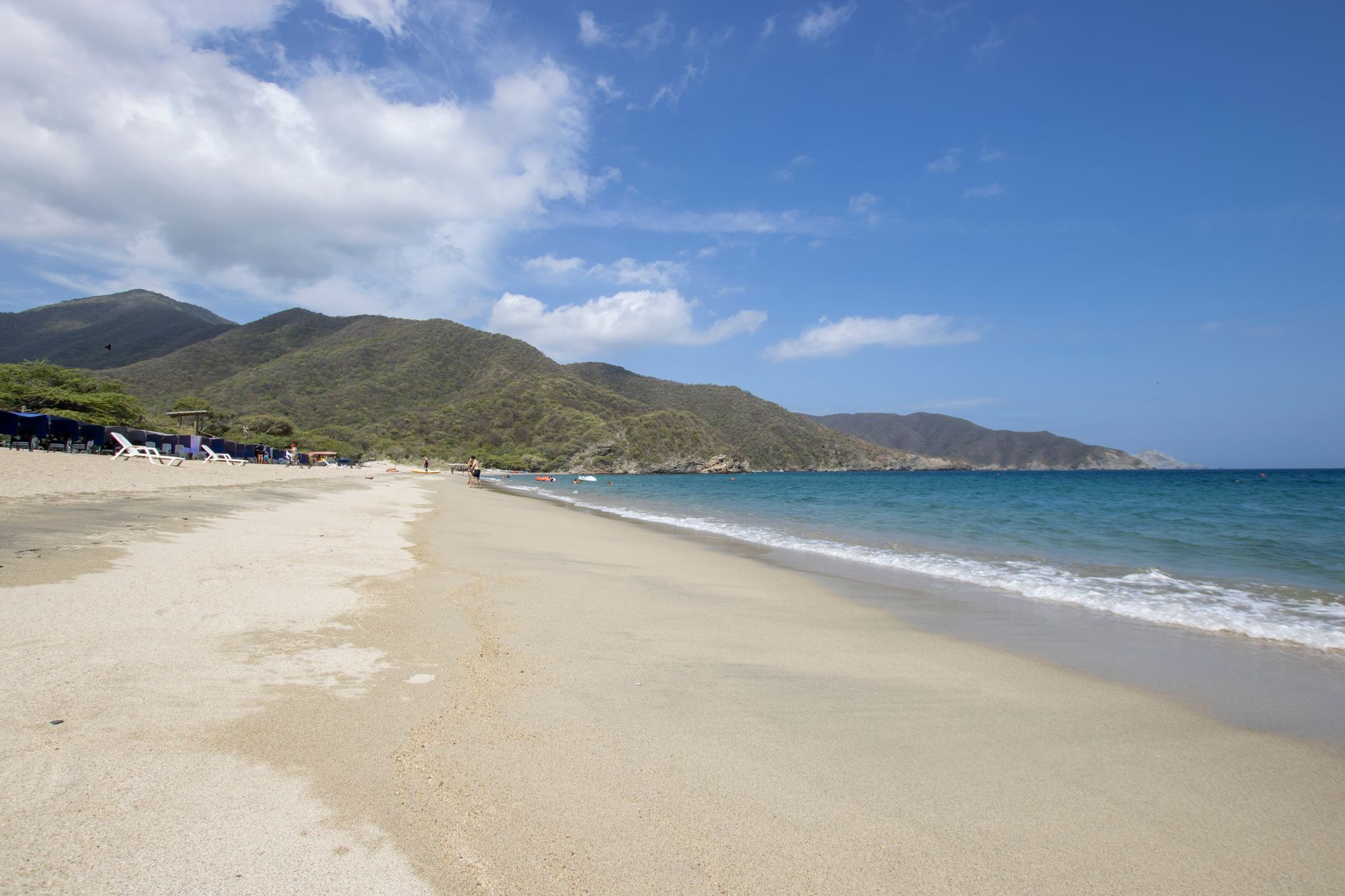
A low-density coastal village to the north, with open beach and very little high-rise building. Lots and houses dominate; towers are the exception. It lies along the coastal road toward Barranquilla, far from the centre and without full urban services.
- whether the property has its own registry folio or sits inside a larger parcel that was never subdivided
- whether there is certified utility availability, not merely a promise that services are coming
- whether the property lies in a coastal erosion risk zone, which is documented along this stretch
What to verify, step by step
- Ask the DIAN which tax identification applies in your case in order to appear as the buyer, which documents from your country are required, in what form, and whether an attorney-in-fact may file. That answer comes from the DIAN, not from the broker.
- What a Colombian living abroad has to settle before opening the procedure: that your Colombian cédula is current and its details match the registry, including any change of marital status or surname; whether in your particular case the transfer must be registered as foreign investment with the Banco de la República, and whether or not you are a Colombian tax resident for DIAN purposes and whether a treaty exists between Colombia and the country where you live, and what it says about rental income and about ganancia ocasional, with an accountant in each country.
- Check with the Cancillería which of your country's documents need an apostille or consular legalisation, and what official translation is required, since a document without that seal is sent back.
- Ask the notaría in Punta Canoa which identification it will draw the deed with, and confirm that name and number match exactly those on the certificado de tradición y libertad and those on the transfer.
- If you will not be present, grant the poder before a Colombian consul or with an apostille, and ask the notaría and the Cancillería which of the two they accept before paying for the translation.
- Once the deed is recorded, check with the Superintendencia de Notariado y Registro that the buyer was entered under the same identification used to sign.
Mistakes that cost money
- Leaving the tax identification until last, once there is a signing date. It is the single formality that most often pushes the signing back for buyers abroad.
- Transferring from an account whose holder is not the buyer who will appear on the deed. Those two names have to match, and explaining it afterwards costs more than planning for it.
- Assuming the tax identification has anything to do with a visa or with residency. Different authorities, different procedures, and neither stands in for the other.
Frequently asked questions
- Can a Colombian living abroad complete this without travelling?
- That is the question to put to the DIAN for your specific case, along with whether an attorney-in-fact may file and which documents must be apostilled. We do not pre-empt the answer, because the requirements change.
- Do I need the foreigner ID card for this?
- That is a question for Migración Colombia, and it is separate from the tax one. The identification the deed is drawn with is confirmed by the notaría.
- Can I buy through a company from my own country?
- It can be put on the table, and it changes which identification and which documents are required. Settle it with the DIAN and with an accountant before signing the promesa, because afterwards the titleholder does not change without another deed.
Where to check it
- DIAN — the tax ID, withholding on sale and the capital gains tax
- Cancillería de Colombia — current visa requirements and the apostille of foreign documents
- Superintendencia de Notariado y Registro — the certificate of title and encumbrances, which is the property's full history
- Cartagena de Indias — the rules of the municipality Punta Canoa belongs to
Official bodies. Specific figures are requested there, not copied from a listing.
Updated 2026-11-06
Interested in a property in this area?
Write to us and we will send you the available options.