The purchase gets recorded even when the money came in badly, and that is the trap: the deed is registered and the investment is not. A American buyer discovers the gap when it is time to sell or to move funds out, which is when it can no longer be fixed without a procedure.
This is not the same as proving where the money came from. Proving the source is the due diligence the real estate sector is required to carry out and which the UIAF explains. Registering foreign investment is an exchange-control operation: the funds have to enter through the regulated foreign-exchange market with their declaración de cambio (exchange declaration), through an authorised intermediary, and the Banco de la República is the body that states how it is registered, under which heading and in whose name. What decides money is the name: whoever sends the funds, whoever appears on the escritura and whoever holds the registration must be the same party, because that registration is what later supports the operation in reverse. And if the money goes into a patrimonio autónomo (a trust estate) before reaching the deed, there is one more check: that the fiduciaria exists and is supervised, which you verify at the Superintendencia Financiera and not in the project brochure.
Moving the money is not a formality. Funds leaving a US account have to enter Colombia through the regulated foreign-exchange market with a declaración de cambio, the exchange declaration, and the Banco de la República is the body that explains how the operation is recorded as foreign investment and in whose name, because whoever sends the money and whoever appears on the escritura, the deed, must be the same person or the same company. Signing from abroad has two routes that are not interchangeable: a poder, a power of attorney, granted before a Colombian consul where you live, or one granted before a notary public and then apostilled. Which one the Cartagena notaría will accept is a question for that notaría and for the Cancillería before you pay for a translation. Visas and the cédula de extranjería, the foreigner ID card, are a separate matter from the purchase and belong to Migración Colombia: buying does not stand in for the immigration process, nor the reverse. On tax, the question to settle is whether a treaty exists between Colombia and your country and what it says about rental income and about ganancia ocasional, the gain taxed on sale. Confirm that with an accountant in each country, not with the seller.
What you buy in Morros is not land but a private unit created by subdividing a single folio matriz, the parent registry record, and that changes the file. The chain of title on the land was settled once by the builder; what remains to review is the registered reglamento de propiedad horizontal, the condominium bylaws, any acta de asamblea, owners' meeting minutes, that amended them, and the coeficiente de copropiedad, the ownership share assigned to the unit, which governs both voting and billing. The counterparty differs from the undeveloped north as well: usually an individual owner living outside Cartagena, so closing depends on a power of attorney from that person, on a spouse's consent where it applies, and on the paz y salvo, a no-arrears certificate signed by the building manager, a document that does not even exist for rural land. Decisions here belong to the owners' assembly and the manager it appoints, not to a public office; the District and the curaduría urbana, the private licensing office, had their say when the tower was permitted. Internal infrastructure, from pumping to the generator and security, is private and funded by the budget that same assembly approves, so the minutes describe the property better than any tour.
What is specific to Morros
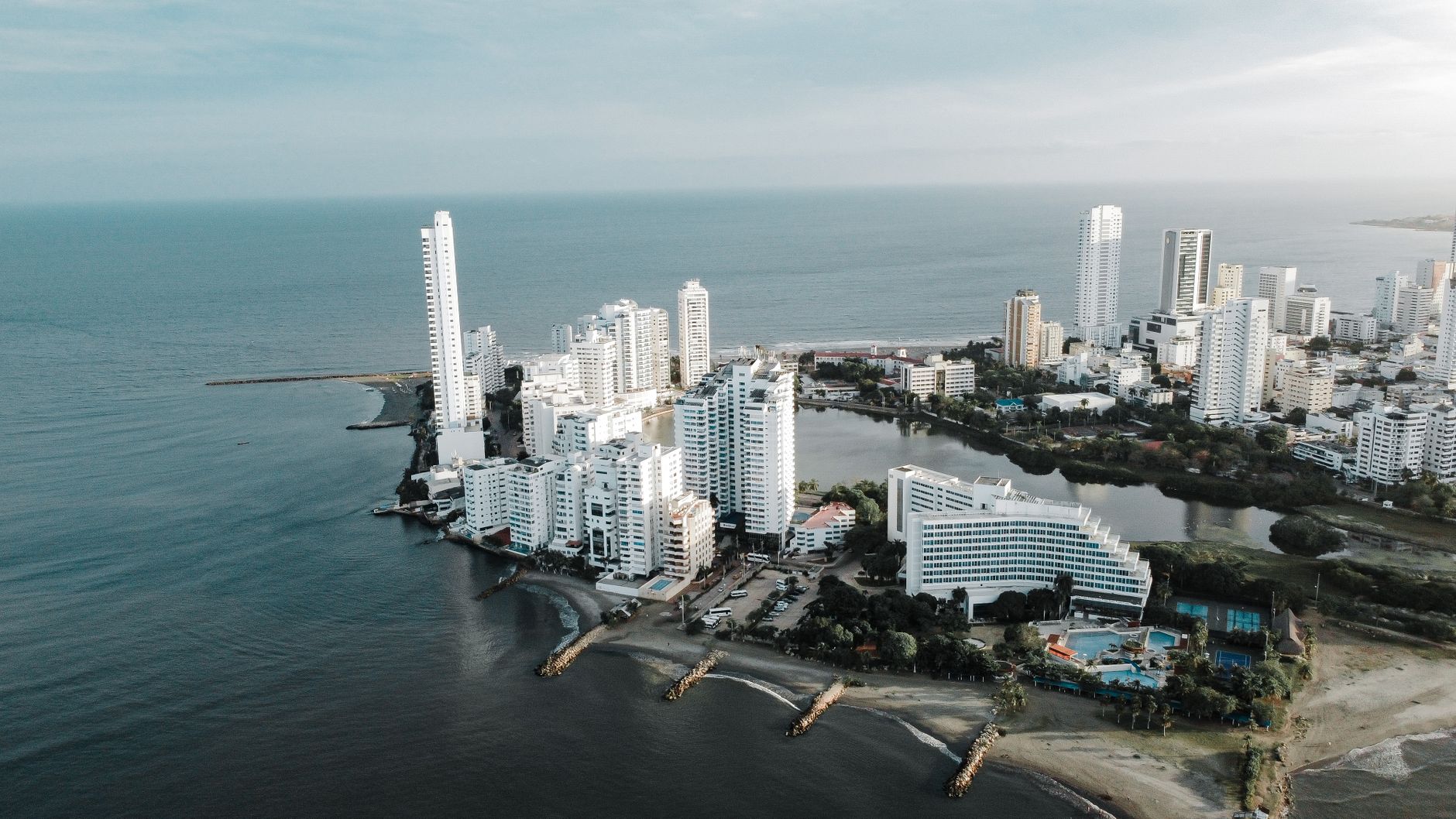
The first consolidated stretch of the Zona Norte: gated tower complexes along the road, beach in front and their own amenities. Almost everything is high-rise condominium, much of it bought as a second home and rented out seasonally. It sits minutes from the airport along the Anillo Vial, which is its only real way in and out.
- what the condominium bylaws say about daily rentals, because several complexes restrict them and buyers find out after signing
- the state of the maintenance dues and the reserve fund, which in seafront buildings goes into façade upkeep
- whether the tower holds a concession or permit for the beach in front, which does not come with the apartment
What to verify, step by step
- Before transferring anything, ask the Banco de la República which channel the funds must use, which declaración de cambio supports them, under which heading an investment in real estate is registered and in whose name the registration ends up.
- What an American buyer has to settle with their bank and with the intermediary before the first transfer: which channel the transfer has to use, and how the foreign investment gets registered with the Banco de la República, before the first peso moves; whether the Cartagena notaría accepts an apostilled power of attorney or insists on one granted before a Colombian consul, and who does the official translation and whether a treaty exists between Colombia and your country, and what it says about rental income and about ganancia ocasional, with an accountant in each country.
- Ask the foreign-exchange intermediary in writing for proof of the operation and a copy of the exchange declaration, and keep them with the deed: that is the support you will be asked for years later.
- If the money enters a patrimonio autónomo or a project trust in Morros, verify at the Superintendencia Financiera that the fiduciaria exists and is supervised, and confirm the destination account belongs to the trust estate and not to the developer.
- Assemble the source-of-funds documentation the UIAF sets out as the sector's duty, because the broker and the notaría are required to request it and the closing stops without it.
- Confirm that the name and identification number on the transfer, on the promesa and on the deed match exactly, and correct any difference before signing.
Mistakes that cost money
- Wiring outside the regulated exchange market because the ordinary transfer arrived sooner. The purchase records anyway and the investment goes unregistered.
- Letting a relative or an account in another name send the money. The registration follows whoever sent it, and that name has to be the one on the deed.
- Confusing source-of-funds evidence with exchange registration. They are two duties before two different authorities, and meeting one does not cover the other.
Frequently asked questions
- How is this different from proving the source of funds?
- Source of funds is the due diligence the UIAF explains and which the broker and the notaría require. Exchange registration sits with the Banco de la República and is what supports the investment. You need both.
- Can an American buyer register the investment after signing?
- That is precisely the question to put to the Banco de la República before transferring, because a later correction is a separate procedure. Do not decide it on what the seller tells you.
- Who do I ask whether the project's trust company is sound?
- The Superintendencia Financiera, which is who states whether that company exists and is supervised. Before transferring money to a trust estate, that check comes first.
Where to check it
- Banco de la República — registration of foreign investment and the official exchange rate
- Superintendencia Financiera de Colombia — whether a trust company exists and is supervised, before transferring money to a patrimonio autónomo
- UIAF — the anti-money-laundering obligations that apply to the real estate sector
- Cartagena de Indias — the rules of the municipality Morros belongs to
Official bodies. Specific figures are requested there, not copied from a listing.
Updated 2026-11-06
Interested in a property in this area?
Write to us and we will send you the available options.