A title review tells you who may sell; a technical inspection tells you what is being sold. They are two separate engagements, both paid for by the buyer, and in Morros the second one is usually skipped because the buyer is not in the city to open the door.
What gets inspected is not the same checklist for every property: when what you are buying is a dúplex (two-level unit), the report has to address what the nature of that property actually puts at risk, not a generic form about damp patches and sockets. That matters for money and for timing. For money, because a repair not found before the promesa de compraventa is signed gets paid for afterwards by the buyer, and in a propiedad horizontal (condominium regime) it can end up shared among all owners through a special assessment. For timing, because before the promesa whatever turns up is a matter for negotiation, and afterwards it is only a claim. The report is signed by a professional who answers for what it says; nobody signs the brochure.
A dúplex is bought differently because what you see and what is recorded may not be the same thing. Two levels joined by an internal staircase are lived in as one home, yet the registry may still see two: two matrículas inmobiliarias (registry folios), two ownership shares, two chains of title and two separate arrears accounts with the building. That gap between the physical thing and the legal thing organizes the entire purchase. If there are two folios, you are really signing two acquisitions that end up tied in fact but not in law, and each one can be taxed, mortgaged, attached and sold on its own, so a future buyer may find half a home on offer. If there is a single folio, you need to know when and how the merger happened, because joining units is an amendment to the reglamento and not merely building work. What gets examined here, then, is the identity of the property before its condition: how the unit came into being, which document recognizes it, and whether the copropiedad was ever told. For a buyer abroad, each folio may also carry its own paperwork and its own power of attorney.
What you buy in Morros is not land but a private unit created by subdividing a single folio matriz, the parent registry record, and that changes the file. The chain of title on the land was settled once by the builder; what remains to review is the registered reglamento de propiedad horizontal, the condominium bylaws, any acta de asamblea, owners' meeting minutes, that amended them, and the coeficiente de copropiedad, the ownership share assigned to the unit, which governs both voting and billing. The counterparty differs from the undeveloped north as well: usually an individual owner living outside Cartagena, so closing depends on a power of attorney from that person, on a spouse's consent where it applies, and on the paz y salvo, a no-arrears certificate signed by the building manager, a document that does not even exist for rural land. Decisions here belong to the owners' assembly and the manager it appoints, not to a public office; the District and the curaduría urbana, the private licensing office, had their say when the tower was permitted. Internal infrastructure, from pumping to the generator and security, is private and funded by the budget that same assembly approves, so the minutes describe the property better than any tour.
What is specific to Morros
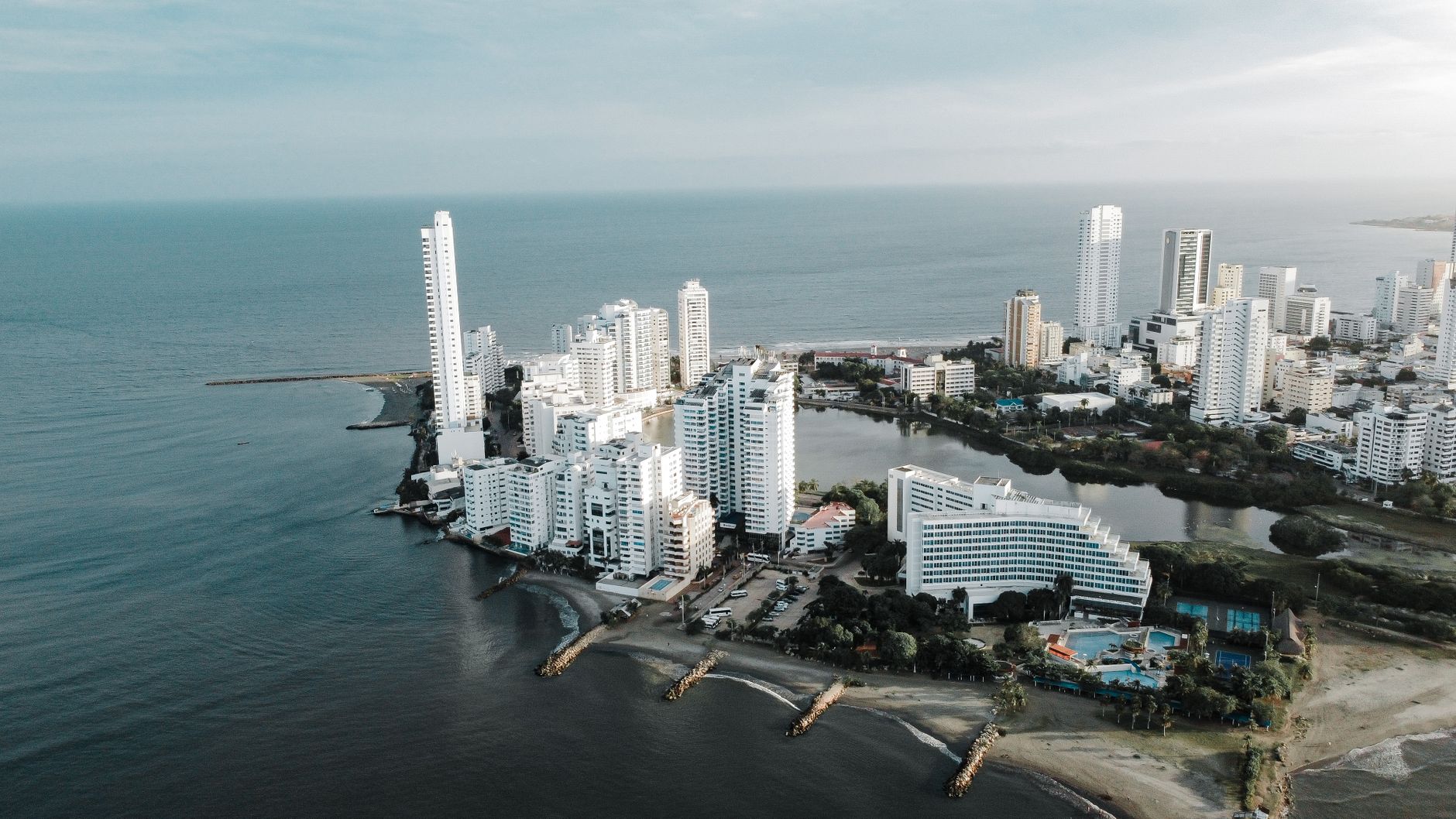
The first consolidated stretch of the Zona Norte: gated tower complexes along the road, beach in front and their own amenities. Almost everything is high-rise condominium, much of it bought as a second home and rented out seasonally. It sits minutes from the airport along the Anillo Vial, which is its only real way in and out.
- what the condominium bylaws say about daily rentals, because several complexes restrict them and buyers find out after signing
- the state of the maintenance dues and the reserve fund, which in seafront buildings goes into façade upkeep
- whether the tower holds a concession or permit for the beach in front, which does not come with the apartment
What to verify, step by step
- Ask the curaduría urbana (the private permitting office) for the licencia de construcción and the approved plans, and check what use, area and height that permit actually authorised against what you are being shown. Anything built beyond it is not cured by the deed.
- What the report has to address point by point for a dúplex (two-level unit): whether both levels sit on a single matrícula inmobiliaria (registry folio) or on two, since that decides whether it conveys as one property or as two; whether the internal staircase appears on the plans approved with the licencia de construcción or was cut later to join two units and how the coeficiente de copropiedad was restated after the merger, because if the reglamento was never amended the dues may still be billed twice.
- And what the same report should pick up for the sector in Morros: what the condominium bylaws say about daily rentals, because several complexes restrict them and buyers find out after signing; the state of the maintenance dues and the reserve fund, which in seafront buildings goes into façade upkeep and whether the tower holds a concession or permit for the beach in front, which does not come with the apartment.
- Engage the visit with an engineer or architect you hire yourself, not the one the seller offers, and require a written report with dated photographs, a signature and the professional's licence number. Ask Camacol Bolívar who carries out technical surveys in the region and ask for references you can check.
- Agree in writing with the seller on the date of the visit and on access to the property before signing the promesa, and attach the report to the promesa together with the agreed repairs and who pays for them.
- Ask the District whether any administrative proceeding is open against the property for building without a permit or for breaching planning rules, because that follows the property and not the seller.
Mistakes that cost money
- Accepting the report the seller or the developer hands over. The useful report is the one the buyer commissioned and can question.
- Leaving the inspection until after the promesa, when the price is already agreed. Whatever surfaces then is argued from the weaker position.
- Confusing the technical inspection with the title review. One looks at the construction and the other at the chain of ownership; you need both, and not from the same person.
Frequently asked questions
- Can the inspection be done without being in Cartagena?
- Yes, and it usually is: you hire the professional, arrange access with the seller and receive the signed report. What you should not delegate is choosing who does it.
- Does the inspection change with the type of property?
- In substance, yes. What has to be verified on a dúplex (two-level unit) comes from the nature of the property —what is privately owned, what is common property, what the permit authorises— and not from a general list of finishes.
- Who pays for repairs the report turns up?
- Whoever agreed to in writing. If the report is attached to the promesa with the fixes and who owes them, you have something to enforce; if it lives in an email, you do not.
Where to check it
- Curadurías Urbanas de Cartagena — whether a current building or subdivision permit exists and exactly what it authorises
- Camacol Bolívar — the industry's own figures on housing starts and launches in Bolívar
- Alcaldía Mayor de Cartagena de Indias — property tax, betterment levies and District procedures
- Cartagena de Indias — the rules of the municipality Morros belongs to
Official bodies. Specific figures are requested there, not copied from a listing.
Updated 2026-11-06
Interested in a property in this area?
Write to us and we will send you the available options.