Handover is the one moment when the buyer has the property in front of him and still holds something to pay or to demand. Whatever is left out of the acta that day stops being a claim and becomes a conversation.
Taking delivery of a property for short-stay rental is not signing that the keys arrived: it is recording the condition in which the property is received, the open items, and how and when they will be addressed. The acta de entrega is a private document between the parties, and its worth lies in its detail: an inventory of what is handed over, meter readings, the state of finishes and equipment, keys and remotes, and the list of observations signed by both sides. New construction adds the recibo de obra and whatever the builder has warranted; a resale adds whatever the seller undertook in the promesa de compraventa, the binding promise of sale. After handover the claim changes counterpart: it stops being a conversation with a seller or a builder and becomes a contractual matter, which is where it starts to matter whether there are proceedings open against the person who sold to you.
A property bought for short-stay rental is bought differently because what changes hands is an operation, not just real estate. Three things that live in separate documents have to line up for it to work: the copropiedad's reglamento, which can ban renting by the day regardless of any other permission; the registro nacional de turismo, the national tourism register, which is issued in someone's name and does not travel automatically with the deed; and the contract with the operator, which sets who attends to the guest, who pays for supplies and what is deducted before income is split. The second difference is that much of the value cannot be recorded anywhere: furniture, equipment, inventory, review history and bookings already taken appear on no folio, so they have to be inventoried and the purchase document has to say what becomes of each, including stays already sold for dates after closing. The third is that a guest is not a tenant and the activity is a trade, with daily attention, staff and restocking, so a buyer abroad is engaging a management arrangement, not merely acquiring a property.
Bocagrande works like a mature resale market, with consequences that do not repeat up north. The counterparty is almost never a builder: it is a long-standing owner or, very often, an unsettled sucesión, an estate proceeding, whose heirs live in different countries, so closing depends not on one power of attorney but on several, and on the partition among them. The registry record is old too: it was opened when the building was submitted to the condominium regime, it carries legacy entries such as cancelled mortgages, patrimonio de familia and afectación a vivienda familiar, both family-home protections, or lifted attachments, and the recorded area does not always match a current survey, so you compare the registry record against the deed and against the unit's floor plan. The peninsula is also land reclaimed from the sea under subdivisions the District authorized in their day, and the oldest deeds still carry references to those parcelaciones, the original platting. Day-to-day power sits with the owners' assembly and its manager, so in a tower with a long record of decisions the minutes and the status of the condominium's lawsuits matter more than the brochure.
What is specific to Bocagrande
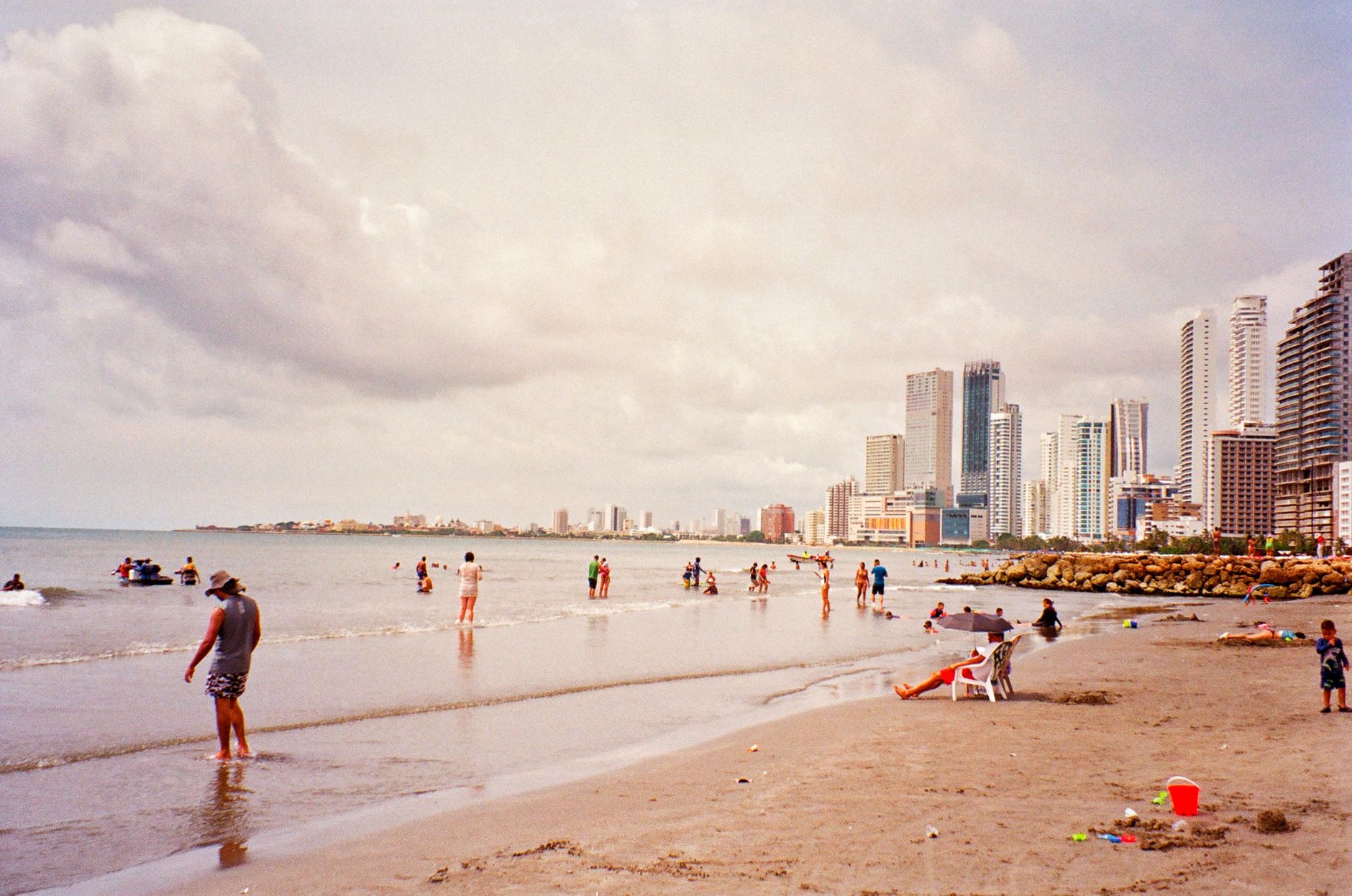
Cartagena's dense, vertical peninsula: open sea on one side, bay on the other, and built out to the last lot. Condominium towers from very different eras, from the sixties to recent construction, on the same block. Groceries, restaurants and beach are walkable, and access is through a few roads that saturate in high season.
- the building's actual age and whether it has a structural vulnerability study, since much of the stock was built under seismic codes earlier than those now in force
- what the condominium bylaws say about daily rentals, which on this peninsula is the difference between being able to rent and not
- how many parking spaces the unit holds in the deed, not in the brochure, because older towers do not have one per apartment
What to verify, step by step
- Ask for the acta template before the appointment and read it with your lawyer: anything without a field will not get written down.
- Walk the property with the permit and the approved drawings in hand and compare what was built against what the curaduría authorised.
- Put meter readings, the inventory of keys and remotes, and every observation with the open item it creates in writing.
- Check the handover points that belong to properties for short-stay rental: whether the reglamento de propiedad horizontal permits daily rentals, because the copropiedad's own ban binds you even with the registro nacional de turismo (the national tourism register) in order; in whose name the registro nacional de turismo is issued and what becomes of it when the property is sold and whether there is an operator or management contract and which expenses are deducted before the income is split.
- Add what has to be verified in Bocagrande: the building's actual age and whether it has a structural vulnerability study, since much of the stock was built under seismic codes earlier than those now in force; what the condominium bylaws say about daily rentals, which on this peninsula is the difference between being able to rent and not and how many parking spaces the unit holds in the deed, not in the brochure, because older towers do not have one per apartment.
- If you cannot attend, grant a power of attorney to someone who receives on your behalf, and require the signed acta plus photographs and video of the walkthrough the same day.
Mistakes that cost money
- Signing the acta with no observations so as not to delay handover. It is the most expensive waiver in the process, and it is made out of politeness.
- Taking delivery without clearance certificates for dues and utilities. The unpaid account follows the property, not the seller who left.
- Leaving an open item in a WhatsApp message. The acta gets signed; the message gets deleted.
Frequently asked questions
- Can I take delivery of a property for short-stay rental without travelling to Cartagena?
- Yes, with a power of attorney granted before a Colombian consul or apostilled. Whoever receives should be someone technical, not the same broker who sold it.
- Who do I claim from after handover?
- It depends on what was signed: the builder for what was warranted, the seller for what was promised, and the administración for anything that is common property. That is why the acta is drafted with names in it.
- Is video of the walkthrough worth anything?
- It backs up what was written in the acta. It does not replace it: the signed document is what binds.
Where to check it
- Curadurías Urbanas de Cartagena — whether a current building or subdivision permit exists and exactly what it authorises
- Alcaldía Mayor de Cartagena de Indias — property tax, betterment levies and District procedures
- Rama Judicial — whether there is pending litigation over the property or its owners
- Cartagena de Indias — the rules of the municipality Bocagrande belongs to
Official bodies. Specific figures are requested there, not copied from a listing.
Updated 2026-11-06
Interested in a property in this area?
Write to us and we will send you the available options.