Not everything that is rented out is rented under the same contract, and the one for an aparta-estudio (studio unit) does not look like the neighbouring unit's when the nature of the property differs. Before thinking about the tenant, the contract has to fit inside what the reglamento and the use rules admit.
Colombian lease law distinguishes by purpose: urban housing, commercial premises and short-stay lodging are not governed by the same rules, and what you sign conditions what may and may not be agreed. On top of that regime sits the private layer: the reglamento de propiedad horizontal (the condominium bylaws) can ban or condition an use the law does not ban, and a later asamblea may have tightened it without the recorded reglamento reflecting it yet. So the contract for an aparta-estudio (studio unit) is built the other way round from how it is usually done: first verify what use the property admits, then which contract matches that use, and only then the clauses. Which regime applies to your case and how each clause is drafted is work for your Colombian attorney; what a buyer can verify before signing is what the reglamento says, what the last asamblea minutes say, what the land-use certificate says and, where the purpose is short-stay lodging, what the registro nacional de turismo says.
An aparta-estudio, a single-room studio unit, is bought differently because it is the smallest unit in the tower, and that has consequences the floor plan does not show. Its coeficiente de copropiedad, the ownership share, is low, so its weight at the asamblea is low too; and in buildings made of identical units, decisions fall to whoever can assemble a crowd of small owners. Meanwhile several building costs are not shared by size but by occupancy: lifts, front desk, lobby, water, waste and wear on common areas all track how many people come and go, and a studio generates as much turnover as a large unit while contributing a far smaller share. The second consequence is the market. These units are bought almost entirely to rent out, so what the reglamento says about renting by the day is not a detail of use but a feature of the asset, since it defines who you can resell to. The third is physical: in a single room, kitchen, bathroom and ventilation share walls with neighbors, so whatever the copropiedad resolved about noise, extraction and quiet hours weighs more here than in a conventional apartment.
In Castillogrande the typical deal is not a unit in a condominium but a house and its lot, which puts the weight of the file back on the chain of title to the land: you climb through the deeds to the parcelación, the original subdivision that created the block, because those platting deeds registered conditions, setbacks and easements that still bind and that are invisible from the street. There is no building manager to issue a paz y salvo, a no-arrears certificate, and no assembly to settle anything, so boundary questions with a neighbor are argued between private parties and what governs is the title and the survey, not a set of house rules. The counterparty is usually an old city family and, fairly often, a family company that owns the property: then you must decide whether to buy the real estate or the company's shares, two different transactions with different paperwork and different exposure, and request the certificado de existencia y representación, the corporate good-standing and signing-authority certificate, together with the resolution approving the sale. And because the neighborhood is fully built out, any construction is permitted on an already developed lot, with neighbors entitled to take part in the proceeding.
What is specific to Castillogrande
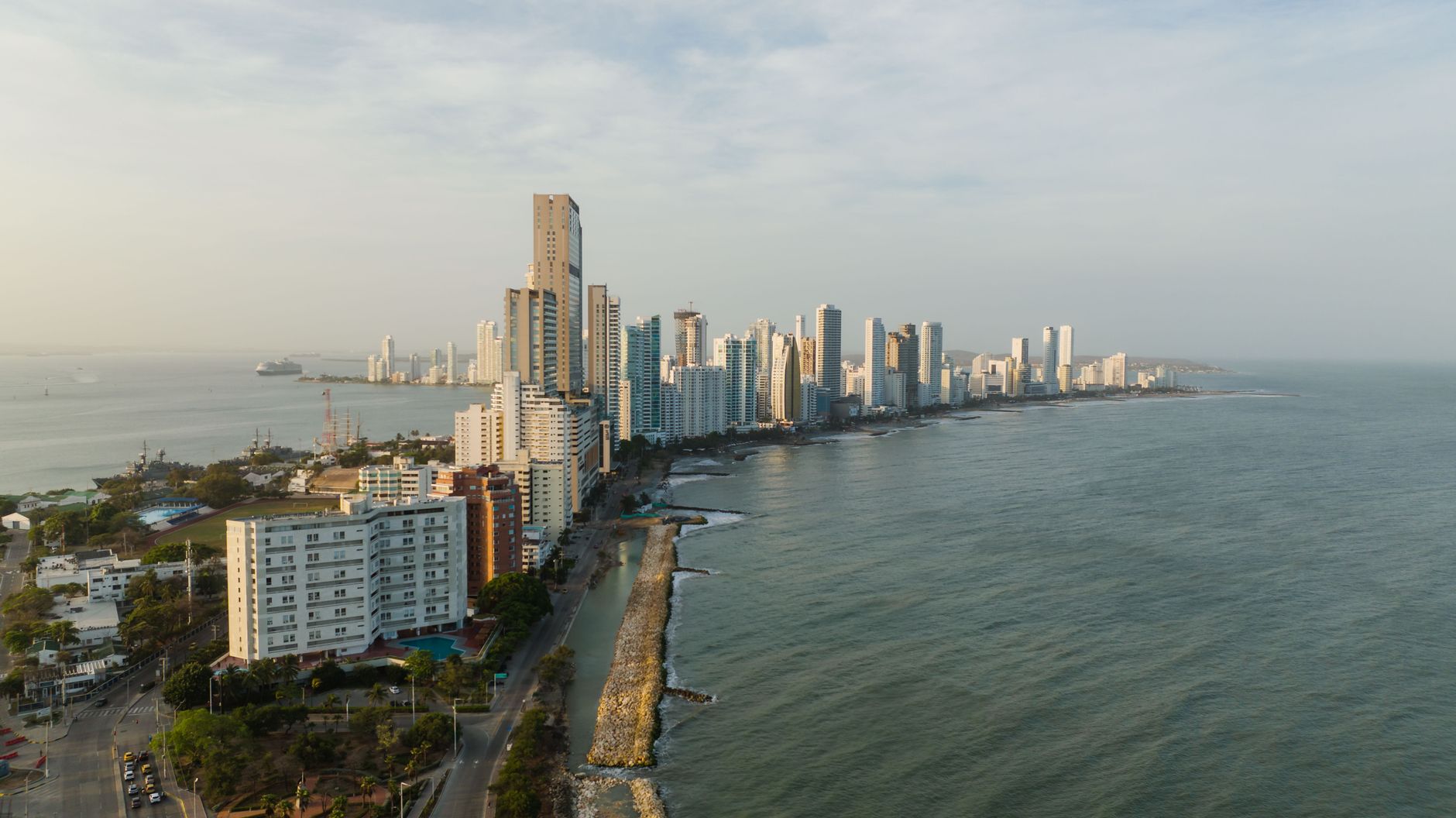
The residential tip of the peninsula: lower and quieter than Bocagrande, facing the bay, with little street retail. Houses and low-rise buildings sit alongside new towers, and single-family homes still exist. It is a dead end: access is through Bocagrande with no through road at the far tip, which keeps it free of passing traffic.
- whether the property faces the bay or the open sea, because the swell, the smell and the façade upkeep are not comparable
- what building height the rules allow on the lot, which is not uniform across the peninsula and is the first fact omitted when a lot is sold
- how ground stability was addressed, given this is land reclaimed from the sea, and what the soil study for the building says
What to verify, step by step
- Request the recorded reglamento de propiedad horizontal and the minutes of the last asamblea, and read what they say about renting, permitted use and short-stay guests.
- Ask the Alcaldía for the land-use certificate covering the activity you plan to host, because the reglamento and the planning rules are two separate permissions.
- Check what belongs to an aparta-estudio (studio unit) itself and changes the contract's clauses: whether the reglamento de propiedad horizontal allows daily rentals, since this is the unit type most often bought for exactly that and the ban never shows up in the brochure; whether the deed places kitchen and bathroom inside the área privada rather than treating them as shared services that cannot later be enclosed and how many identical units the tower holds, and what the administración rules about lift and lobby use by short-stay guests.
- Ask the administrador what the copropiedad requires of a tenant —occupant registration, access rules, use of common areas— and get it in writing rather than by word of mouth.
- Where the purpose is short-stay lodging, check the registro nacional de turismo and ask in whose name it stands and what becomes of it when the owner changes.
- Search the Rama Judicial for pending proceedings over the property or against the seller on tenancy matters before buying the asset with a contract inside it.
Mistakes that cost money
- Signing a residential lease for an use that is not residential, or the reverse, because that template was to hand. The contract's stated purpose conditions what can be agreed.
- Reading the recorded reglamento but not the minutes. The asamblea may have set later conditions on use, and the buyer meets them afterwards.
- Buying a property with a tenant in place without reading the contract in force. What the seller agreed does not vanish because the owner changes, so read with your attorney where it leaves you.
Frequently asked questions
- Can the reglamento prohibit renting?
- The reglamento governs the use of units and common property, and in practice it is where rental restrictions appear. Ask for the recorded version together with the minutes, and have your attorney read how far it reaches.
- Do I need a registro nacional de turismo to rent out?
- That depends on whether the activity is tourist lodging. The RNT and what it requires are matters for the tourism authority, and the copropiedad can still restrict the use with the register in order.
- Who do I verify the contract against?
- The administrador for the reglamento and the minutes, the Alcaldía for land use, and the Rama Judicial for litigation. Drafting the contract itself is work with a Colombian attorney.
Where to check it
- Rama Judicial — whether there is pending litigation over the property or its owners
- Registro Nacional de Turismo — whether a property may legally be used for tourist accommodation and who has registered it
- Alcaldía Mayor de Cartagena de Indias — property tax, betterment levies and District procedures
- Cartagena de Indias — the rules of the municipality Castillogrande belongs to
Official bodies. Specific figures are requested there, not copied from a listing.
Updated 2026-11-06
Interested in a property in this area?
Write to us and we will send you the available options.