Common expenses are not negotiated with the seller: a registered document sets them and an ownership share already written down divides them. What the buyer decides is whether to read that before signing or to discover it with the first bill.
For a beach lot the base of the monthly charge can come from different places, and that is where the differences start. Where the property is under propiedad horizontal —the Colombian condominium regime— the reglamento, recorded in a public deed and registered, assigns each unit its coeficiente de copropiedad, the ownership share, and that share divides the expensas comunes and the weight of the vote at the asamblea. Where there is no propiedad horizontal there may be a neighbours' association or a subdivision covenant charging on another base, and it is worth knowing which document it charges under. On top of the ordinary charge come the levies the asamblea approves and, separately, the impuesto predial and betterment levies collected by the District, which are not common expenses at all. And one debt matters more than the charge itself: the seller's, because unpaid expensas are pursued against the property rather than against whoever left.
A beach lot is bought differently because the first question is not what you may build but whether a private owner ever existed. Along the coastal strip you find land that could lawfully be granted, land that never left the public domain, and land someone occupied and then transferred without holding the right, so the chain of title may rest on mere possession or on falsa tradición, a transfer by someone who never held registered ownership. No deed, no notaría and no lapse of time fixes that, because property in the public domain cannot be acquired by prescription. Investigating the origin of title therefore outranks everything else and comes before any other conversation. The second difference is that the object itself moves: the shoreline advances or retreats, and the area shown on the folio may not be the land that is dry today. The third is that a substantial part of the terrain is not buildable at all, between the public strip, the ronda hídrica (protected water margin) and environmental setbacks, so the usable lot is always smaller than the lot purchased, and it is worth fixing that with a survey and with the environmental authority.
In Castillogrande the typical deal is not a unit in a condominium but a house and its lot, which puts the weight of the file back on the chain of title to the land: you climb through the deeds to the parcelación, the original subdivision that created the block, because those platting deeds registered conditions, setbacks and easements that still bind and that are invisible from the street. There is no building manager to issue a paz y salvo, a no-arrears certificate, and no assembly to settle anything, so boundary questions with a neighbor are argued between private parties and what governs is the title and the survey, not a set of house rules. The counterparty is usually an old city family and, fairly often, a family company that owns the property: then you must decide whether to buy the real estate or the company's shares, two different transactions with different paperwork and different exposure, and request the certificado de existencia y representación, the corporate good-standing and signing-authority certificate, together with the resolution approving the sale. And because the neighborhood is fully built out, any construction is permitted on an already developed lot, with neighbors entitled to take part in the proceeding.
What is specific to Castillogrande
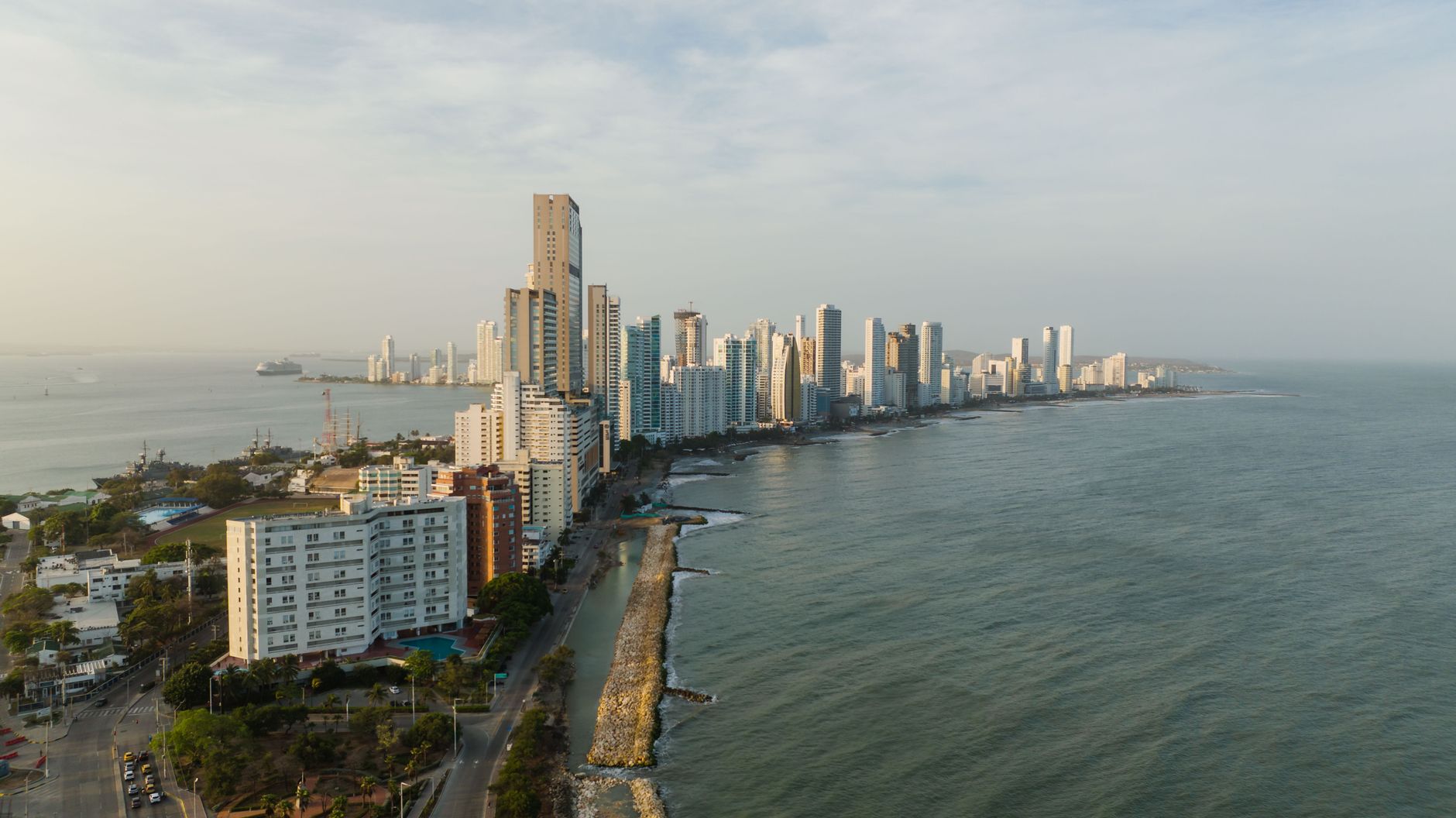
The residential tip of the peninsula: lower and quieter than Bocagrande, facing the bay, with little street retail. Houses and low-rise buildings sit alongside new towers, and single-family homes still exist. It is a dead end: access is through Bocagrande with no through road at the far tip, which keeps it free of passing traffic.
- whether the property faces the bay or the open sea, because the swell, the smell and the façade upkeep are not comparable
- what building height the rules allow on the lot, which is not uniform across the peninsula and is the first fact omitted when a lot is sold
- how ground stability was addressed, given this is land reclaimed from the sea, and what the soil study for the building says
What to verify, step by step
- Request the reglamento de propiedad horizontal exactly as registered and look for the table of coeficientes, not a summary forwarded by chat.
- Confirm on the certificado de tradición y libertad that the reglamento and its amendments are registered against the property's folio.
- Ask the administrador for the unit's account statement, the approved budget, recent asamblea minutes and a clearance certificate in the seller's name.
- Review what sets the charging base for beach lots: where the zona de bajamar ends: it is public domain of the Nation, cannot be sold, and no private deed cures it; whether the lot has its own matrícula inmobiliaria or was never split out, and whether the chain of title carries falsa tradición (a transfer by someone who never held registered ownership) or mere possession and how much of the lot is actually buildable once the public strip, the ronda hídrica (protected water margin) and the environmental setback are taken out.
- Add what is worth confirming in Castillogrande: whether the property faces the bay or the open sea, because the swell, the smell and the façade upkeep are not comparable; what building height the rules allow on the lot, which is not uniform across the peninsula and is the first fact omitted when a lot is sold and how ground stability was addressed, given this is land reclaimed from the sea, and what the soil study for the building says.
- Ask the District about the standing of the impuesto predial and any betterment levy on the property, and search the Rama Judicial for collection proceedings against the seller or over the property.
Mistakes that cost money
- Asking how much the dues are and settling for the spoken answer. The share and the budget set them, and both are documents.
- Confusing the dues with the impuesto predial. They are paid to different bodies and claimed through different routes.
- Treating the debt as settled because the seller says he is current. The clearance certificate is issued by the administrador, not by the seller.
Frequently asked questions
- Can I get the account statement for a beach lot from abroad?
- Yes. The administrador issues it by email on a written request from you or your attorney-in-fact, and the seller usually has to authorise it.
- Can my unit's ownership share be changed?
- That is an amendment to the reglamento, decided by the asamblea under the majorities the reglamento itself requires. It is not something a buyer arranges with the administrador.
- What if the property is not under propiedad horizontal?
- Then ask whether a neighbours' association exists and under which document it charges, because the obligation comes from that document and not from custom.
Where to check it
- Superintendencia de Notariado y Registro — the certificate of title and encumbrances, which is the property's full history
- Alcaldía Mayor de Cartagena de Indias — property tax, betterment levies and District procedures
- Rama Judicial — whether there is pending litigation over the property or its owners
- Cartagena de Indias — the rules of the municipality Castillogrande belongs to
Official bodies. Specific figures are requested there, not copied from a listing.
Updated 2026-11-06
Interested in a property in this area?
Write to us and we will send you the available options.