Along this coast the ground is sand, fill and a high water table, and the foundation is the one part of a property you cannot see and cannot fix cheaply. The estudio de suelos —the geotechnical report— is the document that speaks to it, and what you should ask for depends on what you are buying.
A geotechnical engineer prepares the estudio de suelos with borings and laboratory testing, and it feeds the structural design filed with the licencia de construcción, the building permit. For a beachfront house that turns into different questions: asking for the report that will support work not yet built is not the same as asking for the one that supported a building put up years ago. The report states what the exploration found and what foundation the engineer recommended; it does not certify that the work was built to that recommendation, it does not replace the environmental permit where mangrove, a water setback or a ciénaga is involved, and it does not assert that the property is sound today. Where no report exists, what remains is rebuilding the file: approved drawings, the filed permit, and the history of repairs the owners' association has voted.
A beachfront house is bought differently because one of its boundaries was not drawn by a surveyor: the water draws it and the State defines it. In front of the lot lies a strip that is bien de uso público of the Nation —public domain— which cannot be sold, fenced or acquired by the passage of time. So part of what you enjoy from the terrace will never belong to anyone, and the public keeps its right of access. That condition reshapes the whole review. A clean deed and a clean folio are not enough: you need to know where that line sits today, whether any structure on the lot crossed it, and whether a proceeding is open before the maritime or environmental authority, because building on public land is not cured with money or at a notaría. The second point is that the property lives inside a medium that attacks it. Salt air and surf work on the structure year round, so what you buy includes maintenance that never pauses and, very often, a coastal protection work whose owner and whose duty to repair are worth identifying before signing, especially when it sits outside the boundary or is shared with neighbors.
What sets Cielo Mar apart is that much of the buying happens before the property legally exists. Units sell off plan, and the counterparty is not an owner but a fiduciaria, a trust company, managing a patrimonio autónomo, a segregated trust estate, into which the landowner contributed the site. That changes the whole process. The first document signed is not a deed but an enrollment in the project; the money goes into a trust account rather than to a seller; and the deed is granted once the punto de equilibrio, the pre-sales break-even threshold, is reached and the building goes up, so in the early stage there is no unit folio to certify because none has been opened. Ask for the trust agreement and ask what happens if that threshold is never reached, who returns the money and on what terms. Who decides changes too: the governing document is the permit issued by the curaduría urbana, the private licensing office, and the condominium bylaws are still unregistered, so you read a draft. Utilities may be run by private operators belonging to the development itself, meaning the supply relationship does not start with the city water company.
What is specific to Cielo Mar
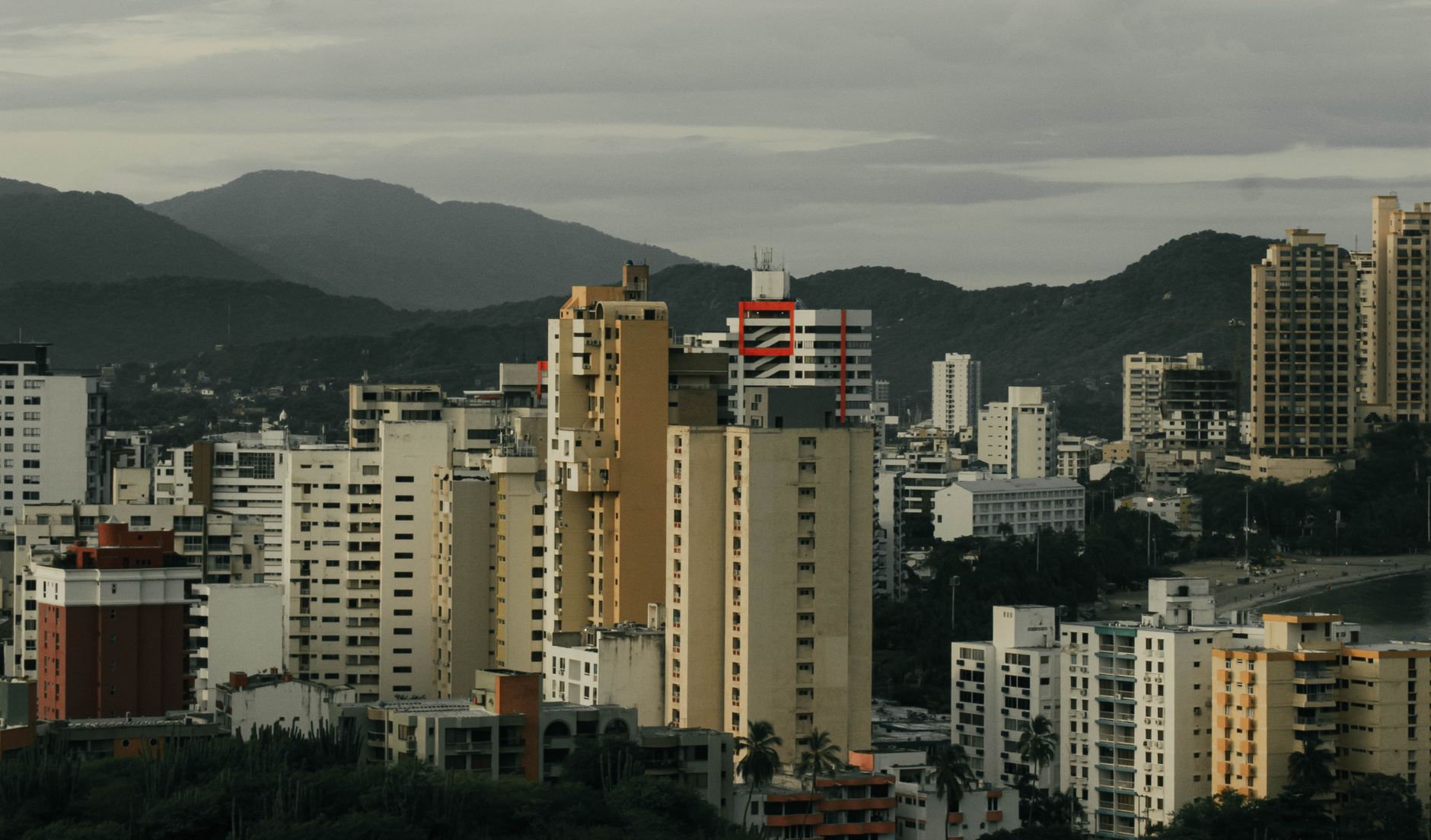
Morros continued northward: newer development and less established street retail. Recently built towers with undeveloped lots still sitting between them. It depends entirely on the Anillo Vial; groceries and school are not walkable.
- what has been permitted on the neighbouring lot, because a new tower next door changes the view and the sunlight you paid for
- how drinking water arrives and where the sewage goes, which along this northern stretch is not always the public network
- whether the building permit is current and matches what the sales office is offering
What to verify, step by step
- Ask who signed the estudio de suelos and request the full report with its boring logs, not the cover sheet.
- Confirm with the curaduría urbana —the private office that issues building permits— whether that report is in the permit file, and whether the approved drawings match what stands on site.
- Ask Cardique whether the land is affected by mangrove, a water setback or a ciénaga, since that governs what can be founded there.
- Review what belongs to beachfront houses and is not covered by the report alone: where the zona de bajamar (the tidal strip, public domain of the Nation) ends in front of the lot, because nothing built on it conveys with the house; whether the fence, pool or terrace encroach on that strip, and whether any proceeding is open before the maritime or environmental authority and how wave protection was solved and who owns the protection works, which often sit outside the boundary line.
- Add what the ground in Cielo Mar imposes: what has been permitted on the neighbouring lot, because a new tower next door changes the view and the sunlight you paid for; how drinking water arrives and where the sewage goes, which along this northern stretch is not always the public network and whether the building permit is current and matches what the sales office is offering.
- If no report exists because the building is old, commission an engineer to assess its present condition and ask the District for whatever risk information it holds on the property.
Mistakes that cost money
- Accepting the neighbouring lot's report. Exploration is site-specific, and in coastal fill it changes from one property to the next.
- Reading the report as a certificate that the building was properly built. It records what the engineer recommended, not what the builder did.
- Buying with a visible crack and a verbal promise that the administración will repair it. What counts is the minute in which the owners voted the work and how it is paid for.
Frequently asked questions
- Can the soil study for a beachfront house be sent to me by email?
- Yes, it is a file and can be reviewed from abroad. The person who has to read it with judgement is an engineer, not the broker.
- What if the seller says the report was lost?
- Ask the curaduría for the permit file, where it was filed, and in parallel order an assessment of present condition.
- Does the soil study cover beach erosion?
- No. That is a separate question, put to the environmental and maritime authorities rather than to the geotechnical engineer.
Where to check it
- Curadurías Urbanas de Cartagena — whether a current building or subdivision permit exists and exactly what it authorises
- Cardique, autoridad ambiental del Canal del Dique — environmental permits, water setbacks and mangrove or wetland constraints
- Alcaldía Mayor de Cartagena de Indias — property tax, betterment levies and District procedures
- Cartagena de Indias — the rules of the municipality Cielo Mar belongs to
Official bodies. Specific figures are requested there, not copied from a listing.
Updated 2026-11-06
Interested in a property in this area?
Write to us and we will send you the available options.