A title review tells you who may sell; a technical inspection tells you what is being sold. They are two separate engagements, both paid for by the buyer, and in Cielo Mar the second one is usually skipped because the buyer is not in the city to open the door.
What gets inspected is not the same checklist for every property: when what you are buying is a retail unit, the report has to address what the nature of that property actually puts at risk, not a generic form about damp patches and sockets. That matters for money and for timing. For money, because a repair not found before the promesa de compraventa is signed gets paid for afterwards by the buyer, and in a propiedad horizontal (condominium regime) it can end up shared among all owners through a special assessment. For timing, because before the promesa whatever turns up is a matter for negotiation, and afterwards it is only a claim. The report is signed by a professional who answers for what it says; nobody signs the brochure.
A retail unit is bought differently because you are not buying a space but the possibility that someone can trade in it, and that possibility is granted by third parties. Two permissions are needed and nobody bundles them: the one the land-use rules give for that specific lot, and the one the copropiedad's reglamento gives, which need not agree. On top of those sit the tenant's own business permits, applied for activity by activity. The second difference is the relationship with the tenant. A lease of premises for commercial purposes runs under rules distinct from residential tenancies, with an expectation of continuity for the tenant that is worth having a lawyer spell out before signing, because the buyer steps into a contract that already exists and inherits its history. The third is that the unit depends on what lies outside it: façade, signage, pavement, loading area and public access are normally bien común, common property, or public space. What makes the unit profitable, in other words, is not inside its walls and is not decided from within the unit.
What sets Cielo Mar apart is that much of the buying happens before the property legally exists. Units sell off plan, and the counterparty is not an owner but a fiduciaria, a trust company, managing a patrimonio autónomo, a segregated trust estate, into which the landowner contributed the site. That changes the whole process. The first document signed is not a deed but an enrollment in the project; the money goes into a trust account rather than to a seller; and the deed is granted once the punto de equilibrio, the pre-sales break-even threshold, is reached and the building goes up, so in the early stage there is no unit folio to certify because none has been opened. Ask for the trust agreement and ask what happens if that threshold is never reached, who returns the money and on what terms. Who decides changes too: the governing document is the permit issued by the curaduría urbana, the private licensing office, and the condominium bylaws are still unregistered, so you read a draft. Utilities may be run by private operators belonging to the development itself, meaning the supply relationship does not start with the city water company.
What is specific to Cielo Mar
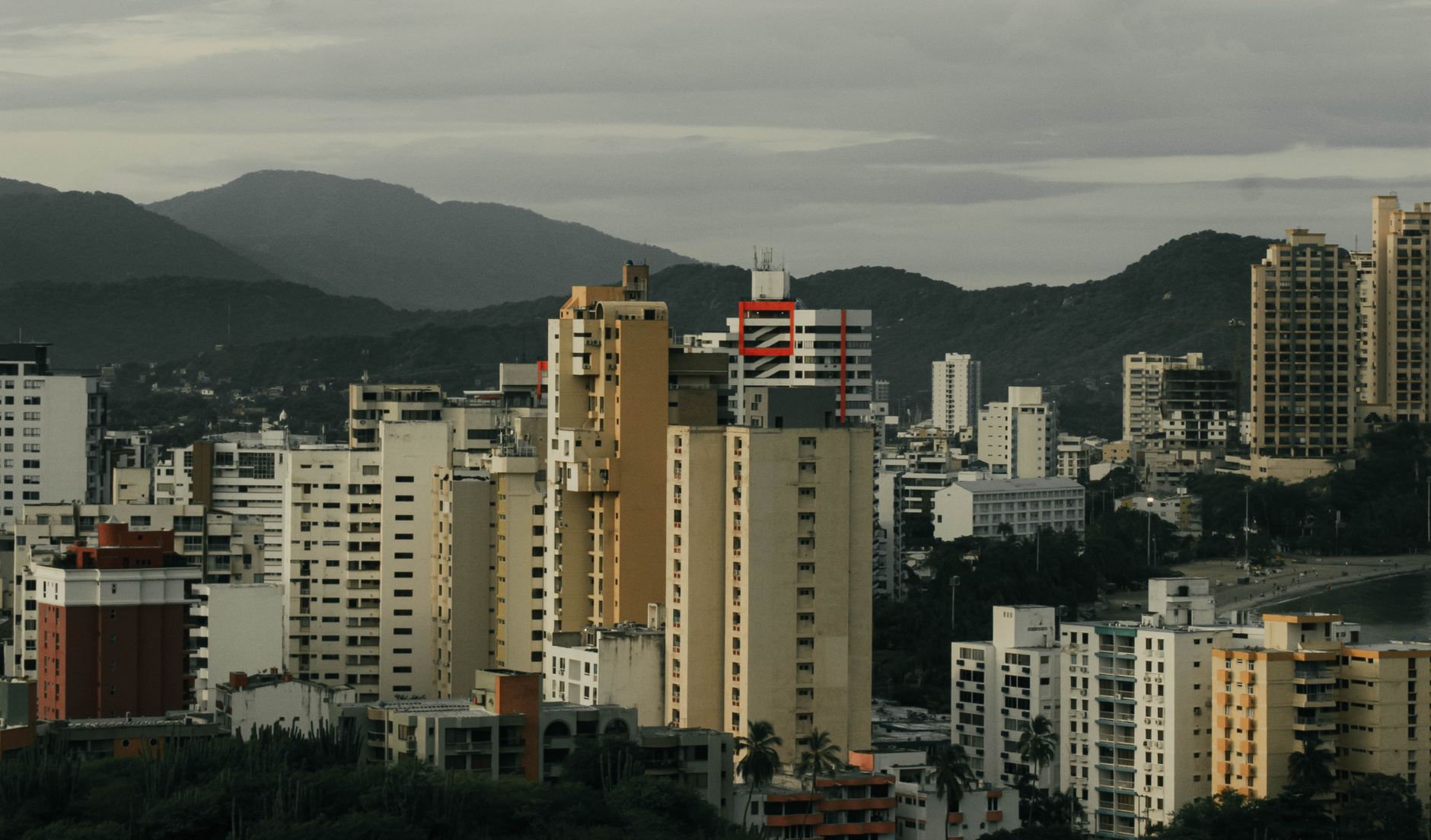
Morros continued northward: newer development and less established street retail. Recently built towers with undeveloped lots still sitting between them. It depends entirely on the Anillo Vial; groceries and school are not walkable.
- what has been permitted on the neighbouring lot, because a new tower next door changes the view and the sunlight you paid for
- how drinking water arrives and where the sewage goes, which along this northern stretch is not always the public network
- whether the building permit is current and matches what the sales office is offering
What to verify, step by step
- Ask the curaduría urbana (the private permitting office) for the licencia de construcción and the approved plans, and check what use, area and height that permit actually authorised against what you are being shown. Anything built beyond it is not cured by the deed.
- What the report has to address point by point for a retail unit: whether the POT (the city's land-use plan) allows commercial use on that specific lot and whether the reglamento de propiedad horizontal admits it — two separate permissions, and you need both; whether the particular activity planned requires a concepto de uso de suelo (a land-use ruling) and who applies for it, owner or tenant and how façade, signage, pavement and loading area are allocated, since these are usually bien común even though the unit uses them daily.
- And what the same report should pick up for the sector in Cielo Mar: what has been permitted on the neighbouring lot, because a new tower next door changes the view and the sunlight you paid for; how drinking water arrives and where the sewage goes, which along this northern stretch is not always the public network and whether the building permit is current and matches what the sales office is offering.
- Engage the visit with an engineer or architect you hire yourself, not the one the seller offers, and require a written report with dated photographs, a signature and the professional's licence number. Ask Camacol Bolívar who carries out technical surveys in the region and ask for references you can check.
- Agree in writing with the seller on the date of the visit and on access to the property before signing the promesa, and attach the report to the promesa together with the agreed repairs and who pays for them.
- Ask the District whether any administrative proceeding is open against the property for building without a permit or for breaching planning rules, because that follows the property and not the seller.
Mistakes that cost money
- Accepting the report the seller or the developer hands over. The useful report is the one the buyer commissioned and can question.
- Leaving the inspection until after the promesa, when the price is already agreed. Whatever surfaces then is argued from the weaker position.
- Confusing the technical inspection with the title review. One looks at the construction and the other at the chain of ownership; you need both, and not from the same person.
Frequently asked questions
- Can the inspection be done without being in Cartagena?
- Yes, and it usually is: you hire the professional, arrange access with the seller and receive the signed report. What you should not delegate is choosing who does it.
- Does the inspection change with the type of property?
- In substance, yes. What has to be verified on a retail unit comes from the nature of the property —what is privately owned, what is common property, what the permit authorises— and not from a general list of finishes.
- Who pays for repairs the report turns up?
- Whoever agreed to in writing. If the report is attached to the promesa with the fixes and who owes them, you have something to enforce; if it lives in an email, you do not.
Where to check it
- Curadurías Urbanas de Cartagena — whether a current building or subdivision permit exists and exactly what it authorises
- Camacol Bolívar — the industry's own figures on housing starts and launches in Bolívar
- Alcaldía Mayor de Cartagena de Indias — property tax, betterment levies and District procedures
- Cartagena de Indias — the rules of the municipality Cielo Mar belongs to
Official bodies. Specific figures are requested there, not copied from a listing.
Updated 2026-11-06
Interested in a property in this area?
Write to us and we will send you the available options.