Water running on the day of the visit does not prove that availability has been certified, and the meter feeding a penthouse is not always registered to the property itself. These are two separate documents, issued by different bodies, and a buyer who asks for neither inherits whatever was never checked.
Service availability is evidenced by a certification from the utility company for that specific property, and it is the document the curaduría looks at when a permit is requested. A seller's word, a temporary hook-up or a line drawn from a neighbour are not the same thing, and the difference decides whether a penthouse can be lived in, conveyed or remodelled. Alongside that sits the bill: in Colombia utility balances follow the property rather than the person who ran them up, so the account status and the name recorded on the meter belong in the promesa de compraventa (the binding promise of sale) and not in an act of trust. How much is owed is for the utility to state; who pays it is what gets agreed in writing before signing.
A penthouse is bought differently because what you acquire is attached to the building's edge. The top unit enjoys, for itself alone, elements it does not own: the roof slab that closes it, the façade that wraps it and, very often, the space holding the tower's water tanks, pressure equipment and antennas. That asymmetry is the whole point. What you enjoy alone you do not control alone: enclosing the terrace, adding a pool or changing the window frames is not interior remodelling but work on bien común, common property, and the body that authorizes it is the asamblea under whatever majority the reglamento demands, not the owner. At the same time the coeficiente de copropiedad —the unit's ownership share— is usually the highest in the tower, so the unit carries the largest fraction of every building expense, including the ones that originate directly above it. Conservation differs as well: sun, salt air and water damage concentrate on the roof slab and the upper façade. So the useful question before signing is not how the apartment looks inside, but how the copropiedad has been handling waterproofing and what it has resolved about it.
What is sold in Punta Canoa is often not a lot but a share in a tract still held en común y proindiviso, in undivided co-ownership, and buying a share gives no right to a specific piece of ground, only an abstract fraction of the whole: the buyer ends up co-owning with strangers and needs a partición, a partition, or a physical division before being able to say which part is his. That is the process that sets this sector apart: identifying every co-owner, finding out whether anyone has already petitioned for division, and seeing how the predial, the property tax, has been paid on an asset nobody uses exclusively. The counterparty differs from the village too: sometimes it is a land-holding company based elsewhere, in which case you request its certificado de existencia y representación, the corporate good-standing and signing-authority certificate, along with the resolution authorizing the sale. Who decides differs as well: lying outside consolidated urban land, permitting runs through the rural regime and the environmental opinions of Cardique rather than a neighborhood licensing office, with DIMAR, the maritime authority, involved at the beach edge. Nor is infrastructure networked: each parcel arranges its own water, power and wastewater.
What is specific to Punta Canoa
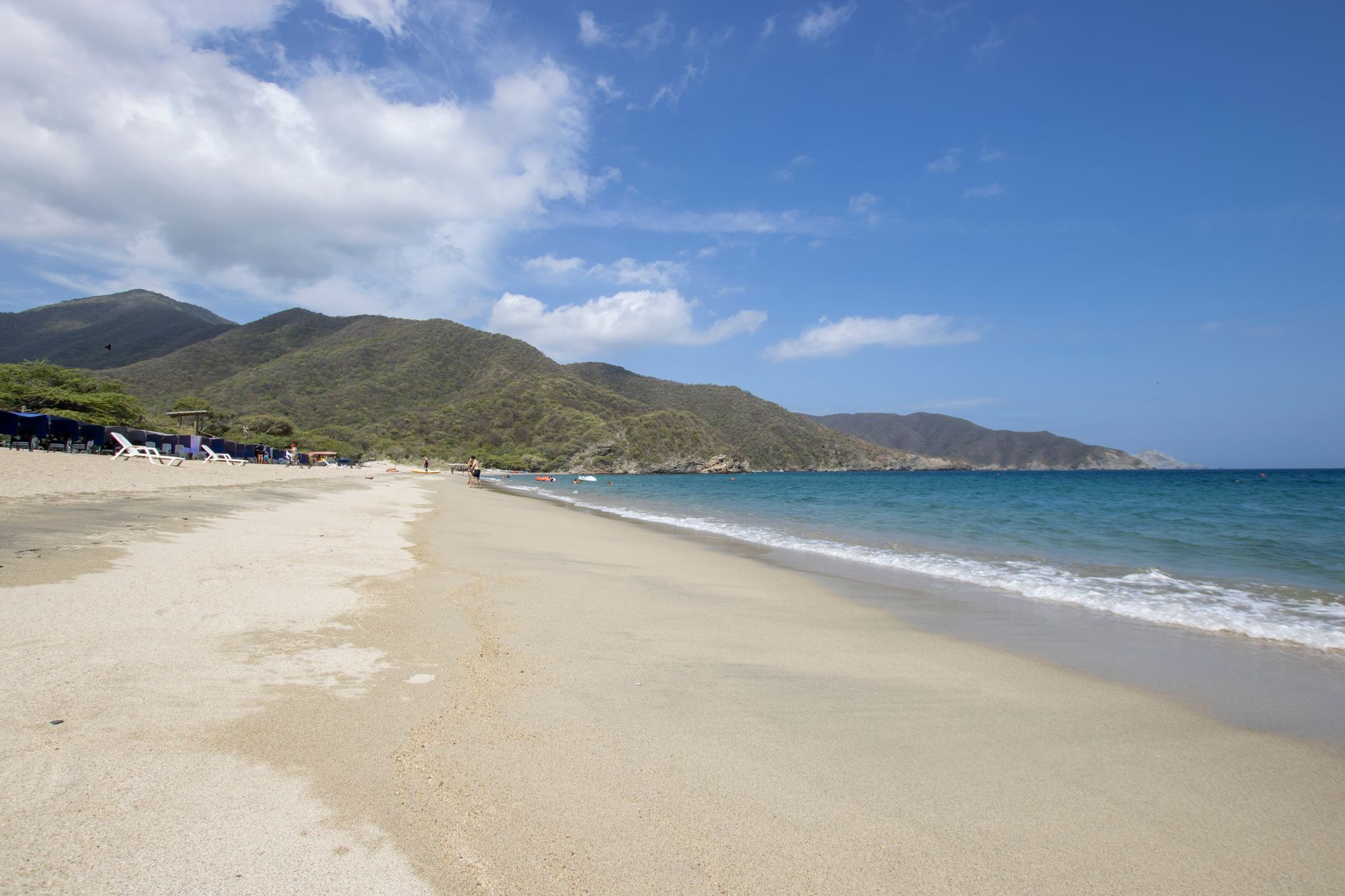
A low-density coastal village to the north, with open beach and very little high-rise building. Lots and houses dominate; towers are the exception. It lies along the coastal road toward Barranquilla, far from the centre and without full urban services.
- whether the property has its own registry folio or sits inside a larger parcel that was never subdivided
- whether there is certified utility availability, not merely a promise that services are coming
- whether the property lies in a coastal erosion risk zone, which is documented along this stretch
What to verify, step by step
- Ask the utility company for a water and sewer availability certification issued for the property's registry folio, not for the development or the sector.
- Request the latest account statement for each service and ask the company whether there are payment arrangements, refinancings or disputed charges on that meter.
- Check whose name the meter is in and whether it matches the unit being shown: in a copropiedad, individual meters sit next to common-area services billed through the dues.
- Check what belongs to a penthouse itself and does not change with the sector: which part of the terrace is área privada (privately owned area) and which is bien común de uso exclusivo, because that line decides who pays to waterproof the roof slab when it leaks; the coeficiente de copropiedad assigned to the unit, which on the top floor is usually the building's highest and fixes the dues permanently and whether the roof slab carries the building's tanks, machinery and antennas, and what access rights the administración holds over the terrace.
- Check in addition what Punta Canoa requires in particular, with the authority that imposes it: whether the property has its own registry folio or sits inside a larger parcel that was never subdivided; whether there is certified utility availability, not merely a promise that services are coming and whether the property lies in a coastal erosion risk zone, which is documented along this stretch.
- Have the promesa state who answers for balances predating closing, and ask for the paz y salvo (a clearance certificate for the account) before signing; it can be requested without being in Colombia.
Mistakes that cost money
- Treating the bill the seller shows you as an account statement. A bill covers one billing period; a statement shows the balance and any arrangements in force.
- Assuming service because the main runs along the street. A main in front of the lot and a metered connection to the lot are different things, and on land purchases that is exactly where the sums fail.
- Forgetting common-area services. In a copropiedad the lift, pump and lighting consumption arrives through the administration dues, not through the unit's own bill.
Frequently asked questions
- Does the seller's utility debt pass to the buyer?
- The balance is charged against the property, so it is a point to be agreed expressly in the promesa. Ask the utility for a certification of the account status and have your attorney review how that clause was drafted.
- Who issues the availability certification?
- The company that provides the service at that property. The curaduría and the Alcaldía require it as an annex, but they do not issue it.
- Can all of this be requested from outside Colombia?
- The account statement and the certification are requested from the utility and in several cases handled online. Where the request has to come from the owner, the seller files it and you receive the document in writing.
Where to check it
- Alcaldía Mayor de Cartagena de Indias — property tax, betterment levies and District procedures
- Plan de Ordenamiento Territorial de Cartagena — land use, the rules applying to the property and protected land
- Curadurías Urbanas de Cartagena — whether a current building or subdivision permit exists and exactly what it authorises
- Cartagena de Indias — the rules of the municipality Punta Canoa belongs to
Official bodies. Specific figures are requested there, not copied from a listing.
Updated 2026-11-06
Interested in a property in this area?
Write to us and we will send you the available options.